Let’s face it: We have a protein obsession. According to a study in Nutrition Reviews, the protein intake of most Americans is significantly higher than the recommended daily amount. But while protein plays a critical role in several bodily functions, like weight loss, building muscle, and increasing satiety, how much of this essential macronutrient do you need daily to build muscle?
To find out, we turned to Gianna Masi, CPT, RDN, a certified personal trainer and registered dietitian with Barbend, who drops some expert knowledge on how much protein you need daily to pack on muscle. Regardless of where you’re at on your fitness journey, understanding optimal protein intake is vital to success.
Fortunately, optimizing your protein intake doesn’t mean blindly chugging protein shakes or devouring mountains of chicken breast. Instead, it requires a more nuanced approach and understanding of your body’s needs, depending on your body and activity level. That’s why we’ve sifted through the online bro-science to break down the real science behind protein requirements.
In this article, we’ll cover the connection between protein intake and muscle, the amount of protein you need, the potential downsides of consuming too much protein, and the best protein sources for muscle growth. It’s time to squash the protein myth, sculpt your physique, and optimize your fitness routine. Read on to solve the protein puzzle.
The link between protein intake and building muscle
Here’s a quick refresher from high school Biology class: Proteins are made up of amino acids, powerful building blocks responsible for muscle growth. You may have heard of the branched-chain amino acids (BCAAs), valine, leucine, and isoleucine, which are especially important for building muscle.
When you work out, your muscles experience tiny tears. That’s where protein comes in to repair and strengthen them. It provides the essential amino acids needed for this process, acting like the construction crew for your body’s muscles. Without sufficient protein, your muscles may struggle to recover and grow after exercise.
Masi explains, “The link between protein intake and building muscle is that we need a minimum amount of protein per day, alongside resistance training, to help support the building and maintenance of muscle. Protein isn’t just for bodybuilders or powerlifters; it’s essential for everyone. Getting enough protein daily helps support our muscles and lean tissue.”
How much protein is necessary for building muscle?

The magic number can vary depending on your age, gender, weight, and activity level, but research recommends around 1.6 to 2.2 grams of protein per kilogram of body weight daily. This amount ensures you’re giving your muscles the amino acids they need for growth. To optimize your protein intake, studies suggest it’s best to spread your protein intake throughout the day across three or four meals that include 25 to 30 grams of high-quality protein.
“The RDA (Recommended Dietary Allowance) for protein is 0.8 grams per kilogram of body weight (g/kg/bw) per day, which is quite low for maintaining and building muscle. Many healthy individuals will require more protein, such as 1.6 to 2.4 g/kg/bw per day,” says Masi.
Protein and adequate calories from the other macronutrients, carbohydrates, and fats will also help build and maintain muscle mass. Masi adds, “Protein can be spread throughout the day when it makes the most sense for the individual. Many will find it’s best to spread out their protein intake into “protein pulses” throughout the day through meals and snacks to get to their total needed at the end of the day.”
Can you eat too much protein?
While protein is crucial, it’s possible to overdo it. Avoid thinking upping your protein intake will magically turn into extra muscles. Studies show that too much protein can strain your kidneys over time. Stick to the recommended amounts and focus on a balanced diet to give your body the full spectrum of nutrients it needs.
With that said, there’s no need to fear overdoing it with protein if you’re physically active. Masi says, “There are myths about using only 30 grams of protein per meal, but this isn’t true. While there may be more optimal numbers for muscle protein synthesis, having more than 30 grams of protein at meals is fine.”
Does protein source matter for building muscle?
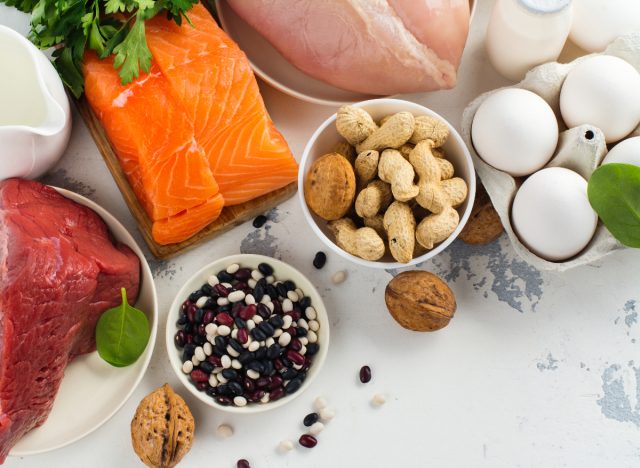
Animal versus plant-based protein sources is a much-debated topic in the nutrition world. While animal sources like chicken, eggs, and dairy offer complete proteins with all essential amino acids, a recent scientific review concluded that plant-based sources like beans, lentils, and tofu could be as effective as animal proteins for stimulating muscle protein synthesis by combining different plant proteins. Variety is key to ensuring you get a range of nutrients along with your protein intake.
But it’s not just the protein source that impacts muscle-building potential. The amino acids you consume play a crucial role. “Higher quality protein sources will help with overall body composition and weight management,” states Masi. “Leucine is an amino acid that’s very important in stimulating muscle protein synthesis. This is why foods with large amounts of leucine are considered superior for muscle building. Sources higher in protein and leucine include meats, fish, whey protein, dairy products like cottage cheese, firm tofu, and black beans.”