Reducing Unnecessary Head CT Scans in Older Adults: A New Decision Rule Shows Promise – With the growing elderly population, emergency departments are increasingly managing a surge in the number of older adults who have fallen. Falls, particularly those occurring on level ground, such as in one’s home, are a common cause of brain bleeds. While computed tomography (CT) scans of the head are frequently used to assess patients who have fallen, subjecting every fallen patient to a head scan is an inefficient and costly practice.
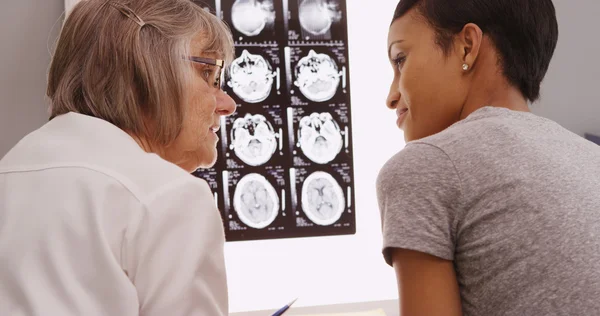
Dr. Kerstin de Wit of Queen’s University in Kingston, Ontario, along with coauthors from the Network of Canadian Emergency Researchers, highlights the drawbacks of excessive CT scans in their article published in the CMAJ (Canadian Medical Association Journal) https://www.cmaj.ca/lookup/doi/10.1503/cmaj.230634.
“Overuse of CT in this population prolongs the emergency department visit, which has been shown to increase the rate of delirium while also diverting resources from other emergency patients,” Dr. de Wit writes. “Furthermore, not all emergency departments have 24-hour on-site CT scanning facilities, meaning that some of these patients may be transferred to another center.”
To address this issue, a team of emergency department physicians from across Canada and the United States developed the Falls Decision Rule. This rule serves as a tool to identify patients who can safely forgo a head CT to rule out intracranial bleeding after a fall.
The researchers included 4308 patients aged 65 years or older from 11 emergency departments in Canada and the US who visited the emergency department within 48 hours of falling. The median age was 83 years, 64% were female, 26% took anticoagulant medication, and 36% took antiplatelet medication, both of which increase the risk of bleeding.
The Falls Decision Rule, if implemented, could potentially eliminate the need for head CT scans in 20% of the study population. This rule can be applied to all older adults who have fallen, regardless of whether they sustained a head injury or can recall the fall.
This new rule complements the widely used Canadian CT Head rule, which is applicable to patients with disorientation, amnesia, or loss of consciousness.
The Falls Decision Rule has the potential to streamline emergency department care for older adults who have fallen, reducing unnecessary CT scans, minimizing resource utilization, and expediting patient flow.


