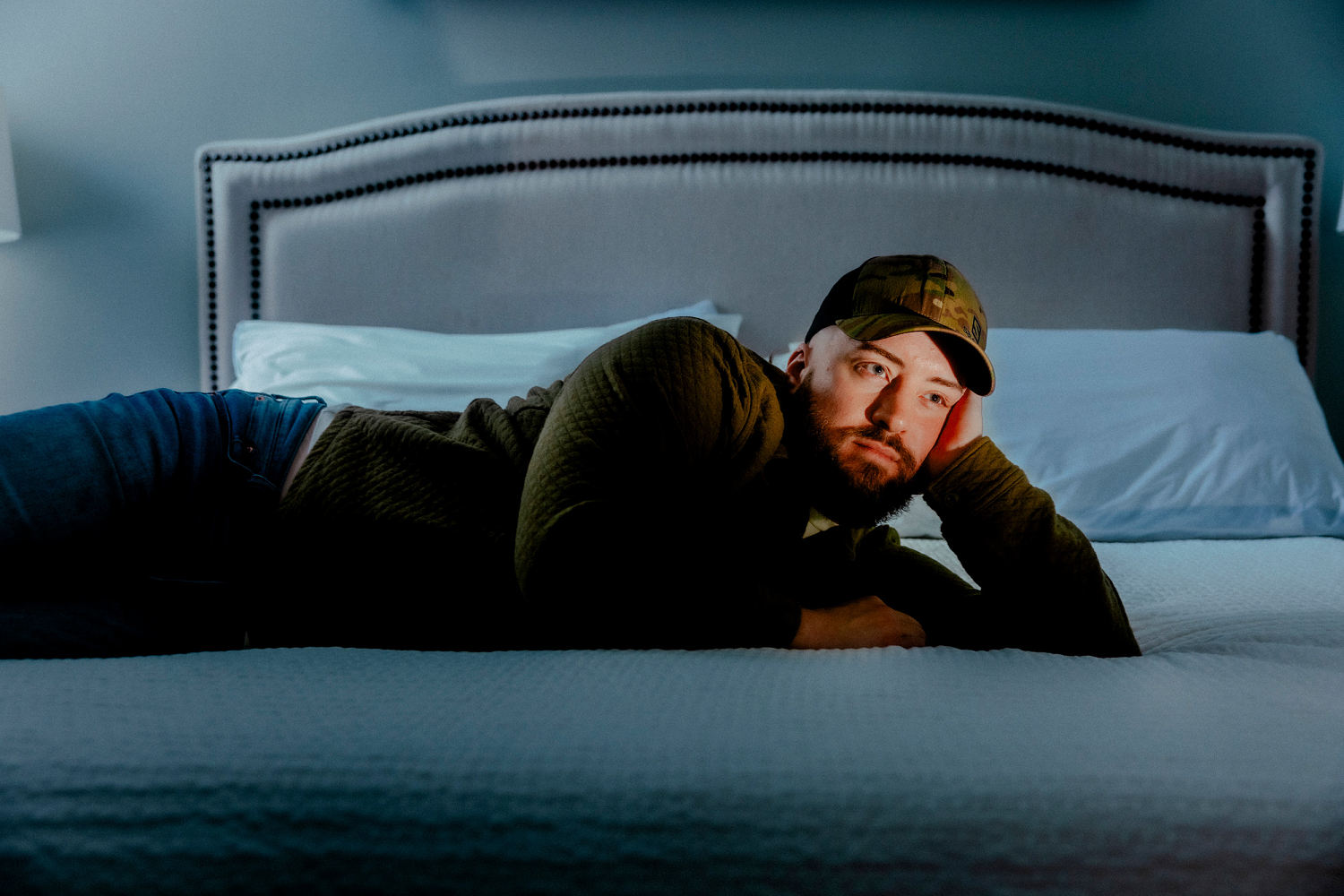
For those who leave their religion — as Swift-Godzisz, Long and Boiter have all done — it’s “like the rug gets pulled out from under you,” according to Winell.
“Your life needs to be gradually reconstructed,” she said. “It’s a reconstruct of who you think you are and what you believe now. One of those new beliefs is that being LGBTQ is OK.”
In terms of treatment, Winell said she first helps her patients learn to take care of themselves.
“Instead of outsourcing all that care to God, I teach them how to be self-reflective and how to regulate their feelings from their own perspective, rather than from the Bible’s,” she said.
From there, she teaches skills that help with the trauma response, like writing down negative messages you grew up believing and changing them to something that can read as positive and hopeful.
“What used to be, ‘My life is a trial, and then I die and go to hell,’ can change to, ‘My life is an adventure and a journey,’” she said.
She also works with her patients on relaxation by teaching them breathing exercises and body scan meditations, among other techniques. In certain cases, she recommends combining these tools with medication.
A debate among mental health providers
As more LGBTQ people share their experiences with religious trauma, there is debate among mental health experts about how it should be characterized in the Diagnostic and Statistical Manual of Mental Disorders, the American Psychiatric Association’s reference guide for coding, classifying and diagnosing mental disorders.
In the decades-old manual’s fifth and latest edition, the DSM-5-TR, religious trauma falls under the category “Religious or Spiritual Problem,” as a Z code, not an official mental disorder. Z codes are listed in the back of the DSM and are referred to as “other conditions that may be a focus of clinical attention.” Other examples include various forms of “Child Psychological Abuse,” “Unsheltered Homelessness” and “Victim of Terrorism or Torture.”
Koenig is now working with a group of public health experts and psychiatrists at Harvard University to expand “Religious or Spiritual Problem” as a Z code in the DSM to include “Moral Problems,” such as moral injury.
Moral injury, which is not currently listed in the DSM, may occur when an individual believes they have acted in a way that deeply conflicts with their morals and values, which produces guilt, shame or profound feelings of broken trust. It has been applied to war veterans and, more recently, to health care professionals who did not feel like they were able to provide appropriate care to those suffering during the Covid-19 pandemic.
“For centuries, people have been manipulating and weaponizing religion by condemning LGBTQ individuals,” Koenig said. “Moral injury — particularly for religious LGBTQ people — can create a whole life of shame and guilt. To live with it can result in mental health problems over time, like suicide, depression and anxiety, because that’s what moral injury does, and you can get stuck in it for years and decades.”
Koenig said it’s critical that the combination of “Religious or Spiritual Problem” and “Moral Problem” — which is currently under review by a DSM committee — finds a spot in the manual as a Z code. By adding moral injury, he explained, providers will be able to collect more specific data and prescribe more targeted treatments, such as whether it’s appropriate to recommend pastoral support for those suffering. They’ll also be able to more effectively document which part of the patient’s trauma came from their family’s or community’s religious beliefs and which part came from a separate worldview that being LGBTQ is immoral.
“For religious people who identify as LGBTQ, it’s not just Christianity at play,” he said. “It’s the whole moral fabric of the culture that’s been passed down through generations that has caused this condemnation.”
Getting a new disorder or code added to the DSM involves submitting an extensive proposal to the manual’s steering committee, which is then reviewed and forwarded along to the American Psychiatric Association’s board of trustees for approval.
“Having it as a Z code will validate and stimulate funding support, and then there’ll be more money for research, which will help us learn more about how we can treat folks experiencing moral injuries like religious trauma,” Koenig said.
A further step would be changing “Religious or Spiritual Problem” from a Z code to an official disorder in the DSM. While Koenig is unsure about his stance on this, as the process would be even more rigorous and could take years, Winell said she “definitely thinks it should be in there” as a disorder.
“Right now, most therapists don’t know much about it. They’ll do an intake with a new client and talk about family, schooling, substance abuse, but they won’t touch religion,” she said. “So if it was a real thing in the DSM, it would get covered and the millions of folks who are struggling with it across this country could get better help.”
Winell added that a disorder classification in the DSM would give religious trauma more credibility in the eyes of medical professionals and would give those experiencing this type of trauma the ability to name what they’re going through. She also predicted this would result in more research in the area and religious trauma becoming part of the curriculum in university psychology courses.
Drescher, who was part of the APA committee that in 2013 changed gender identity disorder to gender dysphoria in the DSM in an effort to remove stigma, disagrees with Winell on this matter.
“We don’t need diagnoses to understand what’s going on. … Medicalizing social issues is how homosexuality was originally labeled a mental disorder,” Drescher said, noting that homosexuality wasn’t officially removed from the DSM until 1973. “So the idea that now we’re going to turn anti-LGBTQ ideas into psychiatric diagnoses doesn’t sit well with me.”
This, he added, could enable a future generation to “just flip the switch” and pathologize homosexuality once again.
And while Drescher — who has been practicing psychiatry for over four decades — isn’t optimistic about changing the hearts and minds of today’s anti-LGBTQ church leaders who are “set in their ways,” he is still hopeful about the future.
“Younger religious people don’t think of LGBTQ people as their enemies. They know them as their friends, their neighbors and their fellow congregants,” he said.
“So as the new generation grows up, religious LGBTQ people will be met with greater acceptance rather than being stigmatized and having to hide who they are, and less hiding who you are means you can grow up feeling better about yourself and perhaps experience less anxiety, depression and other mental health struggles.”
If you or someone you know is in crisis, call or text 988 to reach the Suicide and Crisis Lifeline or chat live at 988lifeline.org. You can also visit SpeakingOfSuicide.com/resources for additional support.


