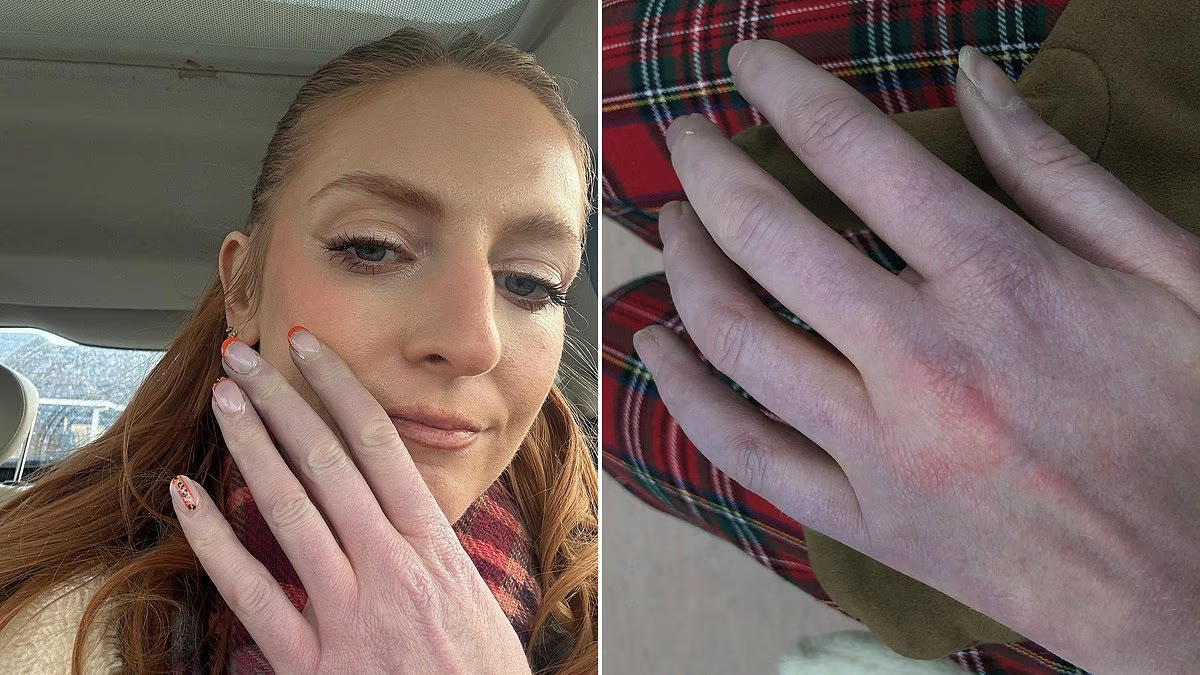
Frostbite can occur in several stages, ranging from mild frostbite that does not require medical intervention and does not cause permanent skin damage, to severe frostbite when both the skin and underlying tissue are frozen.
 Written by Prerna Mittra |Published : February 15, 2024 4:33 PM IST
Frostbite is a painful condition that can often become dangerous if not treated in a timely manner. According to the Mayo Clinic, frostbite is an injury caused by freezing of the skin and underlying tissues. In its earliest stage ‘frostnip’, there is no permanent damage to the skin. Its symptoms may include “cold skin and a prickling feeling”, followed by “numbness and inflamed or discoloured skin”. When a frostbite begins to worsen, the skin may appear to be hard or “waxy-looking”.
First treatment
On Wednesday, the US Food and Drug Administration (FDA) approved the first treatment for “severe frostbite” to reduce the risk of finger or toe amputation in adults, which happens in the worst-case scenario. In a press release, FDA stated that it has approved Aurlumyn (iloprost) injection, which is a vasodilator that opens blood vessels and prevents blood clotting.
Dr Norman Stockbridge, director of the Division of Cardiology and Nephrology in the FDA’s Center for Drug Evaluation and Research, was quoted as saying in the release: “This approval provides patients with the first-ever treatment option for severe frostbite. Having this new option provides physicians with a tool that will help prevent the life changing amputation of one’s frostbitten fingers or toes.”
Stages of frostbite
The release further stated that frostbite can occur in several stages, ranging from mild frostbite that does not require medical intervention and does not cause permanent skin damage, to severe frostbite when both the skin and underlying tissue are frozen and blood flow is stopped. In such a case, amputation may be required.
According to the Centers for Disease Control and Prevention (CDC), you may have a greater chance of developing frostbite if you have poor blood circulation, are not properly dressed for extremely cold temperatures.
Taking action for frostbite
The CDC advised that if you notice signs of frostbite on yourself or someone else, seek medical care. Do the following:
- Get the person into a warm room as soon as possible.
- Unless absolutely necessary, do not walk on feet or toes that show signs of frostbite this increases the damage.
- Do not rub the frostbitten area with snow or massage it at all. This can cause more damage.
- Put the areas affected by frostbite in warm not hot water (the temperature should be comfortable to the touch for unaffected parts of the body).
- If warm water is not available, warm the affected area using body heat. For example, you can use the heat of an armpit to warm frostbitten fingers.
- Do not use a heating pad, heat lamp, or the heat of a stove, fireplace, or radiator for warming. Affected areas are numb and can easily burn.
Ultimately, frostbite should be checked by a health care provider.