
() President Donald Trump on Monday signed an executive order to restrict funding for gain-of-function research, which official documents deemed as “dangerous” and a potential harbinger of “catastrophic consequences.”
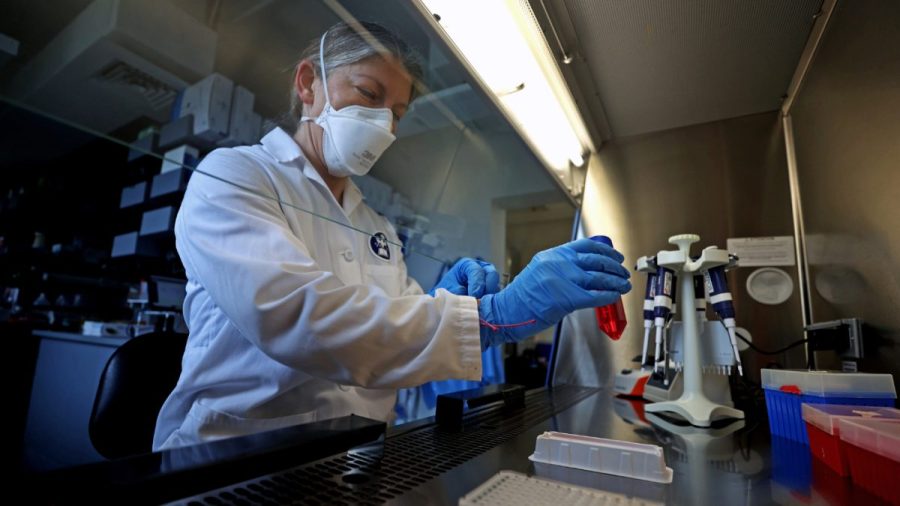
The long-debated science, also called “dual-use research,” consists of experiments on viruses and pathogens and extends into genetic modification.
Typically, gain-of-function research aims to breed germs that are more viral or transmissible than previous strains in order to understand how it spreads, and what could counter such germs.
Proponents of the research say experiments allow scientists to get a clearer understanding of the genetic makeup of potential pandemic-causers, while opponents point to lab leaks as a deterrent.
The debate is one Trump is familiar with. In 2014, federal funding was stopped for any research that could make influenza, Middle East Respiratory Syndrome or severe acute respiratory syndrome more transmissible, NPR reported at the time.
The first Trump administration lifted that ban in 2017, along with new panel approval guidelines to regulate which experiments got the green light. Biden further tightened the research rules in 2024 following an expert panel’s vote.
Now, the White House is asking the Office of Science and Technology Police to replace the Biden-era policy on the topic, which it claims had “insufficient levels of oversight.”
The order outlines the plan to restrict funding for the research both at home and abroad, including in “countries of concern” like China.
It comes after a final congressional report on COVID-19 in December determined the virus likely emerged from a lab accident in China.
But many scientists including five governmental bodies who completed assessments in 2021 favored COVID-19 as having natural origins, as research initially suggested.
Samuel Scarpino, director of Northeastern University’s Institute for Experiential AI, told the university’s newsroom that risk analysis has morphed from a scientific question to one of policy.
“We know that we have learned things from these experiments. We know that they are potentially risky,” he says. “The question is whether what we learn is valuable enough to offset the risks. That’s a question the policymakers we elect have to answer.”