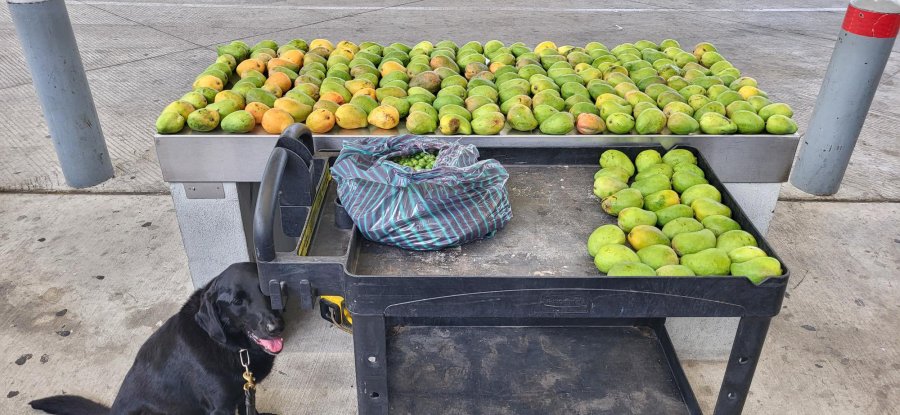


McALLEN, Texas (Border Report) — U.S. Customs and Border Protection officers recently found an illegal shipment of mangos and tropical nance fruit hidden in a vehicle crossing into Laredo, Texas, from Mexico, the agency says.
On May 2, CBP agriculture specialists seized a total of 218 mangos and 7 kilograms of nance that were hidden in luggage inside a pickup at the Juarez-Lincoln International Bridge, CBP says.
A canine team alerted officers to the prohibited fruits, which were what the agency calls a “commercial quantity.”
Nance is a fibrous cherry-sized yellow fruit from Central and South America that have a strong smell and coconut-type flavor with oily pulp.
The driver was fined $1,000 for a civil penalty for bringing in the undeclared prohibited fruit, CBP says.
Fruit and plants are prohibited from being brought into the United States because of the risk of pests and disease that it could bring that could harm U.S. agriculture.
CBP says its agriculture officers intercept about 3,200 items every day that are subject to agriculture quarantine.
In Fiscal Year 2024, over 8,000 people were given agriculture-related penalties, and over 2.7 million were subject to agriculture inspection, CBP says.
Sandra Sanchez can be reached at SSanchez@BorderReport.com.