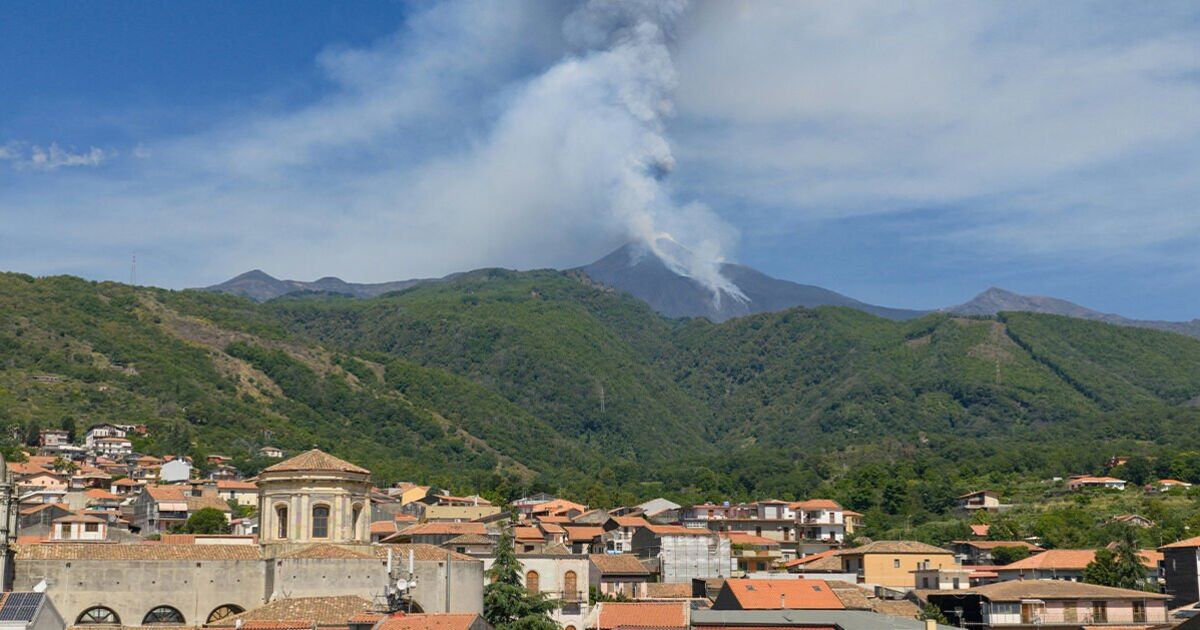
Mount Etna on the coast of Sicily has experienced a dramatic eruption today. The incident saw smoke belch into the sky as onlookers fled.
The so-called Strombolian eruption led to a moderate explosion with moderate gas content, officials say. Yet such volcanic eruptions can pose a major health risk to people in the surrounding areas by releasing acidic gases and ash into the atmosphere.
The International Volcanic Health Hazard Network notes that being exposed to volcanic gases can have a range of effects depending on how concentrated it is and the length of time a person is exposed to it. This can include suffocation and death if the CO2 or H2S is concentrated enough. Radon is also commonly emitted, which doesn’t usually trigger symptoms but long-term exposure can cause lung cancer. SO2 is another chemical in volcanic gas and in high enough concentrations it can cause nausea, vomiting or even pulmonary edema.
Volcanic ash can also cause an array of issues for people in the nearby surroundings after an eruption as these particles can be so fine that you may not even notice you’re breathing it in.
In the respiratory system, the ash can cause irritation and discharge in the throat and nose. It may also trigger dry coughing or make breathing uncomfortable.
People with asthma or bronchitis may experience exacerbated symptoms such as a persistent cough, sputum production, breathlessness and wheezing.
Prolonged exposure to high levels of certain elements like crystalline silica can potentially lead to serious lung disease.
Ash particles can cause painful scratches on the cornea and conjunctivitis, an inflammation of the conjunctival sac surrounding the eyeball. Symptoms may include itchy, bloodshot eyes, excessive tearing or the secretion of a sticky discharge.
Some people may also experience photosensitivity, redness and a burning sensation in their eyes due to ash exposure.
Those who wear contact lenses are advised to avoid wearing them to avoid additional damage.
If acidic ash comes into contact with your skin, it can result in irritation, redness and itching. Scratching these irritated areas may subsequently lead to secondary infections.
The IVHHN recommends staying hydrated, remaining indoors and limiting strenuous activity if you’re in the vicinity of a volcanic eruption. The use of nasal sprays or eye drops may be necessary.
Wearing a mask, goggles and covering the skin can help prevent ash from causing irritation.