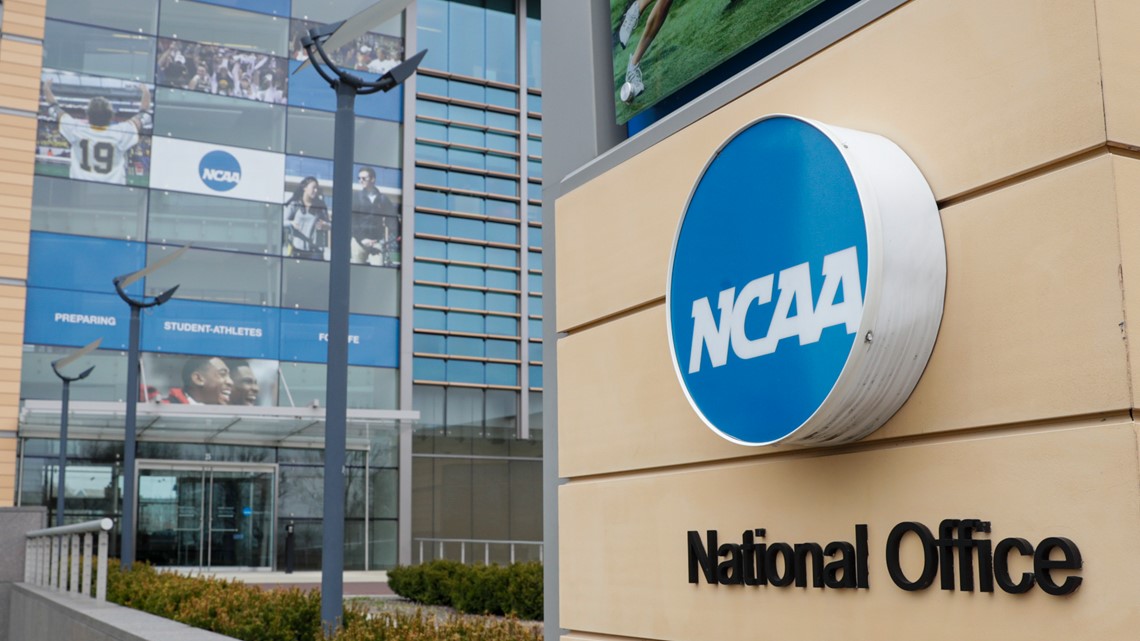

The agreement marks a pivotal change for schools, acknowledging that their athletes are the driving force behind the billions generated in revenue.
WASHINGTON — A federal judge has sanctioned a comprehensive $2.8 billion antitrust settlement, fundamentally transforming the long-standing model of college sports. Essentially, this allows schools to compensate players through licensing arrangements, challenging the traditional concept of amateurism in collegiate athletics.
Some questions and answers about this monumental change for college athletics:
Q: What is the House settlement and why does it matter?
A: Grant House, a former swimmer from Arizona State, initiated a lawsuit against the NCAA and the nation’s top five athletic conferences. His case, combined with two others over several years, culminated in a settlement that overturns the longstanding ban on schools issuing direct payments to athletes. Consequently, schools can now compensate athletes for the use of their name, image, and likeness (NIL). Notably, Division I comprises nearly 200,000 athletes across 350 schools, with the entire NCAA encompassing 500,000 athletes and 1,100 schools.
Q: How much will the schools pay the athletes and where will the money come from?
A: In Year 1, each school can share up to about $20.5 million with their athletes, a number that represents 22% of their revenue from things like media rights, ticket sales and sponsorships. Alabama athletic director Greg Byrne famously told Congress “those are resources and revenues that don’t exist.” Some of the money will come via ever-growing TV rights packages, especially for the College Football Playoff. But some schools are increasing costs to fans through “talent fees,” concession price hikes and “athletic fees” added to tuition costs.
Q: What about scholarships? Wasn’t that like paying the athletes?
A: Scholarships and “cost of attendance” have always been part of the deal for many Division I athletes and there is certainly value to that, especially if athletes get their degree. The NCAA says its member schools hand out nearly $4 billion in athletic scholarships every year. But athletes have long argued that it was hardly enough to compensate them for the millions in revenue they helped produce for the schools, which went to a lot of places, including multimillion-dollar coaches’ salaries. They took those arguments to court and won.
Q: Haven’t players been getting paid for a while now?
A: Yes, since 2021. Facing losses in court and a growing number of state laws targeting its amateurism policies, the NCAA cleared the way for athletes to receive NIL money from third parties, including so-called donor-backed collectives that support various schools. Under House, the school can pay that money directly to athletes and the collectives are still in the game.
Q: But will $20.5 million cover all the costs for the athletes?
A: Probably not. But under terms of the settlement, third parties are still allowed to cut deals with the players. Some call it a workaround, but most simply view this as the new reality in college sports as schools battle to land top talent and then keep them on campus. Top quarterbacks are reportedly getting paid around $2 million a year, which would eat up about 10% of a typical school’s NIL budget for all its athletes.
Q: Are there any rules or is it a free-for-all?
A: The defendant conferences (ACC, Big Ten, Big 12, SEC and Pac-12) are creating an enforcement arm that is essentially taking over for the NCAA, which used to police recruiting violations and the like. Among this new entity’s biggest functions is to analyze third-party deals worth $600 or more to make sure they are paying players an appropriate “market value” for the services being provided. The so-called College Sports Commission promises to be quicker and more efficient than the NCAA. Schools are being asked to sign a contract saying they will abide by the rules of this new structure, even if it means going against laws passed in their individual states.
Q: What about players who played before NIL was allowed?
A: A key component of the settlement is the $2.7 billion in back pay going to athletes who competed between 2016-24 and were either fully or partially shut out from those payments under previous NCAA rules. That money will come from the NCAA and its conferences (but really from the schools, who will receive lower-than-normal payouts from things like March Madness).
Q: Who will get most of the money?
A: Since football and men’s basketball are the primary revenue drivers at most schools, and that money helps fund all the other sports, it stands to reason that the football and basketball players will get most of the money. But that is one of the most difficult calculations for the schools to make. There could be Title IX equity concerns as well.
Q: What about all the swimmers, gymnasts and other Olympic sports athletes?
A: The settlement calls for roster limits that will reduce the number of players on all teams while making all of those players – not just a portion – eligible for full scholarships. This figures to have an outsize impact on Olympic-sport athletes, whose scholarships cost as much as that of a football player but whose sports don’t produce revenue. There are concerns that the pipeline of college talent for Team USA will take a hit.
Q: So, once this is finished, all of college sports’ problems are solved, right?
A: The new enforcement arm seems ripe for litigation. There are also the issues of collective bargaining and whether athletes should flat-out be considered employees, a notion the NCAA and schools are generally not interested in, despite Tennessee athletic director Danny White’s suggestion that collective bargaining is a potential solution to a lot of headaches. NCAA President Charlie Baker has been pushing Congress for a limited antitrust exemption that would protect college sports from another series of lawsuits but so far nothing has emerged from Capitol Hill.
Copyright 2025 Associated Press. All rights reserved. This material may not be published, broadcast, rewritten, or redistributed.