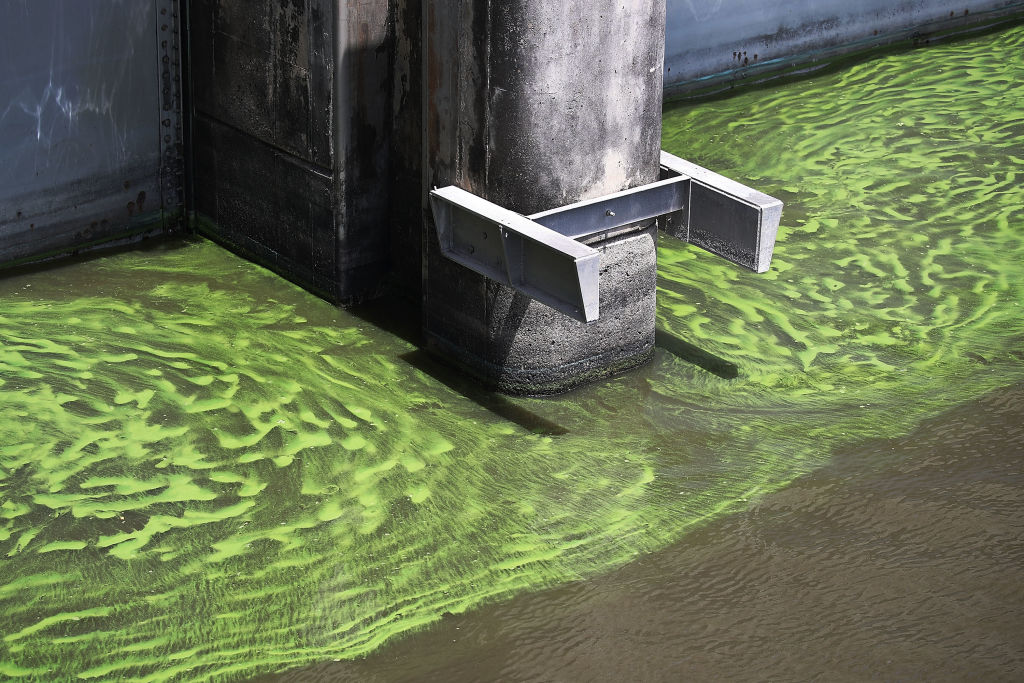

PROVO, Utah (KTVX) With the warmer months finally upon us, you may be heading out to enjoy the bodies of water and reservoirs around you. Unfortunately, the warmer temperatures and abundant sunlight you’re hoping to bask in are also fueling harmful algae blooms on the water.
In Utah, local officials have issued several warnings about the algae blooms in the state, particularly on Utah Lake and in Zion National Park. Warnings have been issued for several lakes in Kansas, Nexstar’s KSNW reports. Bodies of water in Illinois, Michigan, and Ohio have also been flagged for algae blooms already this year.
The warnings typically advise against drinking water from the impacted lakes or reservoirs, or recreating in or on the water (fishing is often permitted, but anglers should throw away the skin and innards of any fish they’re keeping). Dogs and other pets should also be kept away from the potentially dangerous blooms.
“Avoid touching or disturbing algae mats. Avoid primary contact recreation (swimming and submerging the head) when recreating in [these areas],” the Utah Department of Environmental Quality warns, for example.
What are harmful algae?
Also known as blue-green algae, the blooms aren’t algae at all, according to the Utah Department of Environmental Quality. It is an aquatic bacterium known as cyanobacteria that photosynthesizes like a plant.
The DEQ said these harmful blooms occur naturally in bodies of water all over the world, particularly when nutrient levels are high, there is abundant sunlight, warm temperatures, and stagnant waters.
While not algae, the blooms do partially live up to their blue-green name. They’re often described as pea soup-like, or as having the appearance of spilled green paint, the Minnesota Pollution Control Agency explains. The blooms frequently form in parallel streaks along the water’s surface. They can also smell a bit like a swamp, which can be helpful in detecting it when it isn’t as visible.

It is more common to see the algae in summer and early fall, but blooms are possible when conditions are right. The cyanobacteria enjoy calm, warm waters, officials with the New York State Department of Environmental Conservation explain.
If the conditions are right for several days or even months, cyanobacteria can multiply and form large blooms that can cover an entire lake. Blooms generally die and disappear after about a week or two, according to the DEQ, but toxins can linger for days after a bloom dissipates.
It’s worth noting, however, that not every algae will harm you. Most are crucial to a body of water’s food web, the New York State Department of Environmental Conservation says. A non-harmful green algal bloom will look more like “floating rafts on the water,” and does not create the harmful toxins seen with blue-green algae.
How harmful are the algae?
Harmful algal blooms can cause irritations and illnesses if you come into contact with them. In the worst cases, harmful blooms have been known to cause permanent organ damage or even death.
Humans and pets that come into contact with harmful algal blooms can experience irritation of the skin, eyes, nose, throat, and respiratory systems, health officials warn. Accidental ingestion of harmful algae can lead to abdominal pain, headaches, vomiting, diarrhea, kidney or liver damage and neurological symptoms.
In dogs and pets, the DEQ says symptoms can include excessive drooling, vomiting, diarrhea, stumbling or muscle tremors, loss of appetite, rashes, difficulty breathing, and, in serious cases, seizures or paralysis.
If your pet has come in contact with the algal bloom, officials said to rinse them off with clean, fresh water as soon as possible, and get away from the source. Should you or your pet begin to experience symptoms of algae contact after being in or near a potentially contaminated source, you may want to contact Poison Control at 1-800-222-1222, your healthcare provider, or your pet’s veterinarian.
Some have opted to treat waterways to prevent the blooms. Officials in Austin, Texas, recently began the final phase of treating harmful algae growth in its Lady Bird Lake.


