
Brits are urged to be wary of potential symptoms of COVID-19 as the UK has seen a slight increase in cases. According to the latest Government figures, the number of people in England testing positive for Covid rose in the week ending June 15. This included people in hospital who were given PCR tests.
Hospital admissions due to coronavirus also increased slightly compared to the previous week. The most prevalent variants of Covid in that week were pinpointed as LP.8.1.1 (accounting for 19.87% of cases) and XFG (also 19.87% of cases).
Among other variants detected was NB.1.8.1, which has been dubbed the “Nimbus” strain, although this only accounted for 3.97% of cases.
LP.8.1.1 is a sublineage of LP.8.1, which is descended from Omicron. LP.8.1 was first detected in July 2024. It was designated as a “variant under monitoring” by the World Health Organisation (WHO) in January.
Symptoms
It is not known if LP.8.1.1 causes any particular symptoms. Thomas Jeffries, a senior lecturer in microbiology at Western Sydney University, noted that its parent LP.8.1 has not seemed to lead to particularly severe symptoms.
Writing for The Conversation, he said: “Notably, the symptoms of LP.8.1 don’t appear to be any more severe than other circulating strains. And the WHO has evaluated the additional public health risk LP.8.1 poses at a global level to be low.
“What’s more, LP.8.1 remains a variant under monitoring, rather than a variant of interest or a variant of concern. In other words, these changes to the virus with LP.8.1 are small, and not likely to make a big difference to the trajectory of the pandemic.”
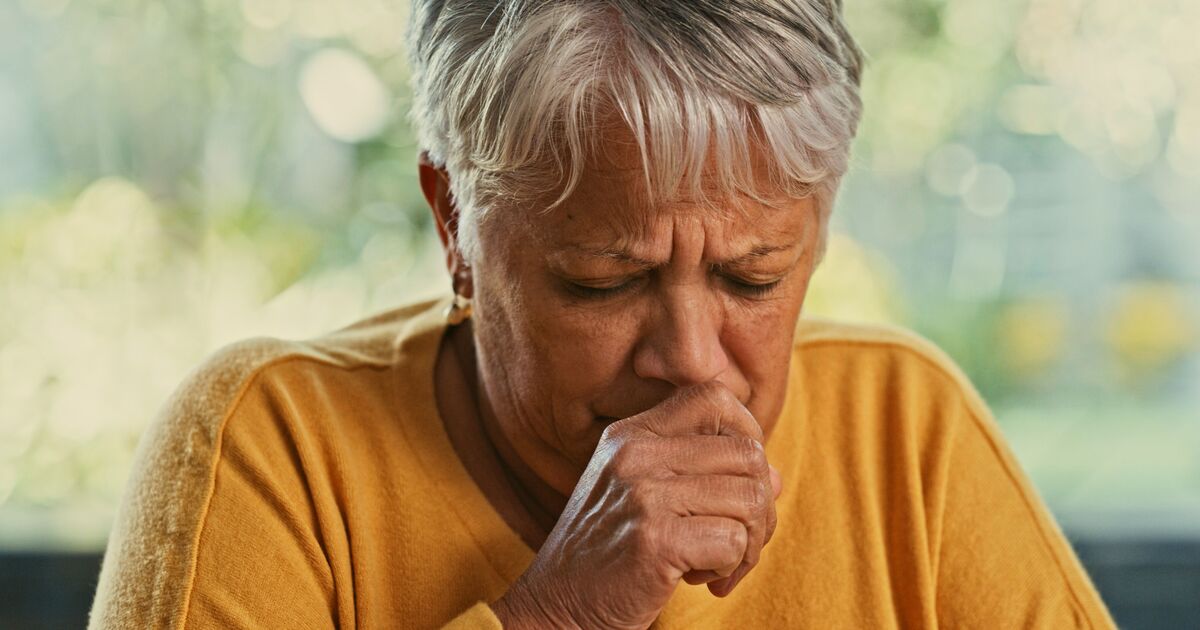
However, one tell tale sign of Covid, according to the NHS, is a new or continuous cough. This could man three or more “coughing episodes” within 24 hours.
Other signs to look for include:
- A high temperature or shivering (chills) – a high temperature means you feel hot to touch on your chest or back (you do not need to measure your temperature)
- A loss or change to your sense of smell or taste
- Shortness of breath
- Feeling tired or exhausted
- An aching body
- A headache
- A sore throat
- A blocked or runny nose
- Loss of appetite
- Diarrhoea
- Feeling sick or being sick.
If you experience Covid symptoms, the NHS advises staying home until you feel better. But if you test positive for Covid, the NHS recommends staying home and avoiding contact with others for five days – although this is no longer mandatory.
Find out about the symptoms you need to watch out for and get health advice with our free health newsletter from the Daily Express
A more detailed breakdown of the latest Covid figures shows that the weekly average positivity rate for PCR tests in hospitals in England was 6.6% in the week up to June 15, compared with 6.2% in the previous week.
The overall weekly hospital admission rate for COVID-19 slightly increased to 1.53 per 100,000 compared with 1.44 per 100,000 in the previous week. However, the the overall ICU or HDU rate for COVID-19 remained stable at 0.04 per 100,000 compared with 0.04 per 100,000 in the previous week.