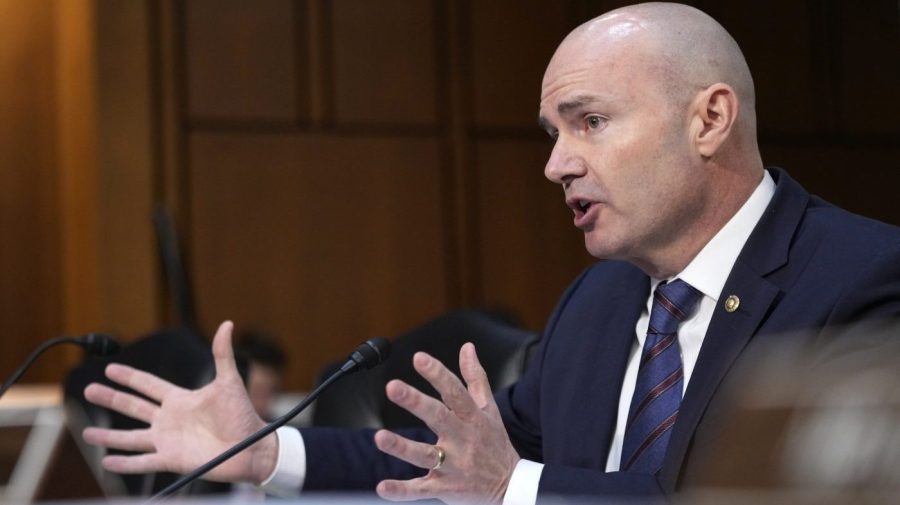


The 940-page bill Senate Republican leaders unveiled Friday night to implement President Trump’s agenda includes a section pushed by Sen. Mike Lee (R-Utah) to sell public lands, although a smaller amount of land than was in a provision rejected earlier in the week by Parliamentarian Elizabeth MacDonough.
The updated language in the bill directs the secretary of the Interior Department to select for sale not less than 0.25 percent and not more than 0.50 percent of the Bureau of Land Management’s land with certain restrictions.
The Interior secretary would be directed to “dispose” of land that has the “highest value,” is nominated for sale by state and local governments, is adjacent to existing developed areas, has access to existing infrastructure and is suitable for residential housing.
Any land sold by the Interior Department must be used solely for the development of housing or to build infrastructure to support housing.
Federally protected land including national monuments, national recreation areas, components of national wilderness and components of national wild and scenic rivers would be excluded from sale.
Interior would not be allowed to sell public lands located more than five miles from the border of a population center of at least 1,000 people.
The revised language reduces the amount of land the Interior Department would be allowed to sell compared to legislation Lee unveiled earlier this month.
The earlier text directed the Interior secretary to select between 0.5 percent and 0.75 percent of Bureau of Land Management land for sale.
The Senate parliamentarian on Monday ruled that the original language mandating the sale of millions of acres of public land from both the Bureau of Land Management and the U.S. Forest Service violated the Byrd Rule.
The Byrd Rule determines what legislation is eligible to be protected from a filibuster and allowed to pass the Senate with a simple-majority vote. Provisions must be primarily budgetary in nature to comply with the Byrd Rule.
The provisions would apply to public lands in Alaska, Arizona, California, Colorado, Idaho, Nevada, New Mexico, Oregon, Utah, Washington and Wyoming.
The issue is controversial, even among Republicans.
Five House Republicans this week said they would vote against the bill if the provision remained in it when it came back to the lower chamber.
Senate Republicans are racing to pass the Trump agenda megabill this weekend despite a number of uncertainties. Leadership had hoped to hold a vote Saturday but the timing remains fluid.