
Sacramento could lose more than a quarter of its population by 2055 , according to a dire new report.
Rising flood risk, soaring insurance costs, and worsening air quality will make the city increasingly unlivable.
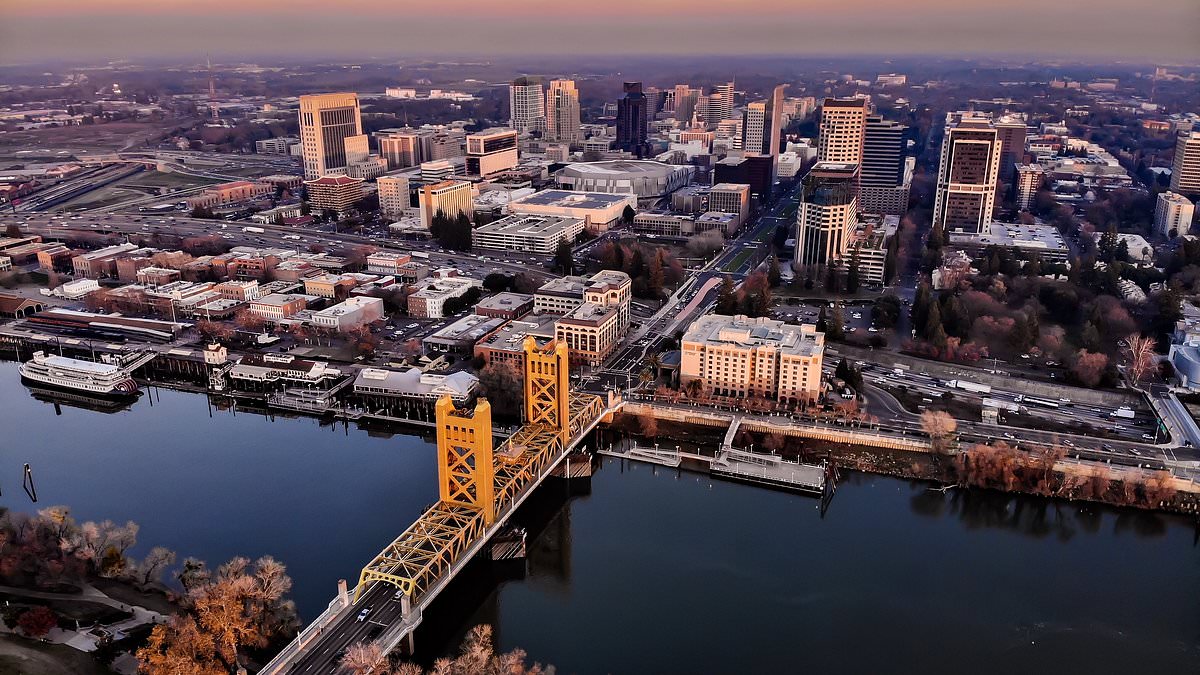
Sacramento, the capital of California, with a metropolitan population of around 2.4 million, is particularly at risk due to its location where the Sacramento and American Rivers meet.
According to researchers from the First Street Foundation, increasing temperatures are causing mountain snow to melt quicker, which in turn increases river flows and leads to more frequent heavy rainfall events.
The foundation’s recent National Risk Assessment forecasts that by 2055, 28 percent of Sacramento County’s population may relocate, a situation it describes as ‘mass abandonment.’
In addition to the growing flood threat, the report cites skyrocketing home insurance premiums, poor air quality from wildfire smoke, and demographic shifts as key drivers of the exodus.
And Sacramento isn’t alone. First Street also predicts Fresno could lose half its population by mid-century — the sharpest projected decline of any major U.S. city.
As California faces more intense storms and higher river flows, experts say once-livable communities may become untenable for everyday homeowners.

The area surrounding the Sacramento River is at risk of flooding
The Sacramento-San Joaquin River Delta lowlands will become less and less able to absorb such deluges and dangerous flooding will become more likely, researchers predict.
In December a report from the US Chamber of Commerce named Sacramento as at highly exception flood risk in need of mitigation.
‘The Army Corps of Engineers and the [Sacramento River] levees have historically done quite a good job of providing protection,’ UCLA climate scientist Daniel Swain told the San Francisco Chronicle.
‘That’s probably thanks to good luck and probably thanks to good engineering, but that good luck probably won’t hold forever.’
Swain warned that mass development of low-lying areas around the city have spread the risk of flooding further.
Developing the area has made California’s Central Valley, but Sacramento in particular, one of the largest populations in the US highly vulnerable to flood risk.
First Street found that risk of flooding was the biggest driver of migration in the US compared to other perils such as poor air quality, wildfires and hurricanes.
One of the biggest economic risks of living in an area prone to flooding is that most home insurance providers will not cover flooding.

Sacramento, which sits at the confluence of the Sacramento River and American River, is a high flood risk

Climate scientist Jesse Keenan says the economic consequences of flooding will force people to move

Many insurance providers will not cover flooding in their policies

Mass development of low-lying areas around the city have spread the risk of flooding further
Instead the Federal Emergency Management Agency (FEMA) provides a flood insurance program.
First Street analysis found that it will cost 137 percent more to insure homes in Sacramento by 2055.
Such costs will drive businesses and residents away to more climate-resilient areas.
‘Some people will no doubt be displaced by climate events,’ Jesse Keenan, director of the Center on Climate Change and Urbanism at Tulane University, told the Chronicle.
‘But many more will be displaced, or at least steered by, the hand of the market,’ he explained.
Other areas of California are also facing an insurance crisis, with major providers such as State Farm hiking prices after threatening to pull out of the state entirely.
Many Los Angeles residents that lost their homes in the devastating wildfires earlier this year found that their insurance policies will only cover a fraction of their rebuilding costs.


