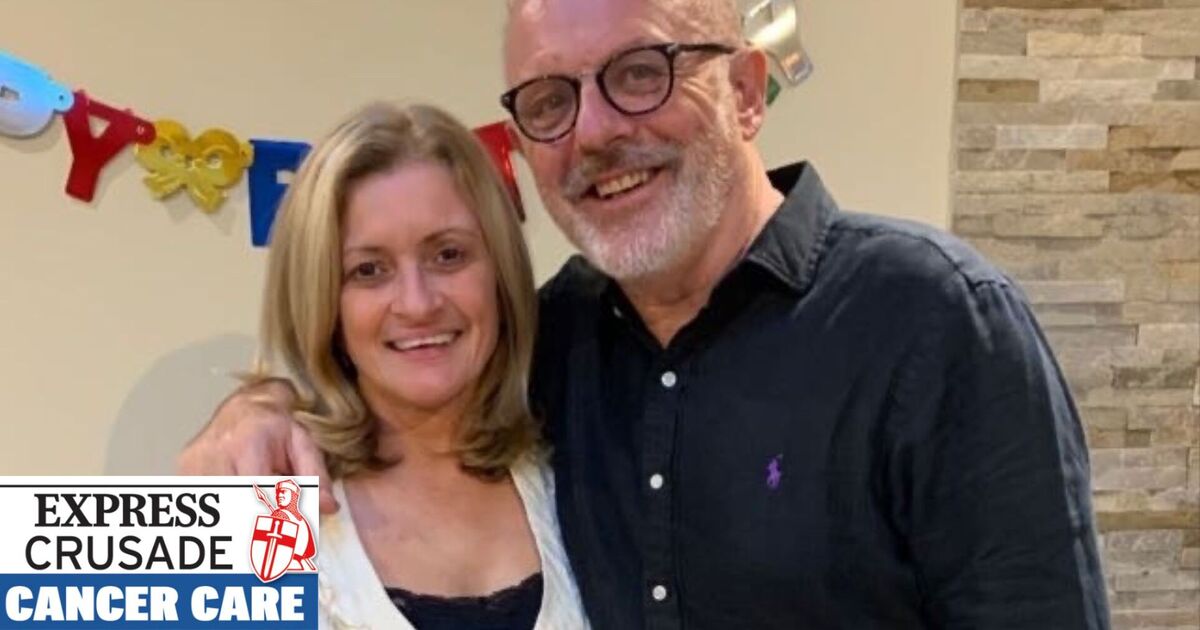

Nobody asked us how we were or how we were coping with the sudden and shocking diagnosis of myeloma. My husband, Rich, was diagnosed with myeloma in April 2022, after four years of being checked regularly via blood tests. At this point, we had been married for 10 years, having known each other for seven years before this. We were both parents and grandparents and had a hectic and happy family and social life. Rich was an action man—walking, cycling, swimming, gardening—rarely sat still. When Rich woke up one morning and could not get out of bed, I called for an ambulance.
We received the diagnosis of myeloma in the A&E department of our local hospital. While we had known this was always a possibility, the shock hit us like a freight train. We sat, stunned, neither of us knowing what to say. There didn’t seem to be any adequate words. Overnight, I became Rich’s carer. His spine had multiple tumours, so it was too painful for him to walk. Previously shared domestic tasks became my sole responsibility. I was a cook, cleaner, gardener, grandparent carer, and shopper, but most importantly, Rich’s carer, with all that this role entails.
I went into a “firefighting mode” of activity, ploughing through each day to ensure all the tasks got done. I existed from hour to hour, not wanting to let anybody down, and proving I could cope.
Actually, I wasn’t coping very well. My sleep was erratic, and anxiety punctuated a part of every day. Our family and friends were amazing; so supportive and always there when needed.
But nobody from the medical teams or the hospital asked us how we were managing, whether we were okay, or whether we needed any external support. Rich’s physical needs were superbly supported, but our emotional needs were never questioned.
After a particularly difficult period, Rich undertook some counselling, which had minimal impact because the counsellor did not understand the diagnosis and its ramifications.
We are all aware of how stretched our NHS is, and I cannot fault the treatment Rich received: it was timely, managed with dignity, and the best that was on offer at the time.
What was missing in the initial treatment interview was the question “How are you both doing?”
Recognition that this was a life-changing event for both of us would have enabled us to feel understood. Empathy for others’ situations is incredibly powerful and affirming.
To be able to say out loud “actually this is really tough” doesn’t change the situation, but it helps us accept the gravity of it.
Rich passed away in March 2023. He was 66 years old. I have spent the last two years coming to terms with the loss of the man who shared my life and who made it exciting and never predictable.
I am okay and grateful that family and friends still ask me that question. I know they are prepared to hear about it if I’m not.
Everyone must receive person-centred care and treatment, which focuses on the individual’s needs. This ensures that people’s preferences, needs, and values guide clinical decisions, thus providing care that is respectful of them.
I’d suggest that person-centred care also requires treating patients as people, and this should guide the type of interaction that takes place with patients and their carers.
Such an approach can have the effect of being personalised and empowering. Our medical team were good at giving us information – what was going to happen with forthcoming treatments, appointments and side effects of medication, etc, but nobody asked us how we were or how we were coping with the sudden and shocking diagnosis of myeloma.
Wouldn’t it be wonderful if all cancer patients, and their carers, were seen as people first and patients second? This is why, along with blood cancer charity DKMS, I am backing the Daily Express Cancer Care campaign.
I worked in a mental health setting for many years, and I know the difference good emotional support can make to a person’s life.
In cancer care, access to mental health support is patchy, and the quality is even more varied. This could have a significant impact with a greater emphasis on supporting the whole individual in cancer treatment.