Share this @internewscast.com
Key Points
  • The educational achievements of Indigenous students have begun to catch up with those of non-Indigenous peers, although disparities still persist. 
  • Experts suggest that incorporating education initiatives rooted in First Nations traditions may enhance learning outcomes for students across the board. 
  • One Year 12 graduate credits reaching her educational goals to the support from teachers and a strong cultural connection fostered through her schooling.  
Prior to the arrival of Europeans, Indigenous cultures featured sophisticated education systems, intrinsically linked with the environment, knowledge, and societal roles. These practices still offer meaningful insights.
However, disparities in education outcomes remain. Indigenous students frequently experience lower levels of school attendance, literacy, numeracy, and representation in higher education due to historical discrimination and ongoing challenges such as socioeconomic stress and a lack of culturally relevant education.
Sharon Davis, a member of the Bardi and Kija communities and CEO of the National Aboriginal and Torres Strait Islander Education Corporation (NATSIEC), emphasizes the importance of acknowledging Indigenous students’ history of discrimination when addressing educational disparities. 
“From the outset, laws and policies have deliberately excluded Aboriginal children from educational opportunities,”

“Policies like the early 20th-century exclusion on demand allowed non-Indigenous families to have Aboriginal children removed from schools.” 
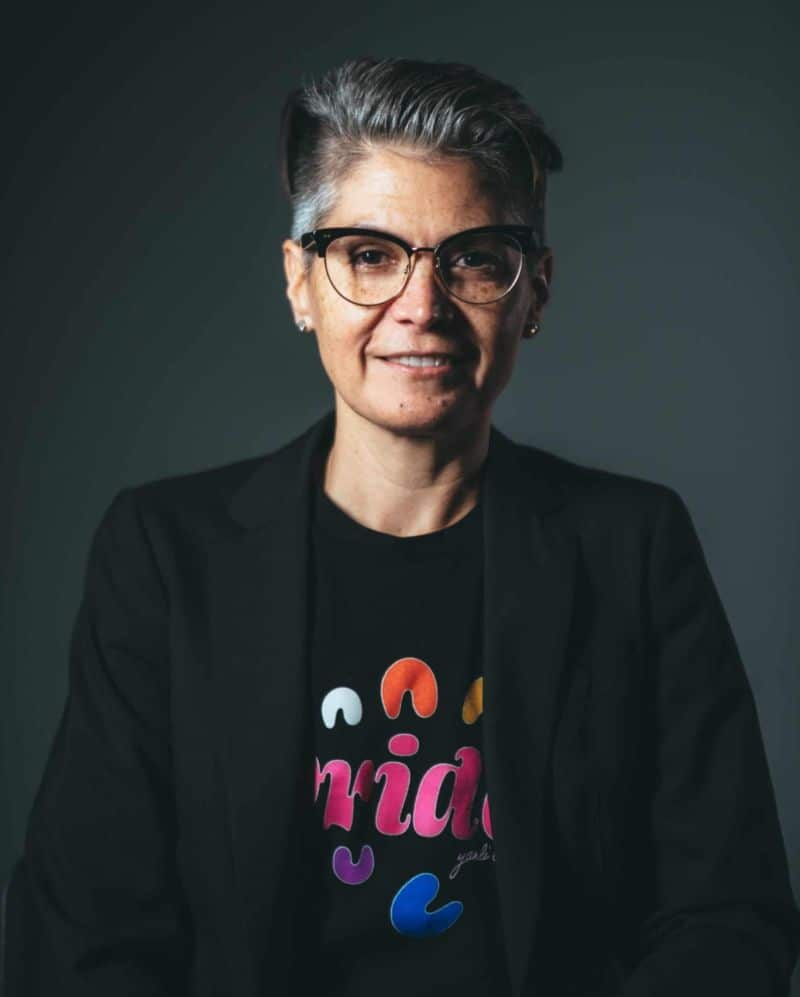
Sharon Davis.jpeg

Sharon Davis, CEO of NATSIEC Source: Supplied / Sharon Davis

In 2008, the Australian government issued a formal apology to Indigenous Australians for the mistreatment they endured, particularly the forced removal of children from their families, communities, and Country.

As part of this apology, a pledge was made to close the gap between Indigenous and non-Indigenous Australians in various areas of life, including education.
A key goal of what is now the National Agreement on Closing the Gap is reforming the way governments work with First Nations people and communities to overcome inequality, such as committing to building the community-controlled sector. 
“We know that Aboriginal community-controlled organisations are the most sustainable way to address the needs of communities,” Davis says. 

“And where our people lead education, we see better engagement, better outcomes, and stronger pathways for our young people.” 

Could cultural education be the way forward? 

Dr Anthony McKnight is an Awabakal, Gameroi and Yuin man, working at the University of Wollongong’s Woolyungah Indigenous Centre.  
He has spent many years teaching and researching how to embed Aboriginal pedagogy in curriculum, policy, and practice.
Dr McKnight believes we need to reframe what closing the gap means in Indigenous education. 
“For me, if you got a spectrum there, you’ve got Aboriginal education and Western education and then the Aboriginal student in between.” 
He says closing the gap initiatives typically aim to bring the student closer to the Western education end of the spectrum. 
“But it leaves a massive gap back to their own education system.” 

“The focus should be on integrating Indigenous children’s heritage with broader educational knowledge, preparing them to thrive in both realms.” 
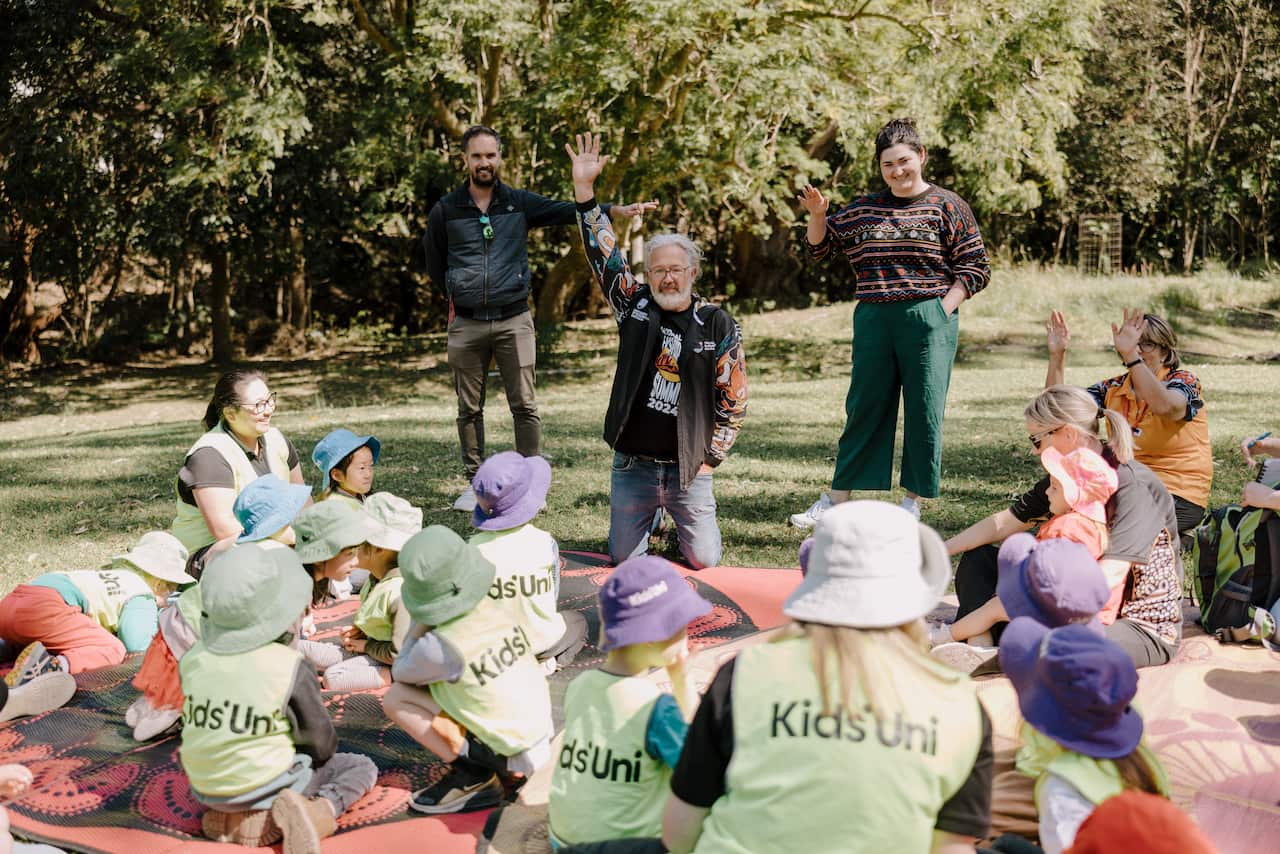
UOW INDIGENOUS LITERACY DAY

Dr. McKnight, who has dedicated years to integrating Aboriginal teaching methods into curricula, policies, and educational practices, adds insight into these efforts. Source: Supplied / MichaelDavidGray

Dr McKnight believes it’s important to popularise education practices that bring the Western education and Indigenous knowledge systems together for children to learn about the land they live on and how to care for it. 

“Trying to look after not just Aboriginal children, but non-Aboriginal children in taking care of this place… It’s the entity that provides us with everything we need and we all walk the same land, drink the same water, breathe the same air.” 

Equality of education outcomes—a roadmap in progress  

“For example, the retention rates of Indigenous students in secondary school currently sits at 59 per cent compared to non-Indigenous students which is around 85 per cent,” Davis says. 

“And when we see gaps in outcomes, that’s more a reflection of how education has failed to serve Aboriginal and Torres Strait Islander students and young people, learners, not the other way around.” 
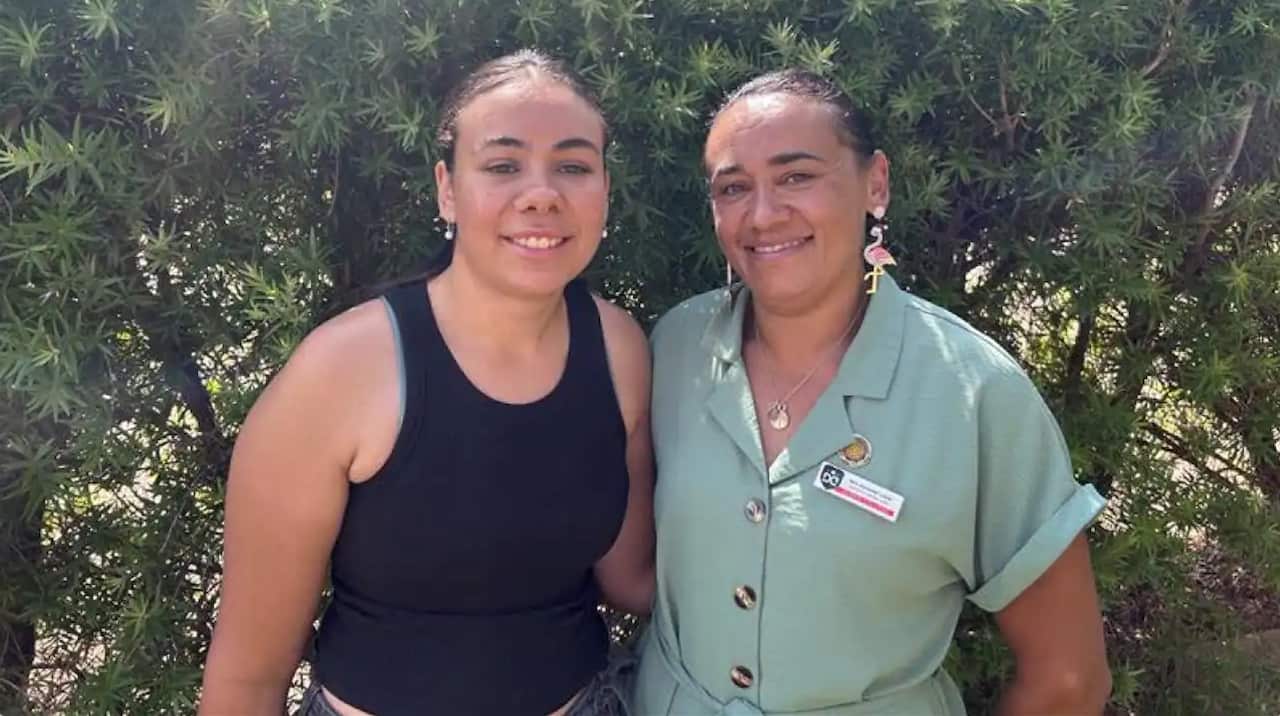
Retori Lane.png

Retori Lane (L) with her mother, Jenadel Lane. Source: Supplied / Retori Lane

Last year, Gamilaroi young woman Retori Lane celebrated her HSC completion at Dubbo Senior College.  

She is part of the largest-ever cohort of Indigenous students to complete Year 12 in New South Wales.
Ms Lane says a supportive learning environment made all the difference.
Her support network included school staff, Indigenous teachers and workers from the National Aboriginal Sports Corporation Australia (NASCA), an organisation running programs across NSW and the Northern Territory helping Indigenous students connect to culture and succeed in school.
“I definitely had a lot of support from especially all the staff,” she says. “And also the NASCA workers. They’d come, they’d take you to lessons, they’d help you all the way through. And then the teachers were just there to help with anything.”
Retori’s mother, Jenadel, is Deputy Principal at Dubbo Senior College where her daughter graduated, and the first in her family to go to university.  
She believes tailored support and a culturally sensitive environment empowers all students to get the best out of their education. 
“I’m passionate about getting Aboriginal kids that complete Year 12, because that’s my little bit that I can contribute to my mob, that’s why I became a teacher.  
“And then hopefully that’ll open up the floodgates for them for life after school.” 
Retori will study a Bachelor of Arts majoring in Indigenous studies.

“Trying to get myself in a position to educate other Indigenous kids that have lost it through generations. So, hopefully help be part of the process to revive the culture, bring it back to life.”  

Subscribe to or follow the Australia Explained podcast for more valuable information and tips about settling into your new life in Australia.   

Do you have any questions or topic ideas? Send us an email to australiaexplained@sbs.com.au.

Share this @internewscast.com
You May Also Like
Former NRL sideline reporter Tiffany Salmond is pictured while she was caught up in the mass shooting at Bondi

Bondi Massacre Survivor Advocates for Nationwide Justice Reform Inspired by New Zealand’s Approach

Former NRL media figure Tiffany Salmond is urging Australians to adopt a…

NSW Premier Seeks Royal Commission and Proposes Ban on Controversial Chant

NSW Premier Chris Minns has announced his government will introduce new laws…

Australia Reinforces Gun Safety: Albanese Launches Buyback Program Amid NSW’s New Restrictions

Prime Minister Anthony Albanese has announced that the government will introduce legislation…
Adelaide prison security breach

Security Alert: Breach Uncovered at Two Adelaide Prisons

An investigation is under way into a suspected security breach at two…

Communities Unite in Collective Grief After Tragic Bondi Terror Attack: A Story of Support and Resilience

Crowds continue to flock to a floral tribute at Sydney’s Bondi Beach,…
Andy and Dawn Cook built a life in Australia, only to have it threatened by a shocking police check.

From Dream to Nightmare: Andy’s Fight Against False Accusations in Australia

Exclusive: Dawn Cook once believed that the ordeal she and her husband…
Rapper Nicki Minaj has made a surprise appearance at a gathering of conservatives in Arizona.

Nicki Minaj Commends US President, Surprising Conservative Circles

Rapper Nicki Minaj made an unexpected visit to a conservative event in…

Tragic Mass Shooting in South Africa Claims Nine Lives, Leaves 10 Injured

Nine people were killed when gunmen opened fire at a bar outside…
A serious seatbelt fault could cause a passenger in the rear seats to become unrestrained in a crash in the Suzuki Fronx.

Urgent Recall Alert: Dangerous Safety Flaw Discovered in Popular Car Model Currently in Use

Australia’s car safety rating agency has warned passengers not to travel in…

U.S. Coast Guard Engages in High-Stakes Pursuit of Oil Tanker Near Venezuela Amid Heightened Tensions

The US Coast Guard is pursuing an oil tanker in international waters…
What's inside the Epstein files released by the Justice Department

Unveiled: Key Insights from the Justice Department’s Release of Epstein Files

The Department of Justice has announced that more files will be released…
Bondi shooting terror attack memorial

Bondi Beach to Transform Tributes into Lasting Memorial with New Permanent Vigil

Since the horror’s of last Sunday’s tragedy unfolded in Bondi, the community…