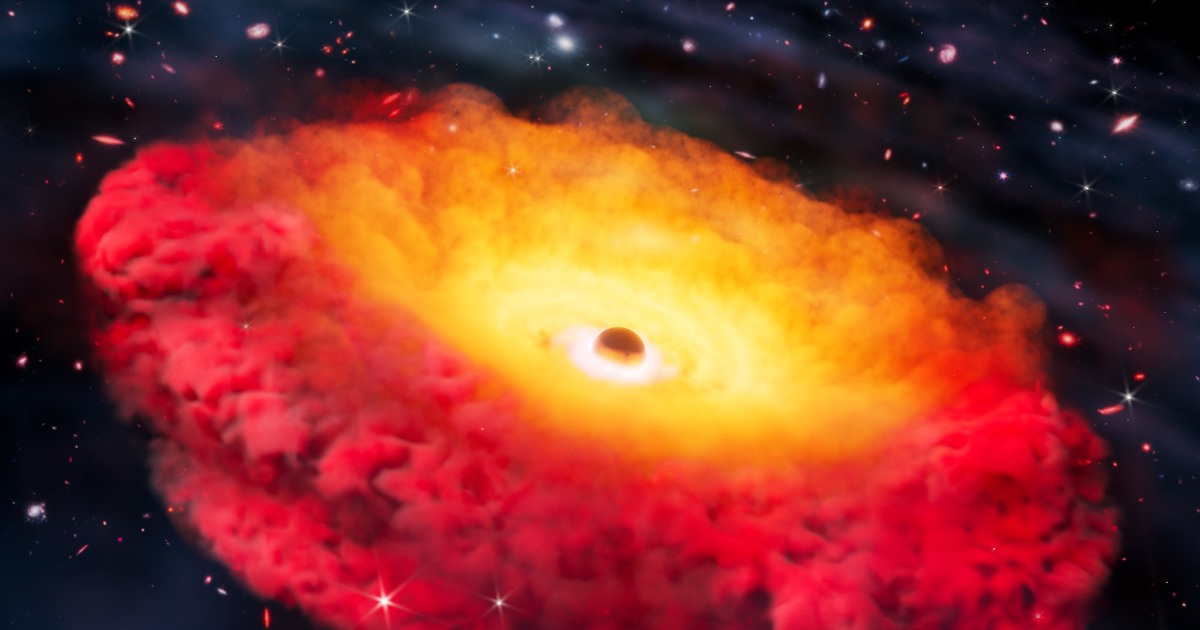

Astronomers use spectroscopy to detect distinguishing features in stars, galaxies, and other celestial phenomena. Black holes consume surrounding dust and materials, compressing and heating them as they spiral into the black hole. This process is visible through spectroscopy, explained Steven Finkelstein, a professor of astronomy at the University of Texas at Austin and a co-author of the study.
“We search for the indicators of rapidly moving gas,” said Finkelstein. “We’re discussing speeds of 1,000, 2,000, or even 3,000 kilometers per second. Nothing else in the universe moves with such velocity, indicating it’s gas near a black hole.”
Scientists have detected potential black hole candidates that are farther away, but this is the earliest confirmed example identified via spectroscopy, he noted.
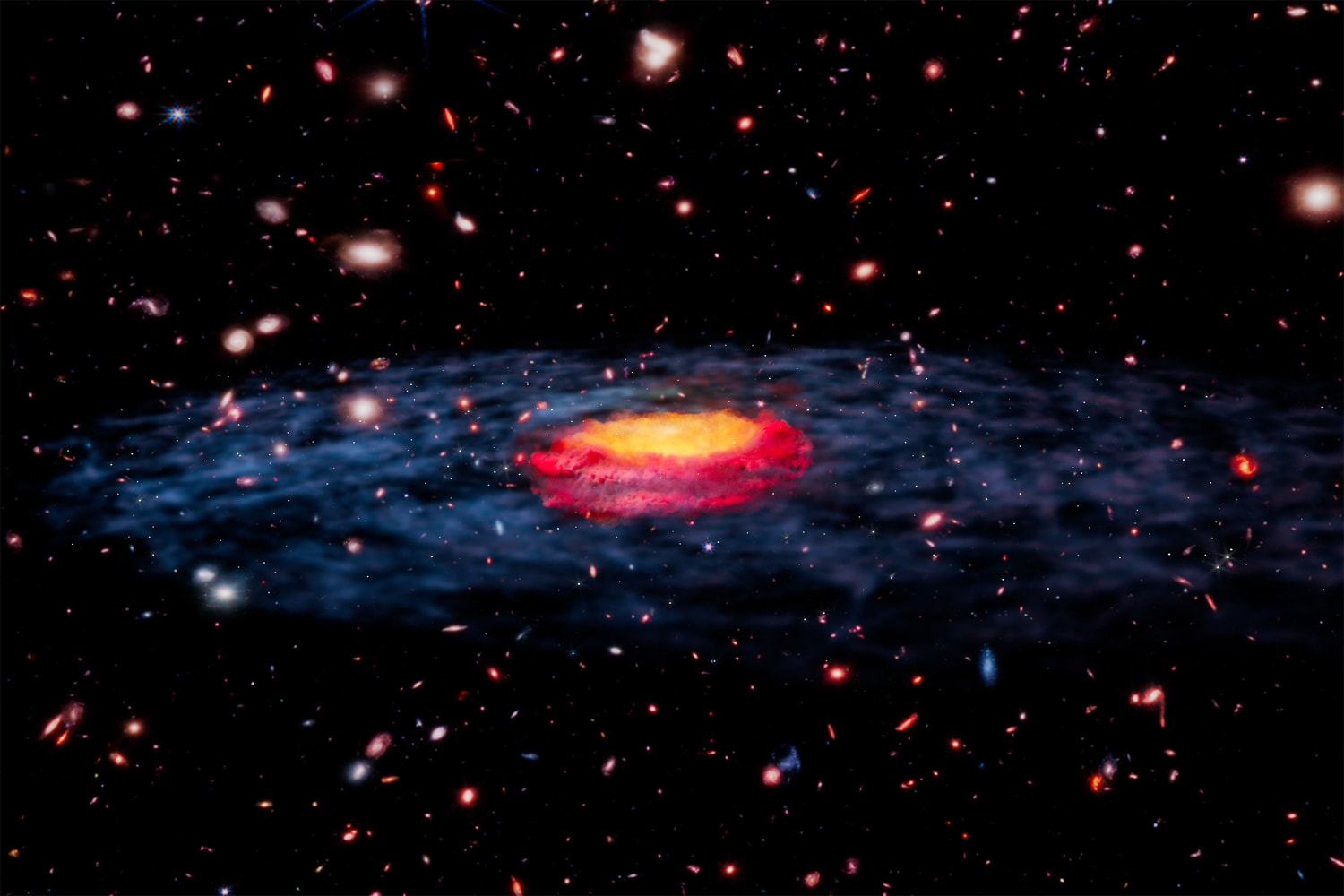
The galaxy hosting the newly confirmed black hole was itself a captivating find, researchers mentioned. It belongs to a category of galaxies called “Little Red Dots,” known for emitting red wavelengths and being unusually compact yet bright, according to Taylor.
While information on Little Red Dots is limited, their first observations were made by the James Webb Space Telescope. Despite some being found relatively close, Finkelstein suggested they were likely more prevalent in the universe’s early stages.
Investigating the CAPERS-LRD-z9 galaxy could provide insights into the origin of Little Red Dots and the factors contributing to their unique red color, according to researchers. It might also shed light on how such an ancient black hole grew so large in the early universe.
In follow-up studies, the researchers are hoping to find other black holes in the distant universe that are just as old — if not older.
“We only ever survey very tiny areas of the sky with the James Webb Space Telescope,” Finkelstein said. “So, if we find one thing, there’s got to be a lot more out there.”


