Share this @internewscast.com
This story contains reference to domestic violence
Diana, a single mother residing in Victoria, faced housing difficulties after leaving the family farm with her two children.
During the most challenging period, Diana lived in her car with her young son, parked outside a fast-food restaurant.
“My son was in year 12, and it was just awful. Unbelievable. It’s really hard to even get the words out about how we felt,” expressed Diana, 53.

“It was the worst time of our lives. It was absolutely devastating and it caused us so much stress.”
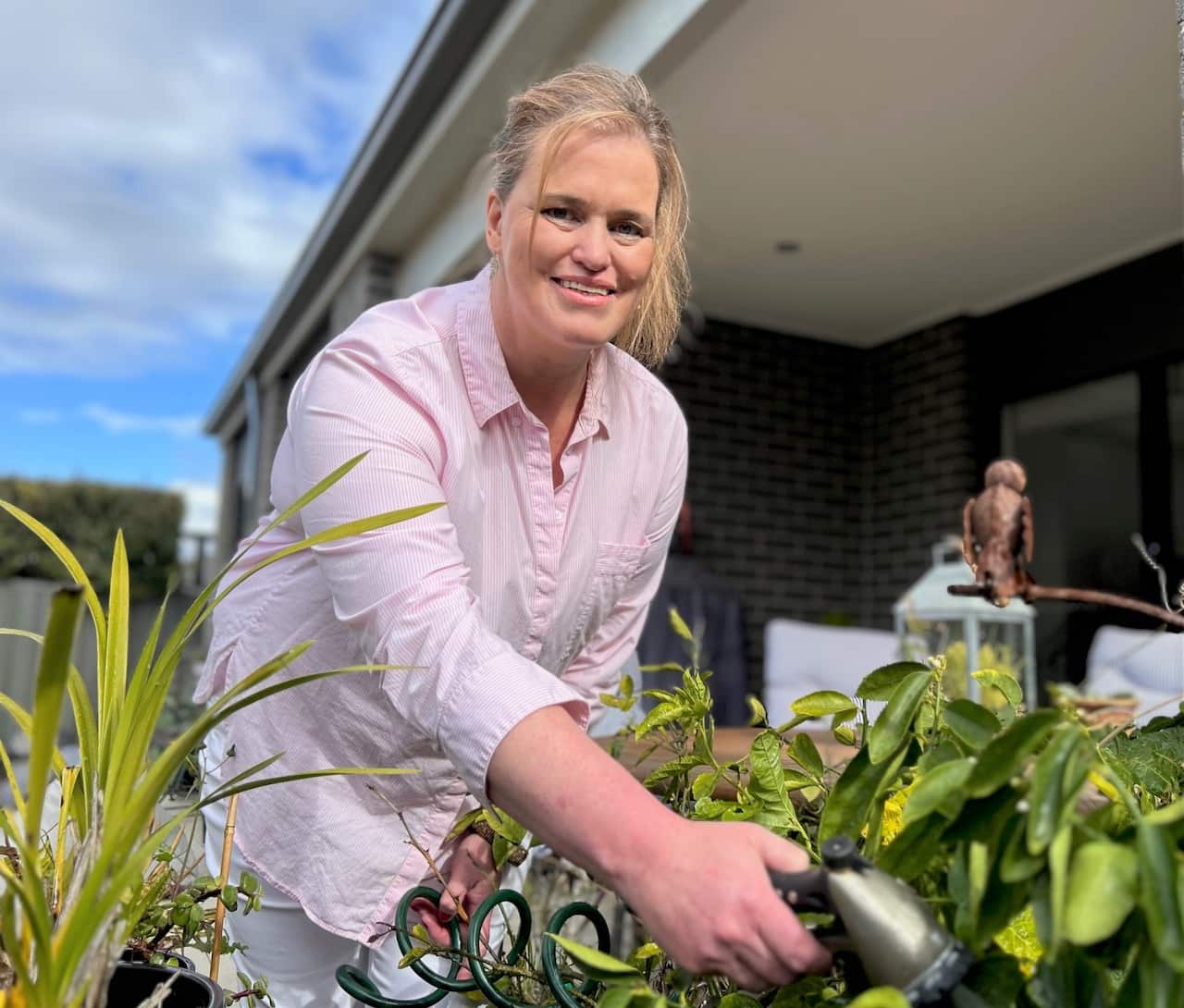
A woman wearing a pink shirt leans into a garden holding a hose.

Diana grew up on a farm and enjoys growing her own food. Source: SBS / Scott Cardwell

Like many women facing insecure housing in Australia, Diana is a family and domestic violence survivor. Bitter memories linger of those terrible years, when lack of housing wasn’t her only hardship.

“I was also battling cancer at that stage. It had affected my stomach, and I was on a feeding tube practically 24/7,” she said.
“Having feeds go through to my stomach while living in the car, I had to hook it up on makeshift power outlet. It was so hard.

“I don’t even know how we got through that. It is something that no-one should ever have to experience.”

A woman with light-coloured short cropped hair smiling for the camera

Kate Colvin, CEO of Homelessness Australia, stated that 45 per cent of women and girls in Australia seeking homelessness support have encountered domestic and family violence. Credit: SBS / Sandra Fulloon

Requests for housing support increasing

Recent research by Homelessness Australia reveals an alarming rise in the number of already homeless women and girls seeking assistance.
“Our analysis found that women and girls coming to homeless services who have already lost their home has increased by 20 per cent in the past three years,” CEO Kate Colvin said.
Requests for housing support increased from 24,517 in May 2022 to 29,449 in March this year.

“Around 45 per cent are fleeing family and domestic violence. Others are squeezed out into homelessness by the rental crisis,” said Colvin.

“The sad reality is that when women come to a homelessness service and can’t get the help they need, if they’re fleeing family violence, often they return to that situation. It feels safer than being on the street,” she said.
Diana understands the housing dilemma all too well. The New Zealand-born former farmer has spent years in and out of temporary accommodation.
“Initially, I had no income at all, so finding a place to rent was impossible,” she said.

“Even when we managed to secure a property, I suffered from PTSD and couldn’t work. My kids contributed what they could, but it was far from enough to meet the rent.”
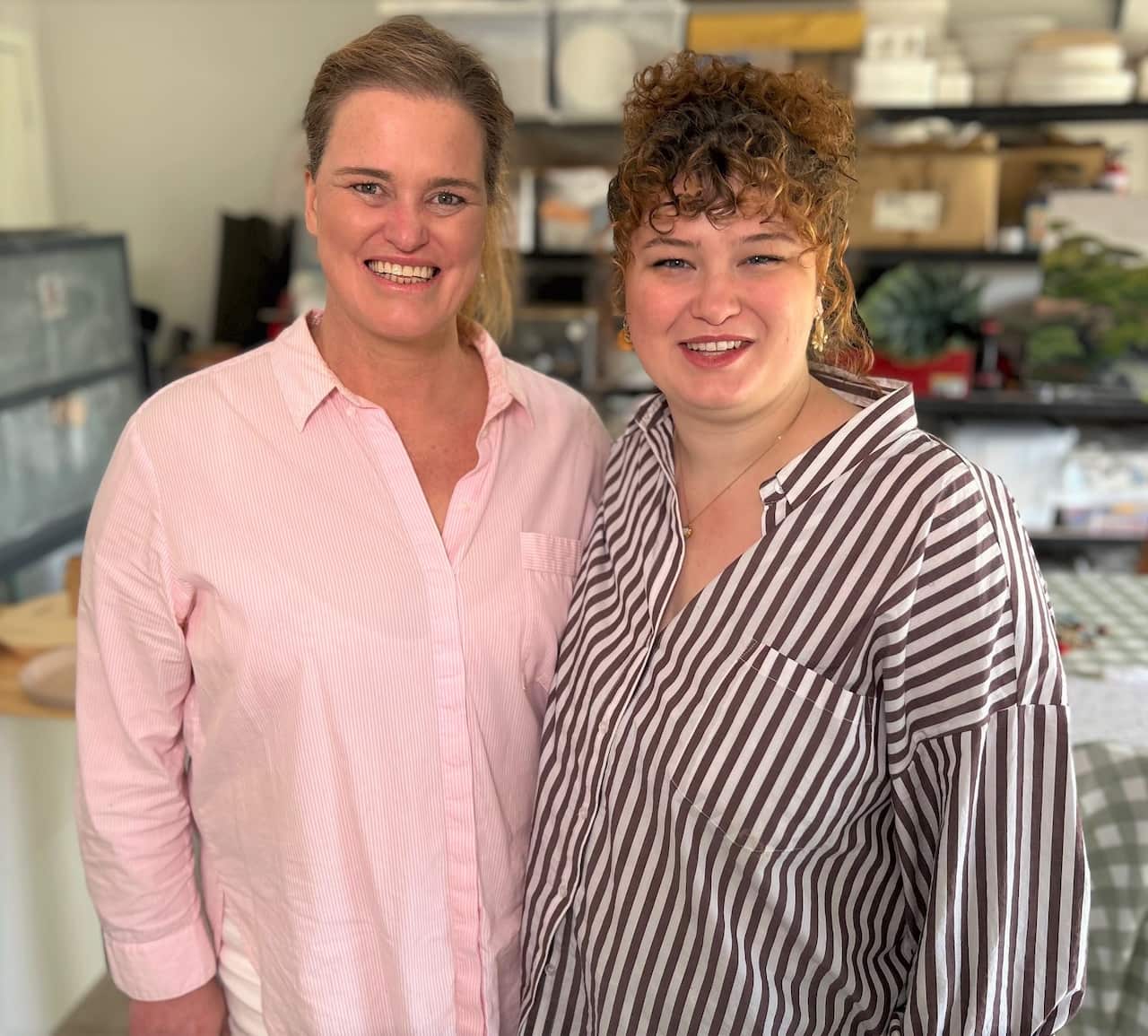
A woman with brown hair wearing a pink shirt stands next to a younger woman wearing a striped shirt.

Diana lives in a rented home in Victoria with her daughter Emma, 30. Source: SBS / Scott Cardwell

“It is devastating and you feel so small, like you are not worthy of anything.

“Finally, St Vincent de Paul got us into a safe house in Melbourne and we stayed there for a year.”
More than 400,000 older women in Australia are thought to be at risk of homelessness.

The federal government’s Housing Australia Future Fund includes dedicated funding for 4,000 homes for older women at risk of homelessness.

However, Homelessness Australia says more is needed.

“[Homelessness] just keeps getting worse and worse. Rents are increasing relentlessly. We also have record low vacancy rates,” Colvin said.

A woman with long dark hair and wearing a black sleeveless top sits behind a desk at a laptop. She is smiling for the camera

Global Sisters founder Mandy Richards. Source: SBS / SBS Sandra Fulloon

New housing initiative

Global Sisters is a not-for-profit trialling a new initiative that aims to get groups of at-risk women into their own homes.
“Called Little Green Houses, the scheme provides affordable housing ownership to Australian women who are on low incomes and those facing housing insecurity,” said founder Mandy Richards.
A $3 million pilot project aims to build up to eight small, energy-efficient houses in regional NSW by Christmas. Pilot projects in other states are due to follow, with ownership backed by low-cost loans.
“These homes are for women who are completely locked out of the housing market,” Richards said.

“Many cannot access a mortgage, so they do not have a hope in hell of buying a house in a land package.”
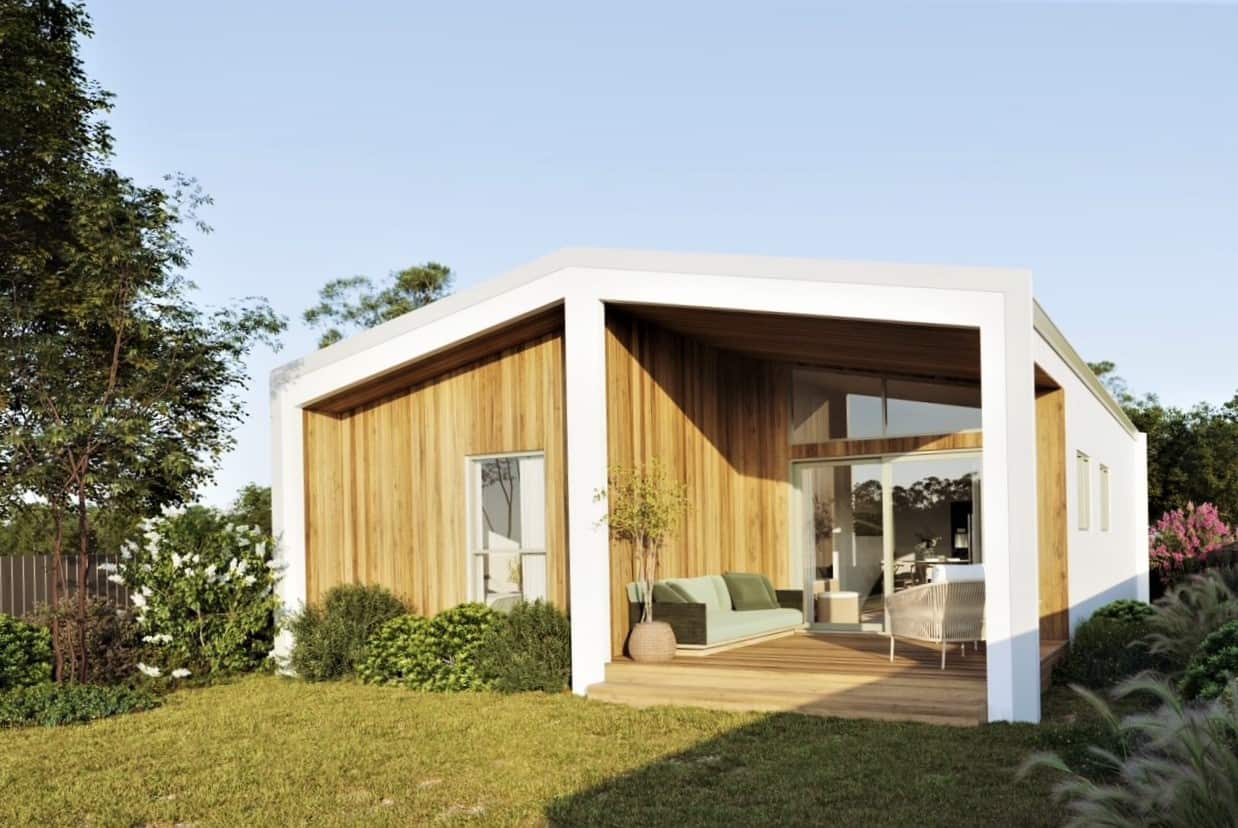
An artists impression of a timber tiny house with an open air deck in a green garden.

One of the Little Green Houses designed for the pilot project. Source: Supplied / Wild Modular / Global Sisters

The project was developed in partnership with pre-fabricated housing company Wild Modular and the Regional Australia Bank, and has support from a major philanthropic foundation, and the Global Cities Foundation.

The first phase of the project is focused on supporting solo mums and their children.

“By enabling women to attain economic security, we can minimize homelessness for certain women and children, preventing them from living in cars and couch surfing,” Richards noted.
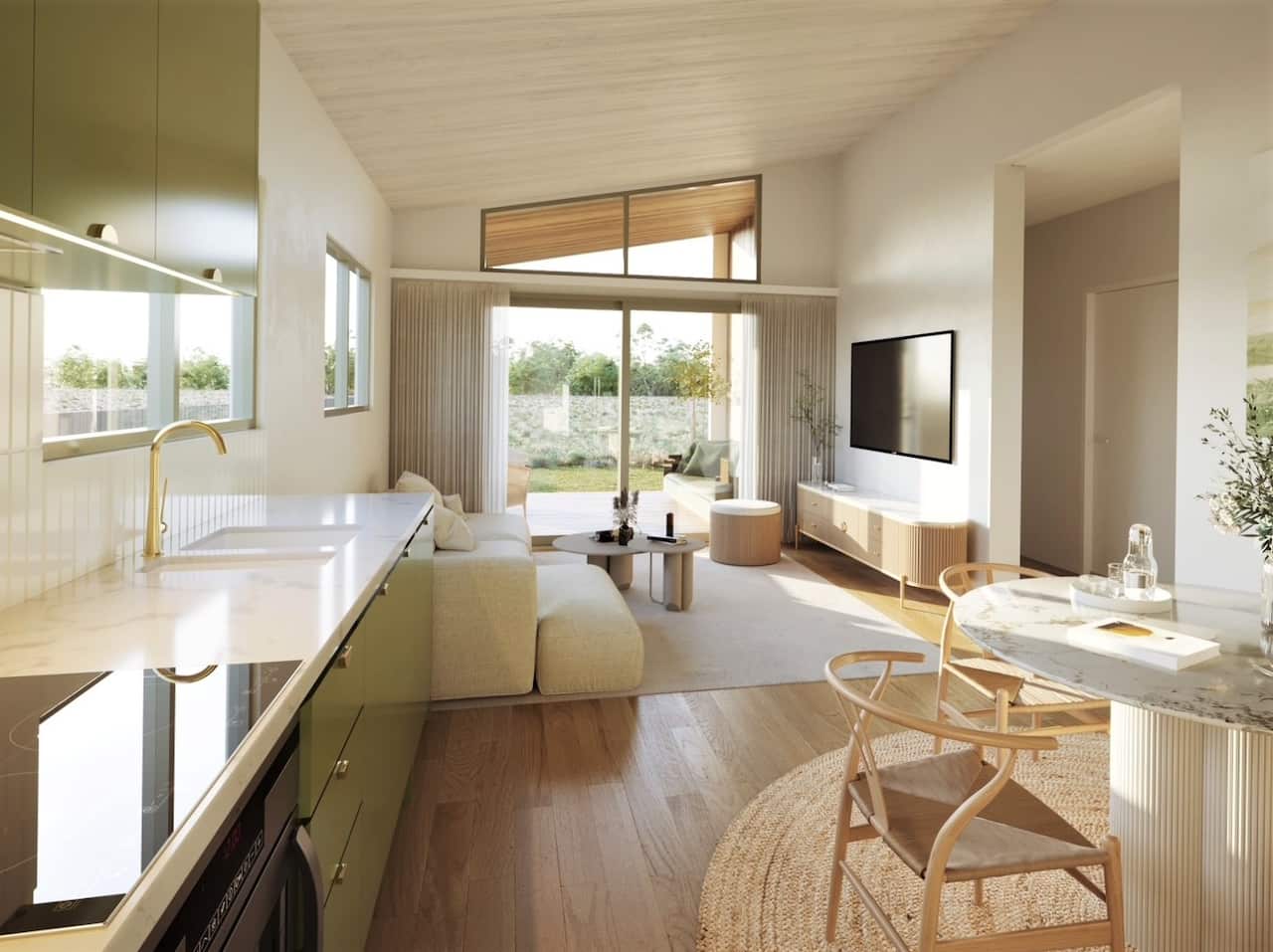
A tiny house interior with timber detail and large glass entry door and windows.

The proposed interior of a Little Green House, designed for the pilot project. Source: Supplied / Wild Modular / Global Sisters

The Little Green Houses are modular and can be built quickly. Each house and land package is valued at around $350,000.

“They are really beautiful and highly energy efficient,” Richards said. “And we aim to ensure that repayments stay below 35 per cent of a low income such as social security payments.”
Diana and her daughter Emma, 30, were forced to move again last year and now pay $535 per week for their four-bedroom home.

They are among candidates selected for a Little Green House.

‘Huge savings on bills’

“It would be a dream come true to own our home, and pay the mortgage back below the rate we are paying in rent,” she said.
“The houses are energy efficient, which means huge savings on bills.

“At the moment, electricity, gas and water keeps going up as everyone knows and it’s extremely hard to make ends meet.”
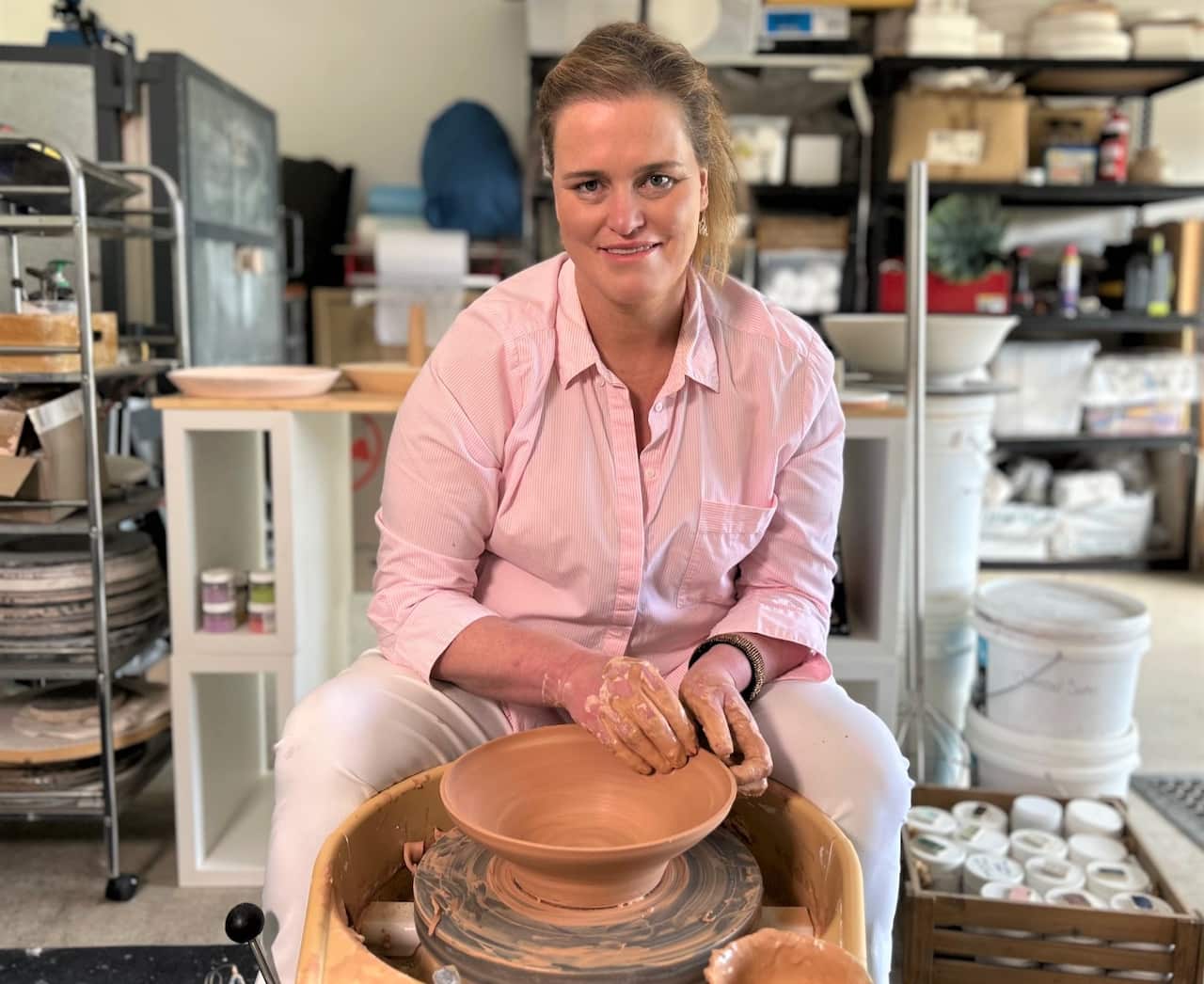
A woman wearing a pink shirt sits at a pottery wheel moulding a pot.

Diana runs a ceramics business from home, which supplements her income. Source: SBS / Scott Cardwell

Diana now works part-time with Global Sisters and runs a small ceramics business from her rented home in regional Victoria.

“I make around $15,000 each year from selling my ceramics and I love it, but it’s not enough to pay bills and save for a mortgage.
“I have no savings, no super. All we earn goes on rent and bills. So, to buy a home [on the open market] now that I am in my mid-fifties, seems impossible.”
Emma runs a home-based jewellery business but both say last year’s house hunt left them traumatised.

“My daughter and I looked at 122 rentals and we were not accepted for any of them,” Diana said.
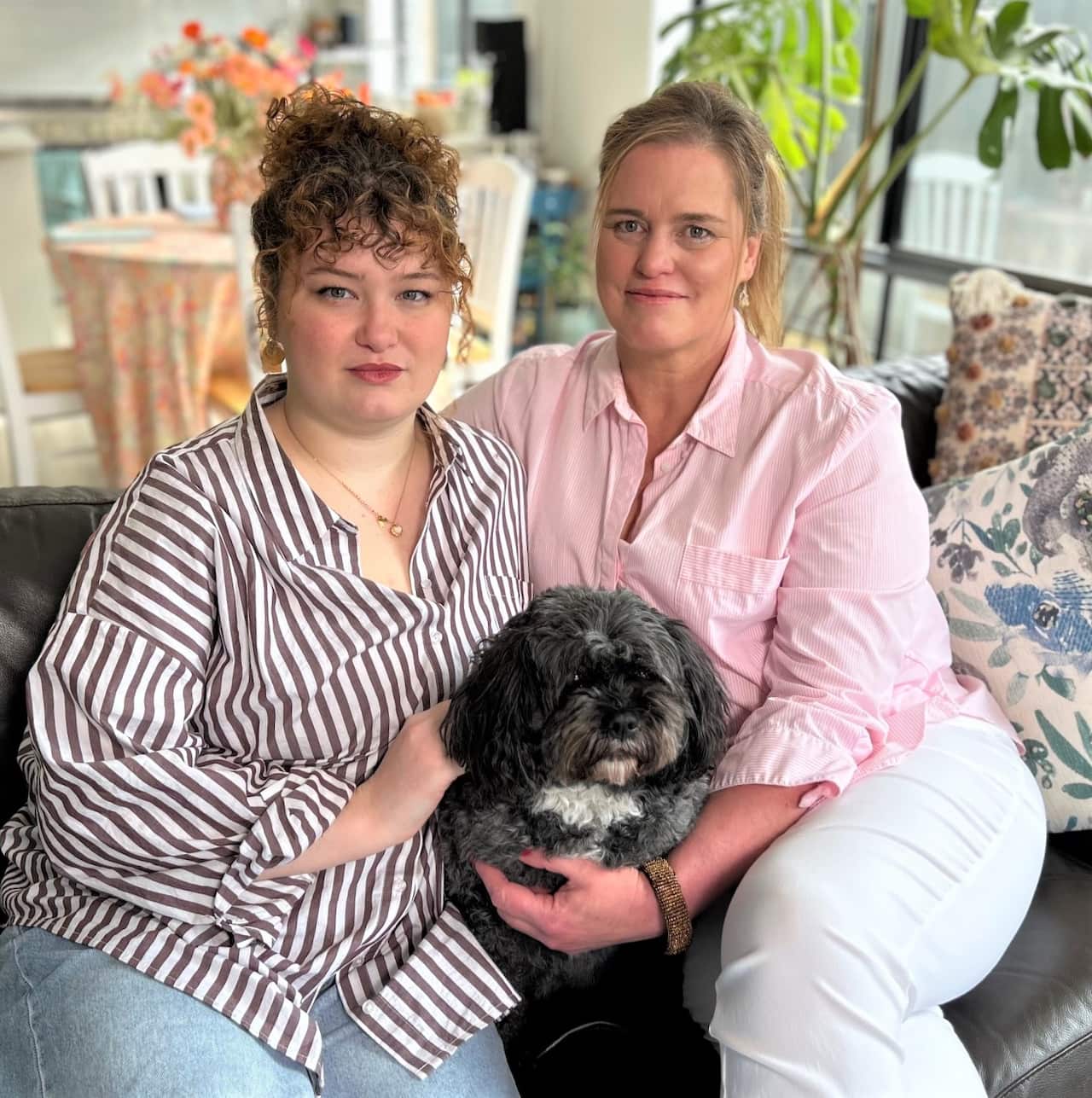
A woman in a striped shirt sits on a sofa with an older woman in a pink shirt holding a black dog.

Emma, (left) with her mum Diana at home in regional Victoria. Source: SBS / Scott Cardwell

“You feel desperate and begin to fear becoming homeless again. Yeah, it’s always on your mind. It looms over you,” she said.

Daughter Emma agrees: “Growing up during a rental crisis, and having to move house every few years it almost becomes the norm. And it is not. You should be able to settle.”

“Ideally, Australia needs to completely reform the system. It is ineffective. There’s insufficient funding, and not enough hands-on assistance,” she commented.

Best hope for security

Mother and daughter fear for their future, as the end of their current lease approaches.
“We both struggle with health issues,” said Diana. “I have PTSD from years of stress and recently had surgery to remove a sarcoma in my leg.

“I have worked so hard since I was 15 years old and every time I took one step up the ladder, I fell back down because of these health issues.”

Their best hope for security is a Little Green House.
“Imagine, just imagine moving into our own home with a garden, knowing that it’s safe.
“And it would be ours. No one could take it away from us,” she said.
Homelessness Week runs from 4 August to 10 August 2025.
If you or someone you know is impacted by family and domestic violence, call 1800RESPECT on 1800 737 732, text 0458 737 732, or visit 1800RESPECT.org.au. In an emergency, call 000.
Share this @internewscast.com
You May Also Like
Video shows cyclist attacked by e-bike riders at Gold Coast sports ground

Shocking Assault: Cyclist Targeted by E-Bike Riders at Gold Coast Sports Venue

Long-running tensions between local sports clubs and young e-bike riders have reached…
Hillary Clinton

Hillary Clinton Faces Congress: Denies Knowledge of Epstein’s Activities

Former US Secretary of State Hillary Clinton told US House lawmakers on…

Tragic Fungal Outbreak Claims Two Lives at Prominent Sydney Hospital: Health Authorities on High Alert

IN BRIEF Sydney’s Royal Prince Alfred Hospital confirmed six patients were caught…
Vance, Rubio respond after Cuban forces kill four on boat with US plates

Senators Vance and Rubio Demand Justice After Cuban Forces Kill Four on US-Registered Boat

US Secretary of State Marco Rubio has pledged to find out “exactly…

Key Takeaways from Trump’s State of the Union: Immigration and Iran Policies in Focus

In Brief: Trump spoke on foreign policy, the cost of living, tariffs,…
Jonah Lomu was an imposing figure and an incredible athlete for the All Blacks

Uncovering Jonah Lomu’s Hidden Struggles: Childhood Trauma, Family Truths, and the ‘Curse’ That Shadowed His Life

Who exactly was Jonah Lomu? During his days electrifying the field in…

South African Recruits Allegedly Deceived into Ukraine Conflict Make Triumphant Return Home

In brief The men were trapped fighting in Ukraine’s Donbas region after…
Jeremy Webb died after eating sausages on a camping trip with friends.

Coroner Confirms Meat Allergy from Tick Bites Led to NSW Teen’s Tragic Death

NSW teenager Jeremy Webb has become the first Australian to have died…
Ocean Grove whale fossil 20 million years old 26 February 2026

Australian Beach Excavation Follows Family’s Remarkable Discovery

A 20 million-year-old whale fossil has been excavated from a Victorian beach…
Samsung's new phone feature blocks prying eyes

Revolutionary Samsung Feature: Safeguard Your Screen from Prying Eyes

Samsung‘s flagship smartphone for 2026 will launch with an industry-first privacy feature…
The fungus can have a severe impact on immunocompromised people.

Fungal Infection Outbreak at Prominent Hospital Results in Two Fatalities

Two patients died and four fell seriously ill after all contracting fungal…
Melissa Vincenty, from Worldwide Migration Partners, says there has been a surge in Americans wanting to move to Australia.

Exploring Cultural Perceptions: Why Exhausted Americans Envy Australia’s Lifestyle

In recent times, an increasing number of Americans are contemplating a move…