
A fourth person has died from toxic vapor spreading in New York City.
City officials announced Thursday that 99 people have been infected with Legionnaire’s disease, a type of pneumonia that spreads through bacteria lurking in warm later.
This is up from 81 cases last week, a 20 percent increase. Hospitalizations, however, have gone down from 24 to 17.
Legionnaires’ disease is caused by Legionella bacteria, which thrive in warm water and can become airborne when water turns to steam. The condition is most severe in older people, smokers and those with chronic lung diseases.
All cases and deaths have been reported in five ZIP codes covering the Harlem, East Harlem and Morningside Heights neighborhoods.
The announcement of the additional death came just hours after city officials revealed 12 cooling towers in 10 buildings across the Harlem neighborhood tested positive for the bacteria.
Several of the affected buildings contain medical offices and grocery stores like Whole Foods.
Mayor Eric Adams said Thursday that 11 out of the 12 cooling towers that tested positive for Legionnaires’ have been treated and disinfected, and the last tower should be completed by the end of the day Friday.

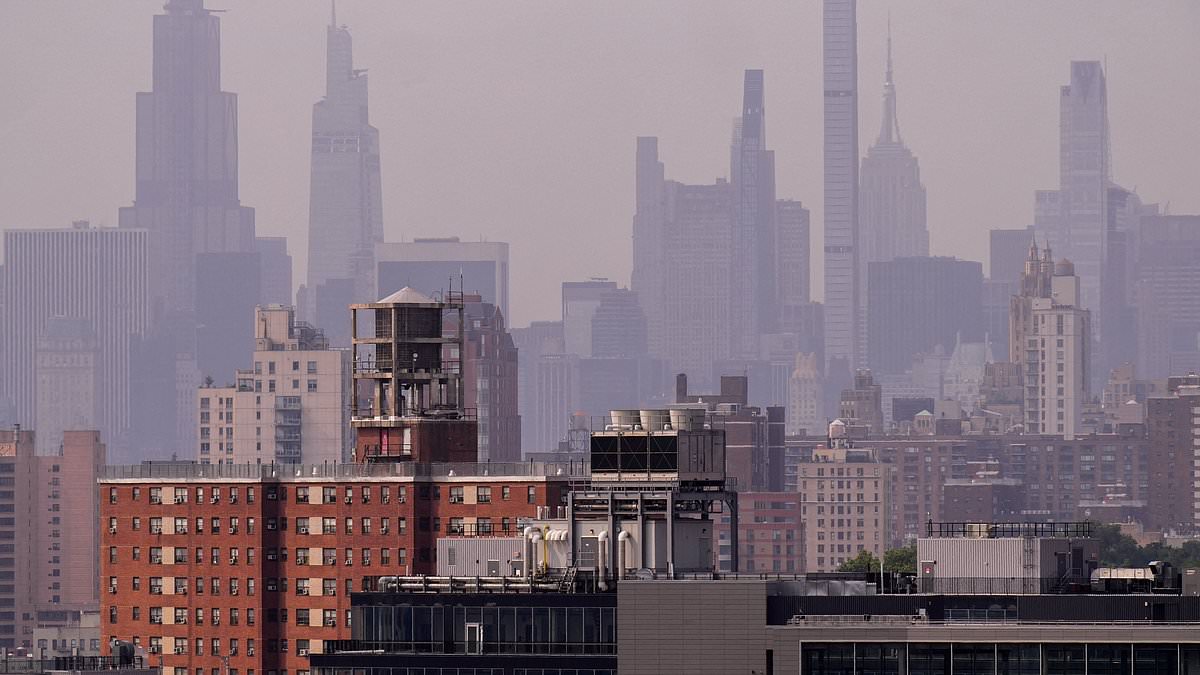
Cooling towers and air conditioning units are seen in the Harlem neighborhood amid a Legionnaires’ disease outbreak in New York City

He said: ‘New Yorkers should know the air is safe to breathe, and we are seeing declining numbers of new cases each day.’
Officials noted the warm weather in the city likely increased the risk of the bacteria spreading. Officials also defended the city’s testing schedule and said many of the buildings had initially been negative for Legionnaires’.
Acting New York City Health Commissioner Dr Michelle Morse said Thursday: ‘The testing is important, and the maintenance is important, but even that rigorous schedule, there are still possibilities that bacteria can grow because of the conditions in warm weather.’
No information has been released about those who have died or been hospitalized.
Infected patients initially suffer a headache, muscle aches, and fever that may be 104 Fahrenheit (40 Celsius) or higher.
But within three days, they may experience a cough, shortness of breath, chest pain, nausea, vomiting and diarrhea, and confusion or other mental changes.
In serious cases, patients can develop severe pneumonia, and the bacteria can spread to the heart and blood, causing the potentially fatal complication sepsis.
Patients die from the disease due to lung failure, septic shock, a sudden severe drop in blood flow to vital organs, or acute kidney failure.
Legionnaires’ affects 8,000 to 10,000 Americans every year and kills about 1,000.

Air conditioning units are seen in the Harlem neighborhood amid a Legionnaires’ disease outbreak in New York City
The five ZIP codes affected in the outbreak are: 10027, 10030, 10035, 10037 and 10039.
City health officials said while ‘most people who are exposed to the bacteria do not develop Legionnaires’ disease,’ those who are 50 or older, smoke, have a chronic lung disease or a weakened immune system may be at a higher risk.
Doctors treat the disease using antibiotics, but say these are most effective in the early stages before the disease has spread in the body. Patients are often hospitalized.
In milder cases, patients may also suffer from Pontiac fever, a condition causing fever, chills, headache and muscle aches that occurs when the bacteria do not infect the lungs.
This condition goes away on its own without treatment and causes no further problems, doctors say.

The New York City outbreak was first revealed on July 22, when the health department reported eight cases.
All buildings that had units that tested positive for the Legionella bacteria were told to clean their systems within 24 hours.
It follows a previous outbreak in July 2015 in the Bronx, which became the second-largest Legionnaires’ disease outbreak in the US.
Overall, a total of 155 patients were infected and 17 people died due to the disease from July to September that year.
The outbreak was eventually linked back to a cooling tower at the Opera House Hotel in the South Bronx, which had been contaminated with the bacteria and was releasing it in water vapor.