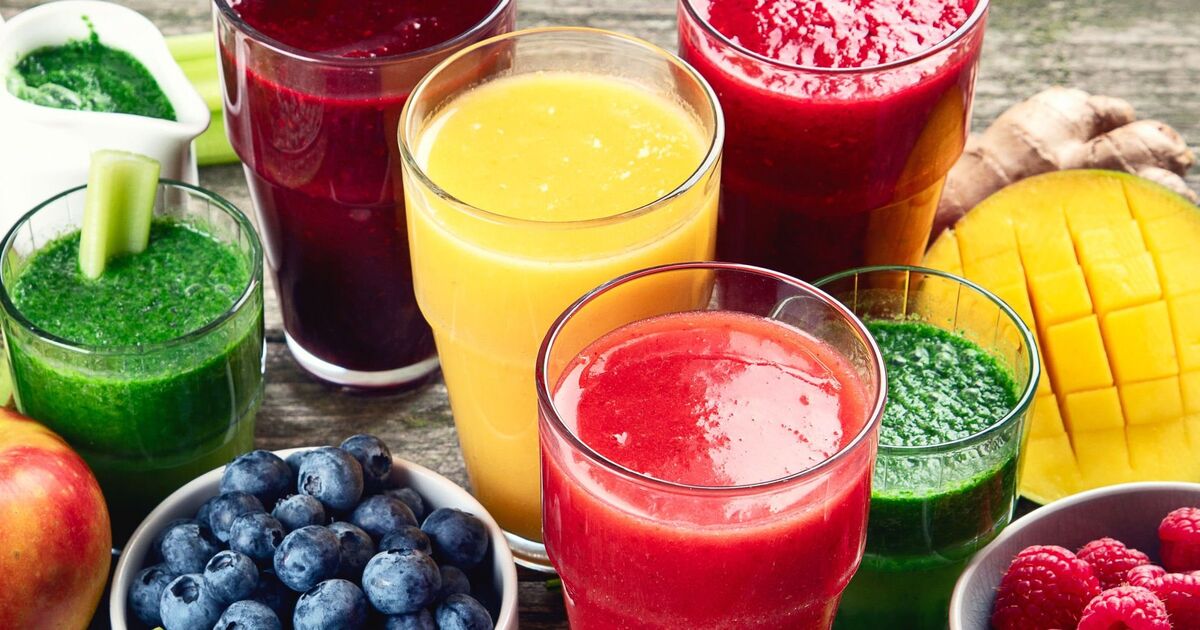

A drink that has often been touted as ‘healthy’ is not a one-stop-shop for weight loss or a better diet, health experts have explained.
The British Heart Foundation warns that while smoothies might appear to be a healthy choice because of their ingredients, they don’t offer the same advantages as consuming whole, unprocessed fruits and vegetables.
A major reason smoothies are not as healthy as we might think is that blending fruit breaks down the cell walls, releasing the natural sugars they hold.
These sugars become ‘free sugars,’ comparable to those added to processed foods and drinks, and consuming them in excessive amounts can lead to weight gain.
However, if you make smoothies at home, they tend to have less sugar and more fiber than store-bought versions, so preparing your own is a better option if you want something healthier.
To make a more nutritious homemade smoothie, consider incorporating a protein source like Greek yogurt, nut butters, or protein powder, along with fruit, leafy greens, and a liquid like milk or water.
Jordan Spivak, a dietitian at Sibley Memorial Hospital, informed Johns Hopkins that fruits contain carbohydrates, which can affect blood sugar levels. Spivak noted, “It is advisable to discuss your ideal carbohydrate intake with a dietitian to tailor your nutritional needs.”
Portion size also plays a key role – as the recommended serving size is 150ml, but smoothies sold in supermarkets or cafés are usually much bigger than this.
The BHF adds: “It can also be hard to keep an eye on how much you’re drinking because smoothies and juices are not as filling as unblended fruits because they contain much less fibre.”
To ensure you are sticking to the 150ml limit, you could share your smoothie with someone else, or save some for the next day.
While you might think that blending multiple fruits and vegetables into a smoothie will help you hit your five-a-day goal easily, this isn’t quite true. The NHS actually says that one 150ml glass of smoothie only counts as one portion of fruit and vegetables, no matter how many different types are in the drink.
The BHF explains the best three drinks you can have are water, then hot drinks like tea or coffee – without sugar – followed by sugar-free colas and squashes. Meanwhile, the worst options for your health are ice cream milkshakes, hot chocolates, and energy drinks.
The organisation says: “A regular ice cream milkshake can have twice the calories of a similar sized full-sugar cola, but if you go for extras such as chocolate or biscuits blended in, the calories go even higher.”