
Since the HBO series The White Lotus featuring scenes filmed in Thailand aired, there has been a consistent increase in individuals, often labeled as ‘losers back home,’ visiting Thailand explicitly for sex tourism.
‘Happy ending’ massage parlours are nothing new in the country, but they seem to be busier than ever.
In bustling nightlife locations like Pattaya, certain streets are filled with sex workers in coordinated outfits, where patrons—frequently solo British men—select from an array of women dressed as maids or in provocative costumes.
Regrettably, the issue of seedy sex tourism seems to have reached its peak. As someone who lived in Chiang Mai for a year and has revisited several times, I’ve witnessed the situation deteriorating.
Despite the Prevention and Suppression of Prostitution Act of 1996 rendering prostitution illegal, these activities persist unabated. Furthermore, human trafficking, including child sex trafficking, remains illegal but prevalent.
It is estimated there are around 200,000 sex workers in Thailand, including elderly women involved in degrading ‘ping-pong’ shows and lady boys (a term commonly used for transvestites and trans women), many of whom are victims of sex slavery.
Being apprehended for soliciting sex incurs a 1,000 baht fine (approximately £23), mirroring the price of a half-hour with a sex worker in a brothel. Over the last two decades, sex workers in Bangkok have had access to free STI testing at clinics, but there are limited other protections or support available for them.
As a resident who has discussed this plague of exploitation (cash often goes to pimps) with many locals, the answer for those who wish to have a Thai massage – which can provide huge health benefits – is to seek out genuine massage centres, many of which employ marginalised groups of people, such as former female inmates or blind masseurs.

Anti-prostitution laws have done little to stem the growing sex trade in Pattaya in Thailand

John Gries’s character ‘Gary’ is described as a ‘loser back home’ in The White Lotus
But sex tourism is not the only ‘dark side’ to holidays in Thailand.
Cannabis was legalised in the country in 2021 and weed shops have since proliferated throughout the country. There are cannabis dispensaries every few blocks in tourist hotspots of Chiang Mai, Bangkok, Pai and Koh Samui. This has led to more strung-out tourists stumbling around the streets and making a ruckus late at night.
Some cannabis shops sell harder drugs, which are strictly illegal in Thailand. Unfortunately, in the past year, several tourists have died while being under the influence. Thai authorities have since threatened to ban the recreational use of marijuana and reintroduced the requirement of medical certificates for buying cannabis.
Another burning issue is exploitation of animals for the benefit of tourists.
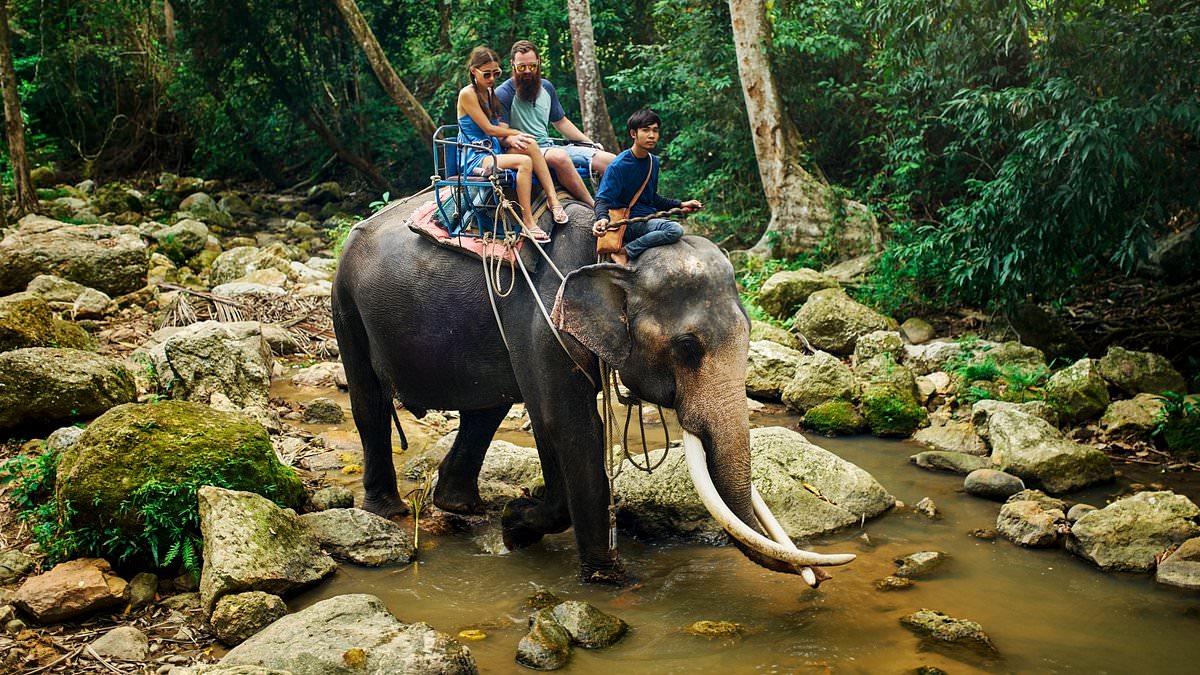
The horrors facing captive animals such as elephants and tigers are all too real. Elephants are said to be rescued from the logging trade and living better lives at so-called sanctuaries. Yet rides on elephant backs, even when not using ‘boxes’ tied to the top to make tourists more comfortable, are harmful, as is feeding them and petting baby elephants.
Last year, I visited a sanctuary where I was stunned to see people riding elephants with boxes on their backs around the site – which is hugely painful for the creatures.
Tourists need to be aware that it is NOT okay – and to support genuine sanctuaries such as Burm And Emily’s Elephant Sanctuary BEES (Burm And Emily’s Elephant Sanctuary), ChangChill, Kindred Spirit, and BLES (Boon Lott’s Elephant Sanctuary).
It can also be extremely dangerous. A Spanish tourist has recently died after an elephant knocked her over while she was giving it a bath at Koh Yao Elephant Care Centre on Yao Yai Island; the mahout (elephant keeper) was charged with ‘negligence causing death’.

Tourists often go on elephant rides without stopping to think of the damage they are doing

One social media user defended posting pictures of himself riding and standing on an elephant
Nearly 3,000 captive Asian elephants are kept at tourism venues across Thailand… all for the sake of an Instagram shot.
Tiger tourism is rife, too. Tiger farms claim not to use chains or drugs to subdue the tigers, but that doesn’t explain how they tame the tigers – more than likely by beating them into obedience.
They are often cruelly kept in tiny enclosures. Yet tiger farms still operate where tourists snap selfies with the abused big cats – often to boost their dating profiles.
And yes, the tigers do occasionally maul a tourist or two.
My advice is: don’t fall prey to false promises that creatures are treated ethically. Instead, visit the reputable hands-off Tiger Rescue Centre at Wildlife Friends Foundation Thailand in the central province of Phetchaburi.
‘Human zoos’ are yet another tourist no-no.
Longneck Karen ‘villages’ are positioned as social enterprises that promote cultural exchange and allow tourists to witness the unusual local cultural tradition of women wearing brass coils round their necks. They’re mainly found in the northern provinces of Chiang Mai, Chiang Rai and Mai Hong Son. The horrific truth in these phony villages – zoos, really – is that many of the women escaped the ongoing military junta in Myanmar and were trafficked and forced to ‘perform’.

Some say the tradition of the long neck women is kept alive only for the tourists

The villages claim to offer the chance to watch the women going about their daily routine
They’re coerced into wearing an excessive amount of brass neck rings to elongate their necks for the sake of tourists who are fooled into thinking they’re supporting refugees by paying them to be photo props. Humans, however, should never be used as ‘tourist attractions’ like this.
There is a final issue I would like to raise.
Thailand is one of the few countries in the world that was never colonised. Yet foreigners buying property has – of late – become a form of neocolonialism across the country.
Luxurious apartments with on-site gyms and pools can be rented for under £370 a month directly from Thai owners. However, many Farangs (the Thai word for foreigners) buy condos even though investing in property doesn’t provide a pathway to residency.
Instead, they rent the flats out to other foreigners at a premium price on Airbnb, despite it being illegal to operate short-term rentals (less than 30 days) without a hotel licence. Yet it’s widely considered exploitative behaviour to buy property abroad for profit – a mindful foreigner should ensure funds go directly into local hands rather than to a foreigner.
Without a doubt, out of the nearly 100 countries I’ve visited, Thailand is my absolute favourite. When someone asks me where their first trip in Asia should be, I always recommend Thailand. It’s a fantastic holiday destination, boasting incredible nature and wildlife, a rich cultural heritage, delicious regional cuisine, affordability for many Western tourists, and it’s very safe.
Despite the ongoing dark tourism encounters, there are even more social enterprises and NGOs that offer do-good tourism-facing experiences. If you visit Thailand, be conscious that your baht isn’t contributing to exploitative tourism.
Sadly, though, time and time again, I continue to witness how tourists take advantage of the world-renowned Thai kindness and hospitality, which means rarely saying no to a Western customer, even if the requests are downright outrageous at best or illegal at worst.