
At first it seemed like a small problem. My iPhone’s side buttons stopped working.
Nothing catastrophic, until it hits you that those tiny buttons are your access to Apple Wallet, Apple Pay, and even basic functions like volume. Suddenly, my thousand-dollar device felt more than half-useless.
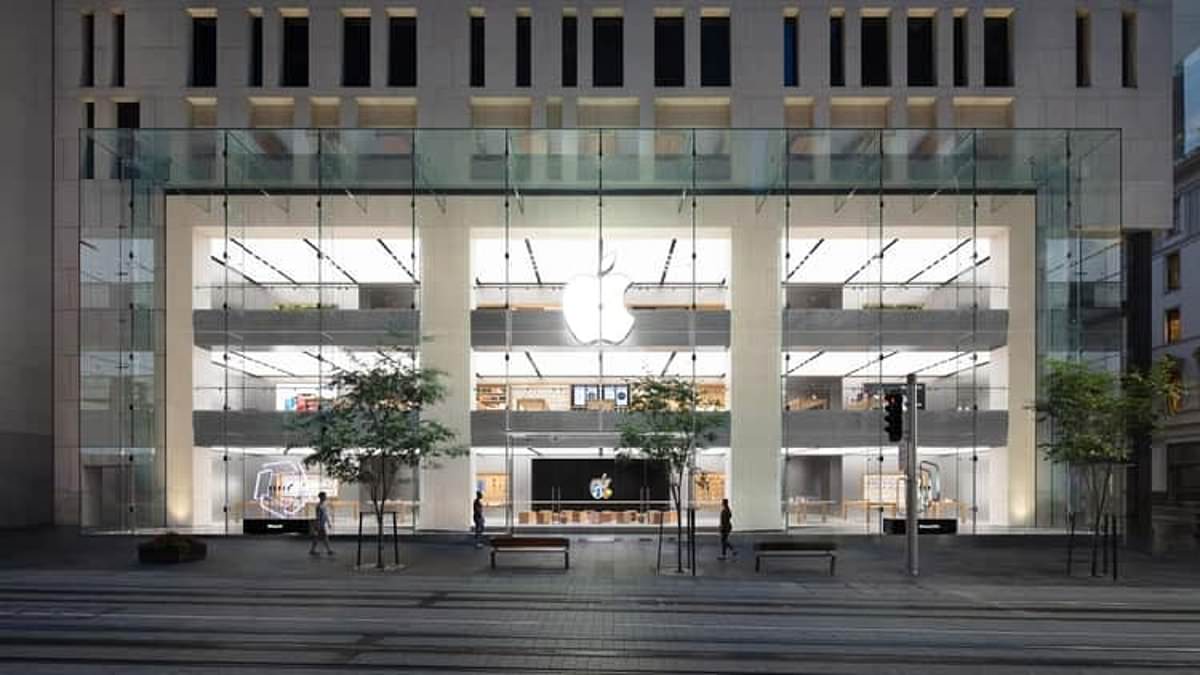
So, like millions before me, I scheduled a trip to the Apple Store. You know the scene: sleek tables, a cheerful ‘Apple Genius’ guiding you through diagnostics, the quiet hum of other desperate customers awaiting salvation.
The diagnosis was harsh. Repair cost? Around $700, roughly half the cost of a new phone—and about the same amount I paid for the phone three years ago. For buttons. And nearly an hour spent in the Apple store.
I managed to cope for two weeks, adapting to the glitch. But eventually, it became unbearable. So I returned, ready to bite the bullet and replace the entire phone. I left with a shiny new device, and the staff graciously transferred my data.
And then came the kicker. Once the data was copied, my old phone’s buttons suddenly sprang back to life. Working perfectly.
Coincidence? Almost certainly. But standing there, I couldn’t shake the uneasy thought: was my old phone only ‘obsolete’ due to a temporary mechanical failure?
By then the money was spent, the trade-in deal closed, and another hour consumed by Apple’s time vortex. I still found myself trapped in their gleaming white showroom. All I wanted was freedom. So I walked out, new phone in hand, the employee just as surprised as I was that the old one was suddenly working again.
The phone in your pocket is disposable by design. Apple’s business model depends on a cycle: new phone, upgrade, replacement, repeat. It is a cycle where we do the pedalling and they do the peddling.

Apple preaches green values – while pushing millions to dump perfectly good phones onto the scrapheap, writes Cameron Carpenter

At the Apple Store, staff can’t even sip water on the shop floor

My trusty iPhone 11 barely made it three years before Apple rendered it obsolete – and even the employee admitted that’s about the expected lifespan of their products
The cheapest iPhones start at $1,200, more than a week’s wages for many Australians.
And yet you are told you are ‘lucky’ if your phone still works after only three or four years. One Apple employee even told me exactly that.
Lucky? Shouldn’t it be the minimum expectation?
Apple loves to preach its values, boasting that it is ‘committed to protecting the planet’. The company highlights its use of recycled and renewable materials, clean electricity, and lower-carbon shipping. Each launch is framed as another step toward a greener future.
But behind the marketing gloss, the reality is far less noble. For all the talk of sustainability, Apple continues to push millions of customers into an endless cycle of upgrades – one overpriced handset at a time.
Each phone contains rare earth metals and cobalt, much of it mined in conditions so harsh human rights groups call them modern-day slavery.
In the Democratic Republic of Congo, children as young as seven dig through toxic mud to mine cobalt for batteries, often earning just a few dollars a day.
In China, the factories that assemble these phones have been accused of driving workers into 12-hour shifts, crowded dormitories, and even suicide. Rivers in China run black with industrial waste.
All this so that every three or four years, we can throw another $1,200 device onto the e-scrapheap.

Children aren’t spared the strains of manual labor in the ‘artisanal’ mines of the DRC. Above, a child carries a sack of rocks in Kapata, southwest of Kolwezi

A woman carries her infant as she mines for cobalt in the hills several kilometers northwest of the town of Kambove

A young girl sifts through rocks in the DRC hoping to find cobalt to sell. Western companies widely rely on the fact that they do not trade with the mines directly. Instead, they buy the cobalt from refiners or smelters, and say they hold those intermediaries to their codes of conduct and standard
Apple calls it progress. In reality, it is overpriced landfill, and dangerous landfill at that.
Each phone is packed with lead, cadmium, mercury and lithium, all of which leach into soil and groundwater unless expensively treated.
The device that was sold to you as ‘the future’ becomes another ecological hazard once you are told it is out of date.
My grandparents’ generation fixed things. If a radio broke, they tinkered with it. A toaster stopped working, they pulled it apart until it came back to life.
Repair wasn’t just practical, it was normal. But for us millennials, that knowledge was lost. Instead, we’ve been trained by corporations to upgrade, to throw away, to see repair as pointless, unfashionable, even a waste of time.
Get the new iPhone. With the marginally better camera. Slightly longer battery life. The one that is more connected, more relevant, more complete. Until it breaks, all-too-soon.
And then there is the Apple Store itself. While I was waiting for the last rites on my phone, I asked the employee if he was even allowed to have a bottle of water on the shop floor. ‘No,’ he said. Not even a sip of water on the floor.

In the late 2000s and early 2010s, a series of worker suicides took place at Foxconn factories in China. Foxconn is one of Apple’s largest suppliers, assembling iPhones, iPads, and other products. In response, Foxconn installed safety nets outside dormitories and factory buildings to prevent employees from jumping.
What kind of hellscape is this, where the people tasked with fixing our thousand-dollar gadgets are not trusted to drink a glass of water in public view?
The pristine, minimalist Apple aesthetic extends all the way down to denying staff basic human comfort.
Apple’s iconic slogan that resurrected the company in 1997 after Steve Jobs’ return was ‘Think Different’.
If ever there was a reason to think different, it is Apple’s chain of sterile, water-free temples of consumerism, where short-lived iPhones pile up under a shroud of environmental destruction and corporate hypocrisy.
And remember – this isn’t just Apple’s problem. Every big tech company, and consumers like me, are guilty of it.
So how do we fix it?