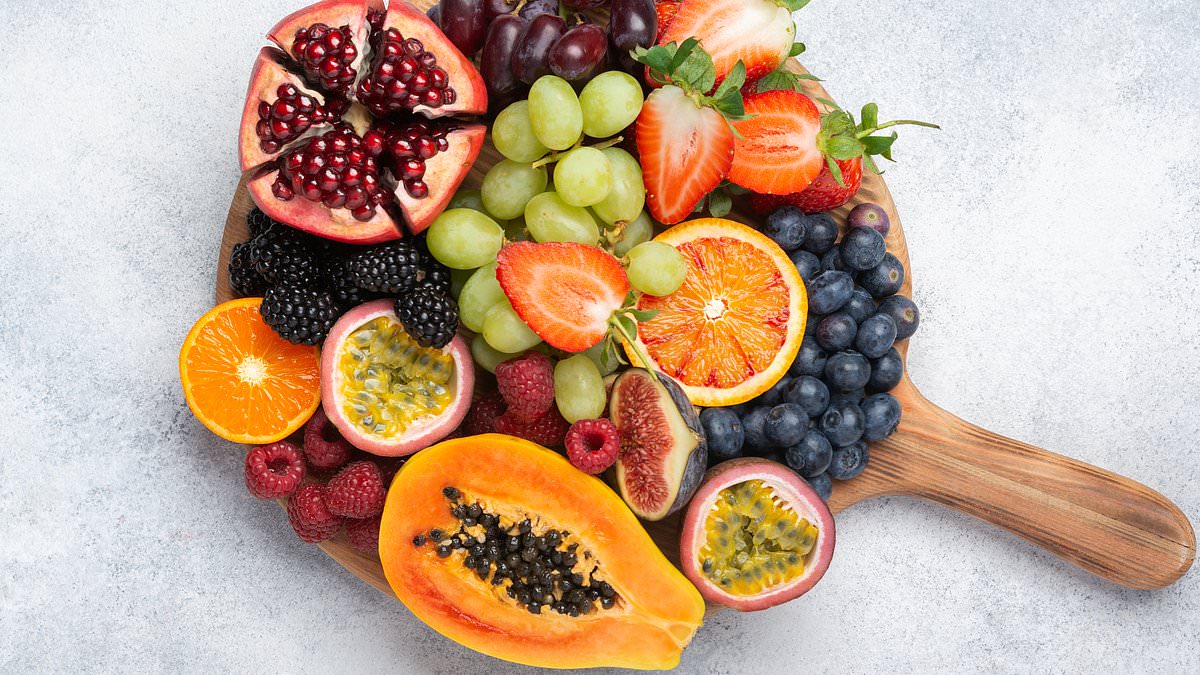

A prominent gut health specialist has evaluated ten popular fruits according to their impact on gut wellness, unveiling the unexpected fruit he avoids to maintain his gut health and prevent inflammation.
Harvard-educated gastroenterologist Dr. Saurabh Sethi shared on Instagram that fruit isn’t universally beneficial, as some can disturb our digestive system.
Ranking last place was overripe bananas, a go-to breakfast choice for millions of people across the world.
Dr. Sethi explained that overripe bananas, notorious for their high sugar content and once likened to ‘Mars bars in yellow skin,’ can cause blood sugar spikes, providing minimal nourishment for gut bacteria.
Studies have shown that as bananas ripen, the resistant starch and total dietary fibre decrease and the sugars increase.
Resistant starch is a type of carbohydrate that resists digestion by enzymes in the digestive tract, slowing down digestion.
Since this type of starch bypasses digestion in the small intestine, it doesn’t elevate glucose levels. Instead, resistant starches—like slightly unripe bananas—ferment in the large intestine, serving as a prebiotic and nurturing beneficial gut bacteria.
Thus, overripe bananas are on Dr. Sethi’s list of foods to avoid. On the contrary, slightly green bananas are considered more acceptable, receiving a score of five out of ten.

Dr. Saurabh Sethi, a Harvard-trained gastroenterologist, highlighted that not all fruits are equally beneficial, with some causing distress to our digestive systems.

Dr Sethi said overripe bananas, which are so rich in sugar they were once described as ‘ Mars bars in yellow skin,’ can spike blood sugars, providing less fuel for gut bacteria

In the middle were melons, pears and apples, with grapes and oranges coming in at two and three out of ten
Slightly unripe bananas are higher in dietary fibre—which is associated with a lower risk of heart disease, stroke, type 2 diabetes and bowel cancer.
Commonly referred to as roughage, fibre also helps prevent constipation, aiding digestion and helping us feel fuller for longer.
According to Dr Sethi, kiwis are a great source of soluble fibre, with one kiwi providing around 2g of fibre per 80g serving.
Soluble fibre attracts water to form a gel in the gut, easing constipation and increasing frequency of bowel movements.
Whilst suffering the problem now and then is harmless, frequent or chronic constipation has increasingly been linked to bowel cancer.
Studies have shown that a chronic sluggish system could make a sufferer one-and-a-half times more likely to develop digestive cancers, as regular bowel movements minimises the amount of time potential toxins can spend in the bowel wall.
Mr Haney Yousef, a colorectal surgeon, previously told the Daily Mail: ‘This is crucial because prolonged contact with harmful substances can damage the delicate lining of our colon and rectum.’
The more often these waste products are excreted—by going to the toilet—the better.

Claiming first place on Dr Sethi’s gut-friendly fruits were blueberries, closely followed by pomegranates

Pomegranates also contain ellagitannins, a powerful type of polyphenol which can help reduce inflammation in the body, a known risk factor for heart disease
Claiming first place on Dr Sethi’s gut-friendly fruits were blueberries, closely followed by pomegranates.
These fruits are packed full of antioxidants which help the body fight off free radicals which have long been linked to diseases like diabetes and cancer.
Pomegranates also contain ellagitannins, a powerful type of polyphenol which can help reduce inflammation in the body, a known risk factor for heart disease.
In one study, led by nutritionists at the University of Barcelona, participants who reported eating diets high in polyphenols—found in dark-coloured berries, nits, cocoa and olive oil—had a 46 per cent lower risk of developing heart disease than those who consumed very few.
In the middle were melons, pears and apples, with grapes and oranges coming in at two and three out of ten.
Grapes are mostly made up of water, are packed with vitamin C and potassium, and have been shown to even reduce inflammation, lowering the risk of disease.
But, they are also low in calories and overall nutritional value compared with other fruits.
Whilst oranges are high in vitamin C, folate and antioxidants that can help strengthen the immune system and fight off infection, too much of a good thing can disastrous effects.
Research published in the British Journal of Dermatology revealed a high correlation between high citrus consumption and an increased risk of skin cancer.
Experts believe this is due to the photosensitizing properties of the fruits, but more research is needed to clarify these findings and the their effect on long-term health.
That being said, vitamin c is essential for maintaining health skin, blood vessels, bones and cartilage—and a lack of the vitamin can lead to scurvy.
Whilst the NHS states that you should be able to get all the vitamin C you need from your daily diet, it cannot be stored in the body meaning some people may be advised to take supplements.