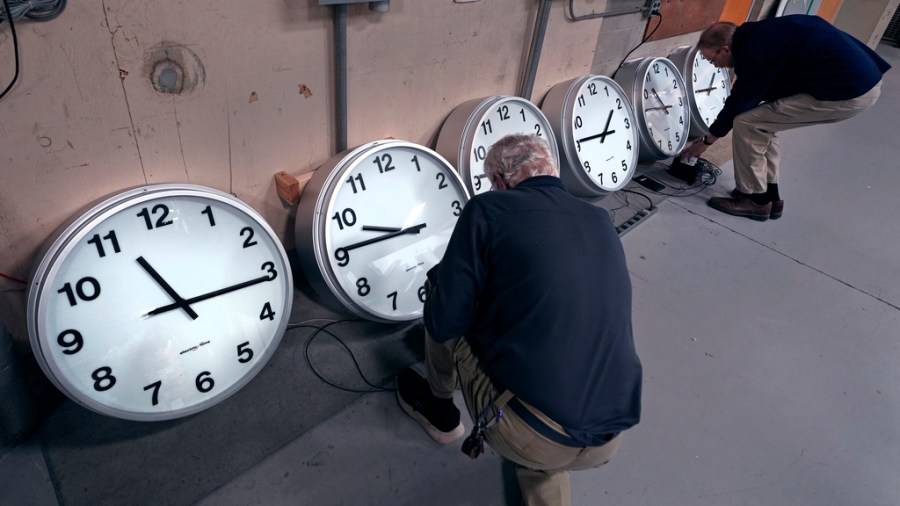


If you’re already not a fan of altering your clocks, recent research from Stanford Medicine’s sleep scientists might have you contemplating a move to places like Hawaii or Arizona, the only U.S. states that don’t follow daylight saving time.
There’s been a longstanding connection between daylight saving time and spikes in events like heart attacks and car accidents. However, this study quantifies the potential health risks associated with changing the clocks.
The findings indicate that adopting permanent standard time could potentially lead to about 2.6 million fewer obesity diagnoses and approximately 300,000 fewer annual stroke incidents. Opting for a permanent daylight saving time, where we don’t turn the clocks back in November, could achieve around two-thirds of these benefits, the research suggests.
Lara Weed, the study’s lead author and bioengineering graduate student, mentioned that the research combined recent circadian models with data from the Centers for Disease Control and Prevention.
Published in the Proceedings of the National Academy of Sciences, the study reveals that many U.S. states have chosen the least optimal time policy among the three main options for public health.
“Our analysis shows that remaining in either standard time or daylight saving time is preferable to switching between the two annually,” stated Dr. Jamie Zeitzer, the study’s senior author and a psychiatry and behavioral sciences professor, in a Stanford news release.
The two main alternatives to our current system seem to be discussed every time we near the start or end of daylight saving time. A bill proposed by Florida Republican Sen. Rick Scott would make daylight saving time permanent.
“Americans are sick and tired of changing their clocks twice a year — it’s an unnecessary, decades-old practice that’s more of an annoyance to families than a benefit to them,” Scott said while introducing the Sunshine Protection Act.
Meantime, the National Sleep Foundation has long called for standard time to become permanent, saying in a news release: “DST essentially fights the natural order of our circadian rhythms, the natural sleep/wake process in our bodies. Our circadian rhythms rely on bright natural light in the morning to wake us up and to synchronize important biological processes, and dimmer light in the evening to make us sleepy and ready for bed. It’s unhealthy to alter our bodies’ sleep schedule to have more daylight hours in the evening.”
Weed and Zeitzer both noted that the study, which approaches the data from a circadian health standpoint, may not capture economic, safety and other factors. The models also used consistent sleep habits and outdoor hours, which aren’t always possible.
“People’s light habits are probably much worse than what we assume in the models,” Zeitzer said. “Even in California, where the weather is great, people spend less than 5% of their day outside.”
What is circadian rhythm?
The brain has a master clock that is set by exposure to sunlight and darkness. This circadian rhythm is a roughly 24-hour cycle that determines when we become sleepy and when we’re more alert. The patterns change with age, one reason that early-to-rise youngsters evolve into hard-to-wake teens.
Morning light resets the rhythm. By evening, levels of a hormone called melatonin begin to surge, triggering drowsiness. Too much light in the evening — that extra hour from daylight saving time — delays that surge and the cycle gets out of sync.
Sleep deprivation is linked to heart disease, cognitive decline, obesity and numerous other problems. And that circadian clock affects more than sleep, also influencing things like heart rate, blood pressure, stress hormones and metabolism.
The next time change will be on Nov. 2, 2025, when we fall back at 2 a.m.
The Associated Press contributed to this report.