
NEW YORK — During the United Nations General Assembly this week, the United States found itself in disagreement with other countries regarding artificial intelligence, as it opposed global regulation despite widespread calls for collaborative efforts.
While numerous government and industry leaders highlighted the necessity for immediate global cooperation on AI, the U.S. delegation expressed its opposition to the U.N.’s involvement and resisted the concept of a centralized authority for AI oversight.
Speaking on behalf of the U.S. at the Security Council meeting focusing on AI, Michael Kratsios, Director of the Office of Science and Technology Policy, stated, “We firmly oppose any attempts by international bodies to impose centralized control and governance over AI.”
Kratsios argued that the path to an advanced future enhanced by AI should not be through “bureaucratic oversight,” but should focus on the “independence and sovereignty of countries.”
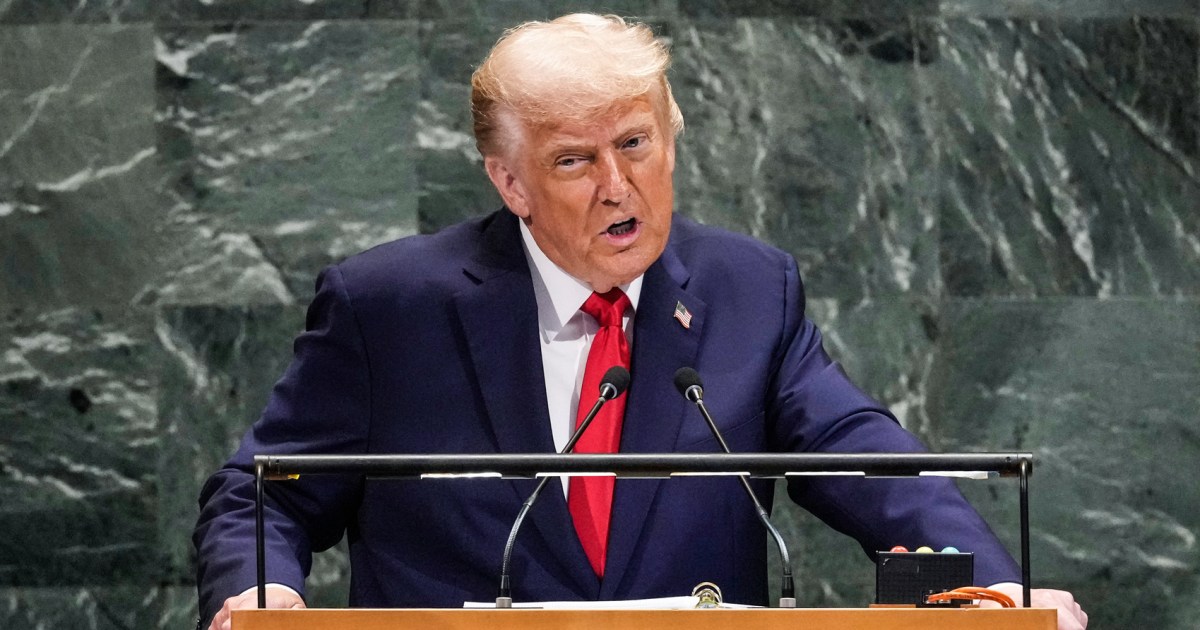
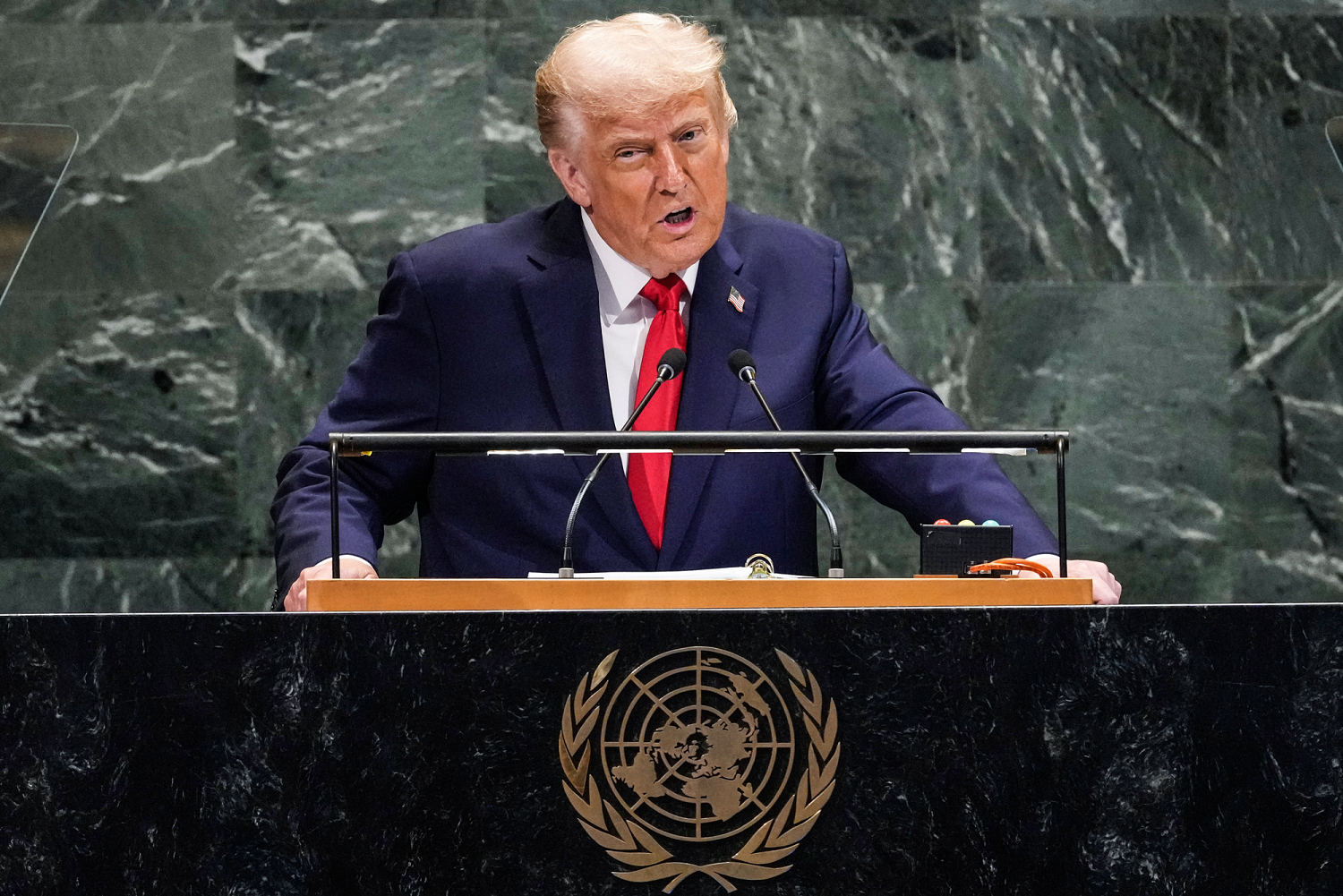
Despite Kratsios’ dismissal of unified AI governance, President Donald Trump, in his address to the General Assembly on Tuesday, introduced the idea of the U.S. developing an AI verification system aimed at ensuring trust for the Biological Weapons Convention.
“Hopefully, the U.N. can contribute positively, and it could be one of the initial projects under AI,” Trump remarked. He acknowledged that AI “has the potential to be one of the greatest innovations, but it can also be risky if misused, though it offers immense benefits and potential for good.”
In a statement to NBC News, a State Department spokesperson said, “The United States supports like-minded nations working together to encourage the development of AI in line with our shared values. The US position in international bodies is to vigorously advocate for international AI governance approaches that promote innovation, reflect American values, and counter authoritarian influence.”
The comments rejecting collaborative efforts around AI governance stood in stark contrast to many of the initiatives being launched at the General Assembly.
On Thursday, the U.N. introduced the Global Dialogue on AI Governance, the U.N.’s first body dedicated to AI governance involving all member states. U.N. Secretary-General António Guterres said the body would “lay the cornerstones of a global AI ecosystem that can keep pace with the fastest-moving technology in human history.” Speaking after Guterres, Nobel Prize recipient Daron Acemoglu outlined the growing stakes of AI’s rapid development, arguing that “AI is the biggest threat that humanity has faced.”
But in an interview with NBC News, Amandeep Singh Gill, the U.N.’s special envoy for digital and emerging technologies, told NBC News that the United States’ critical perception of the U.N.’s role in international AI governance was misconstrued.
“I think it’s a misrepresentation to say that the U.N. is somehow getting into the regulation of AI,” Gill said. “These are not top-down power grabs in terms of regulation. The regulation stays where regulation can be done in sovereign jurisdictions.”
Instead, the U.N.’s mechanisms “will provide platforms for international cooperation on AI governance,” Gill said.
In remarks immediately following Kratsios’ comments, China’s Vice Minister of Foreign Affairs Ma Zhaoxu said, “It is vital to jointly foster an open, inclusive, fair and nondiscriminatory environment for technological development and firmly oppose unilateralism and protectionism.”
“We support the U.N. playing a central role in AI governance,” Ma said.
One day after Kratsios’ remarks at the Security Council, Spanish Prime Minister Pedro Sánchez seemed to push back on Kratsios and gave full-throated support for international cooperation on AI and the U.N.’s role in AI governance.
“We need to coordinate a shared vision of AI at a global level, with the U.N. as the legitimate and inclusive forum to forge consensus around common interests,” Sánchez said. “The time is now, when multilateralism is being most questioned and attacked, that we need to reaffirm how suitable it is in addressing challenges such as those represented by AI.”
Reacting to the week’s developments, Renan Araujo, director of programs for the Washington, D.C.-based Institute for AI Policy and Strategy, told NBC News that “no one wants to see a burdensome, bureaucratic governance structure, and the U.S. has succeeded in starting bilateral and minilateral coalitions. At the same time, we should expect AI-related challenges to become more transnational in nature as AI capabilities become more advanced.”
This is not the first time the U.N. has addressed AI, having passed the Global Digital Compact last year. The compact laid the foundation for the AI dialogue and for an independent international scientific panel to evaluate AI’s abilities, risks and pathways forward. Guterres announced that nominations to this panel are now open.
While Thursday’s event marked the launch of the global dialogue and panel, the dialogue will have its first full meeting in Geneva in summer 2026, in tandem with the International Telecommunication Union’s annual AI for Good summit. The dialogue’s exact functions and first actions will be charted out over the coming months.