
Recent research suggests that older fathers may be at a higher risk of passing on disease-causing mutations to their children. This finding adds a new dimension to the conversation around parental age and its impact on offspring health.
While it has been well-documented that older mothers face increased risks of birth defects due to potential chromosomal abnormalities in their eggs, new evidence highlights that delayed fatherhood also carries significant risks. Scientists in the UK conducted a study tracking dozens of healthy men and found that postponing fatherhood could inadvertently lead to the transmission of multiple harmful mutations to children.
The study involved DNA testing, which revealed that men in their early thirties had disease-causing mutations in about one in every 50 sperm. This rate increased substantially with age, with men aged between 43 and 70 exhibiting nearly one in 20 sperm carrying such mutations.
Experts have described this research as ‘important,’ noting that it clearly indicates a higher risk of transmitting pathogenic mutations as men age. They advise prospective parents to consider these findings when planning for children, as the age of the father could significantly impact the genetic health of their offspring.
This rose, however, to almost one in 20 between the ages of 43 and 70.
Experts, who labelled the research ‘important’, said the findings ‘clearly’ show that older fathers have a ‘higher risk of passing on more pathogenic mutations’ and would-be parents should take this into account.
It comes as a growing body of research has suggested that sperm counts – a measure of male fertility – are also declining globally, with some estimates showing a fall of as much as 60 per cent in little over a generation.
Before the year 2000, studies showed the average sperm count falling by roughly one per cent each year – since then, the rate of decline has doubled.

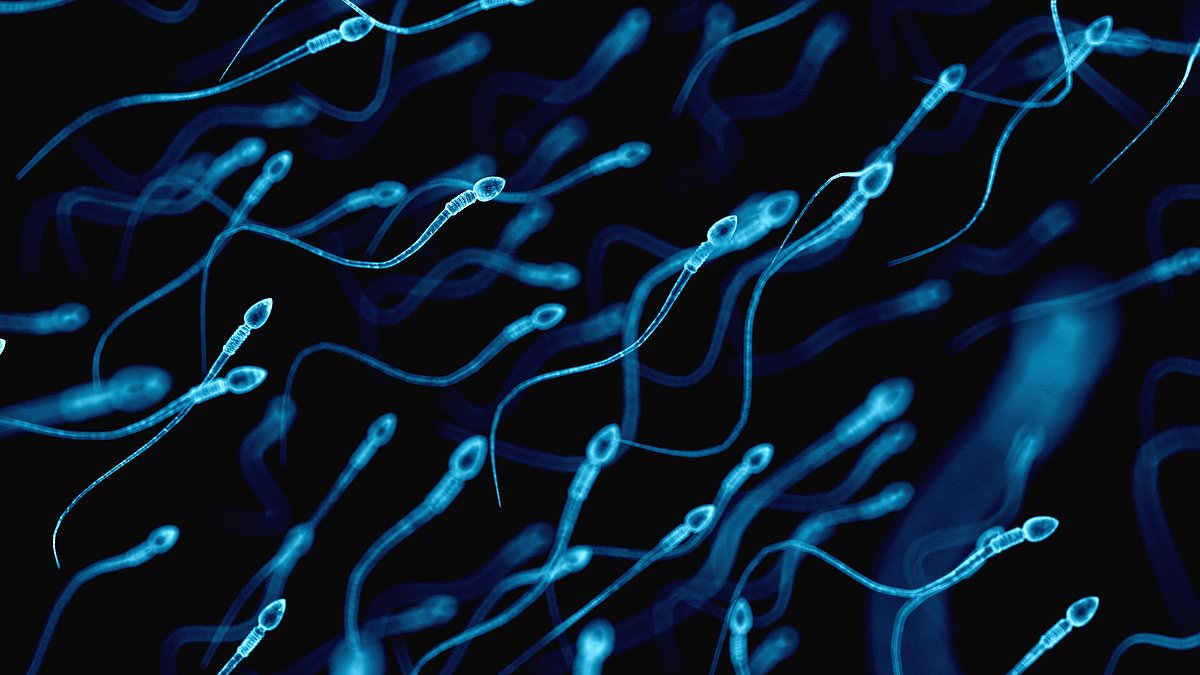
Scientists who tracked dozens of men have discovered that delaying fatherhood could carry its own consequences, by unknowingly passing on multiple harmful mutations to children
According to the UK’s most recent Fertility Index Survey, young men today are nearly three times more likely to have fertility issues than older generations.
Dr Matthew Neville, a computational biologist at the Wellcome Sanger Institute in Cambridge and study co-author, said: ‘We expected to find some evidence of selection shaping mutations in sperm.
‘What surprised us was just how much it drives up the number of sperm carrying mutations linked to serious diseases.’
Professor Matt Hurles, director of the Wellcome Sanger Institute and study co-author, said: ‘Our findings reveal a hidden genetic risk that increases with paternal age.
‘Some changes in DNA not only survive but thrive within the testes, meaning that fathers who conceive later in life may unknowingly have a higher risk of passing on a harmful mutation to their children.’
In the study, researchers used DNA sequencing technology to analyse more than 1,000 sperm from 81 men aged between 24 and 75.
The approach allowed them to identify a wide range of mutations in more than 40 genes that trigger sperm stem cells to mutate, a phenomenon dubbed by some experts as ‘selfish sperm’.
They found that around two percent of sperm from men in their early 30s carried disease-causing mutations.
This proportion increased to between 3 and 5 percent in men aged 43 to 74.
Among 70-year-old participants, 4.5 percent of sperm contained harmful mutations, showing a clear link between age and genetic risk to offspring.
Writing in the journal Nature, they said the increase was not caused solely by random DNA errors accumulating over time.
Instead, a subtle form of natural selection within the testes appears to give certain mutations a reproductive advantage, allowing them to become more common during sperm formation.
Mutations in the 40 genes have been linked to conditions including autism and a raised risk of certain cancers.
But the researchers also cautioned that although the number of sperm carrying harmful mutations rose with age, not every one of these mutations could lead to conception or pregnancy.
Some may prevent fertilization or normal embryo development, while others could cause miscarriage.
Further research was vital, they added, to determine how the growing number of sperm mutations affects children’s health outcomes.
Unlike women, who are born with all the eggs they will ever have, men begin to produce sperm between the ages of ten and 12 and continue to do so for the rest of their lives.
The average man will make millions of sperm cells every day, that then take about three months to fully mature.
But despite being able to survive outside the body, sperm cells are surprisingly fragile.
Seemingly small changes in body chemistry can have a profound impact on their ability to move, grow and fertilise an egg.
And any shift in the amount of sperm in a given quantity of semen – the sperm count – can impact a man’s ability to conceive a child.
The NHS does not provide routine sperm freezing facilities. It is typically only offered for men whose fertility may be impaired by medical conditions or treatments like cancer therapy.
Private clinics, however, do offer the service for £300 a year, plus the cost of fertility treatments when a man wants to use the frozen sperm to impregnate a woman.