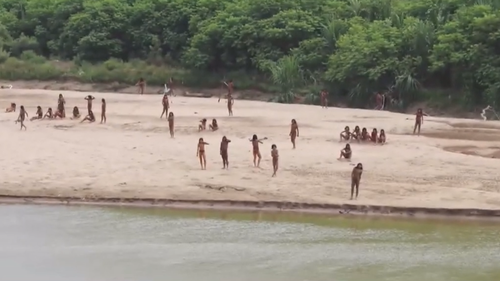

From the remote corners of Brazil’s Amazon to the dense jungles of Indonesia, some of the planet’s most secluded communities are under siege. They face mounting pressures from infrastructure projects, illegal mining operations, and drug cartels—a crisis largely invisible to the global public and inadequately addressed by state protections.
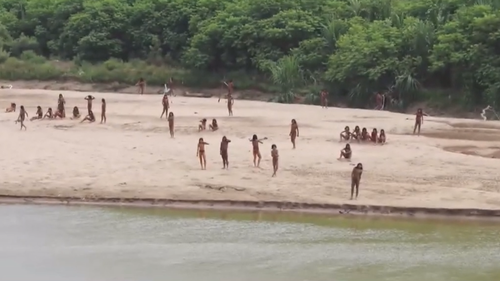
Survival International, a London-based organization championing Indigenous rights, has compiled one of the most extensive reports to date. This study identifies no fewer than 196 uncontacted Indigenous groups across 10 nations, with a significant concentration in South American countries that share the vast Amazon rainforest.
Published on Sunday, the report highlights that nearly 65% of these communities are threatened by logging activities, about 40% by mining ventures, and approximately 20% by agricultural businesses encroaching on their lands.
Ways to protect uncontacted peoples
Experts argue that safeguarding these isolated peoples demands more robust legislation and a transformative shift in perception. They urge the world to see these groups not as remnants of a bygone era but as integral members of our global community whose continued existence is vital for the future of us all.
Advocates propose several measures to address these challenges.
Foremost, it is imperative for governments to formally acknowledge and protect Indigenous territories, declaring them off-limits to industries seeking to exploit their resources.
Mapping is crucial, Bhattacharjee said, because identifying the approximate territories of uncontacted peoples allows governments to protect those areas from loggers or miners.
But, she added, it must be done with extreme caution and from a distance to avoid contact that could endanger the groups’ health or autonomy.
Second, corporations and consumers must help stop the flow of money driving destruction.
Survival’s report calls for companies to trace their supply chains to ensure that commodities, such as gold, timber and soy, are not sourced from Indigenous lands.
“Public opinion and pressure are essential,” Watson said.
“It’s largely through citizens and the media that so much has already been achieved to recognise uncontacted peoples and their rights.”
Finally, advocates say the world must recognise why their protection matters.
Beyond human rights, these communities play an outsized role in stabilising the global climate.
“With the world under pressure from climate change, we will sink or swim together,” Bhattacharjee said.
What the new report calls for
Survival International’s report urges a global no-contact policy: legal recognition of uncontacted territories, suspension of mining, oil and agribusiness projects in or near those lands and prosecution of crimes against Indigenous groups.
Watson said logging remains the biggest single threat, but mining is close behind. She pointed to the uncontacted Hongana Manyawa on Indonesia’s Halmahera Island, where nickel for electric-vehicle batteries is being mined.
“People think electric cars are a green alternative,” she said, “but mining companies are operating on the land of uncontacted peoples and posing enormous threats.”
In South America, illegal gold miners in the Yanomami territory of Brazil and Venezuela continue to use mercury to extract gold — contamination that has poisoned rivers and fish.
“The impact is devastating — socially and physically,” Watson said.