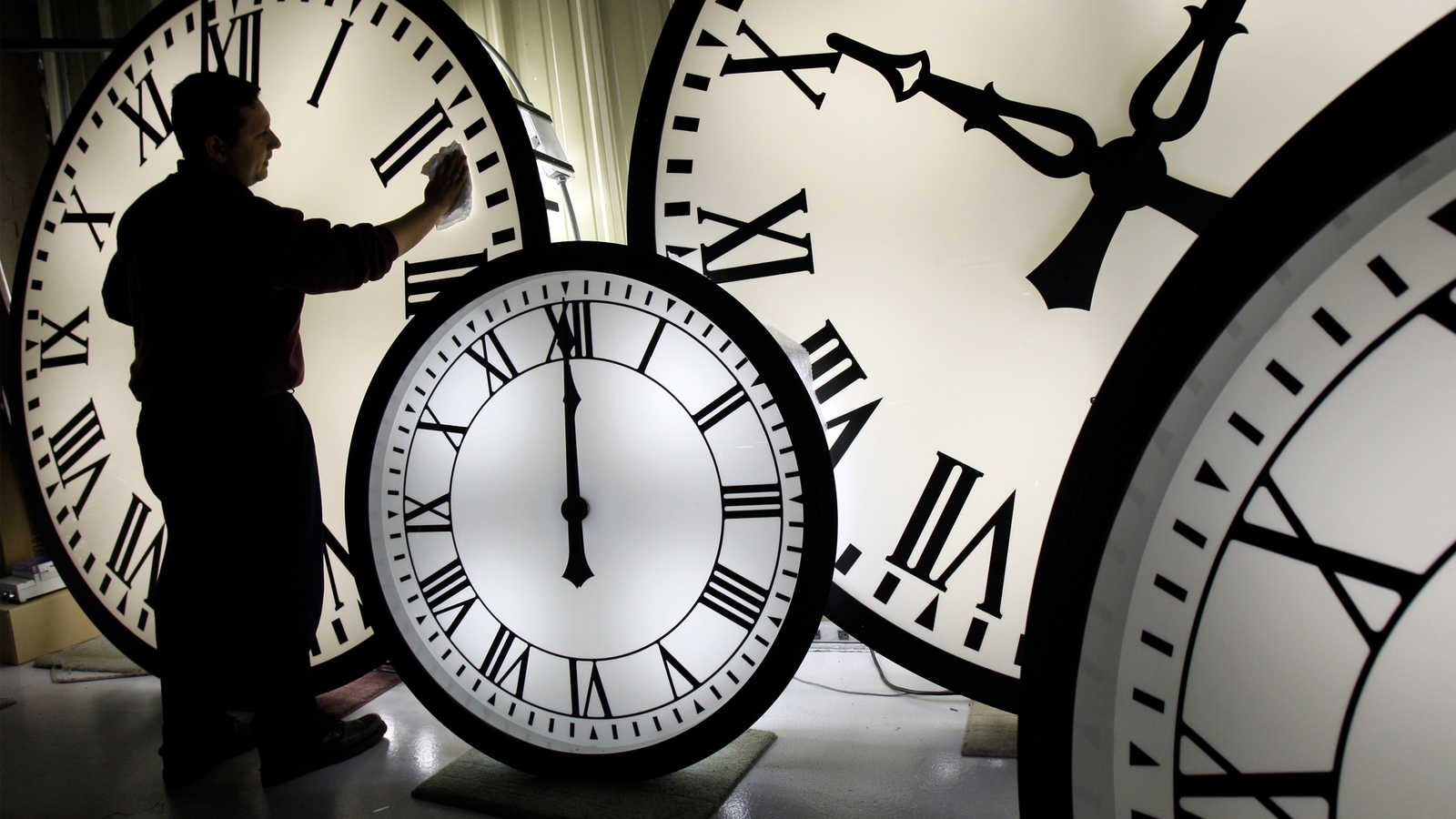

As the calendar inches toward November, it’s time to prepare for the annual ritual of turning our clocks back an hour. This year, daylight saving time officially ends on Sunday, November 2.
What is daylight saving time?
In the United States and several other countries, clocks are set forward one hour on the second Sunday of March, marking the start of daylight saving time. This adjustment remains in effect for nearly eight months, until the first Sunday of November, when clocks revert to standard time.
The practice of daylight saving time, as observed from March to November, has been in place since 2007. However, the origins of “saving daylight” date back much further. Initially tied to train schedules, the practice was broadly implemented in Europe and the U.S. during World War I to conserve fuel and energy, as noted by the U.S. Department of Transportation’s Bureau of Transportation Statistics.
A linguistic tip worth noting: it’s “daylight saving time,” not “savings.” The singular form is correct.
Reasons for daylight saving time
Historically, the United States maintained permanent daylight saving time throughout most of World War II, again for fuel conservation and consistency. However, when the war ended in 1945, a Gallup poll revealed that only 17% of Americans favored keeping this “war time” year-round.
The energy crisis of the 1970s saw another experiment with permanent daylight saving time during the winter of 1973-1974, aimed at fuel conservation. Initially, it was a popular decision when President Richard Nixon enacted it in January 1974. However, safety concerns quickly emerged; by the end of the month, Florida’s governor was calling for its repeal after several incidents of schoolchildren being struck by cars in the dark. This led to schools nationwide delaying start times until daylight hours.
By summer, public approval had plummeted, and in early October Congress voted to switch back to standard time.
In the US, states are not required by law to “fall back” or “spring forward.” Hawaii, most of Arizona and some territories in the Pacific and Caribbean do not observe daylight saving time. The twice-yearly switcheroo is irritating enough to lawmakers of all political stripes that the US Senate passed legislation in March 2022 to make Daylight Saving Time permanent. The bill passed by unanimous consent. However, the legislation was never brought to a vote in the U.S. House of Representatives.
Why do we need daylight saving time
Studies over the last 25 years have shown the one-hour change disrupts body rhythms tuned to Earth’s rotation, adding fuel to the debate over whether having daylight saving time in any form is a good idea.
The issue is that for every argument there is a counterargument. There are studies, for example, that show we have more car accidents when people lose an extra hour of sleep. There are also studies that show robberies decline when there is an extra hour of sunlight at the end of the day. We also know that people suffer more heart attacks at the start of daylight saving time. But what about our mental health? People seem to be happier when there is an extra hour of daylight.
Of course, there’s the economy, which pays for all that outdoor fun in the sun. Although saving energy was often put out as a reason to have daylight saving time, the energy saved isn’t much – if anything at all.
Instead, the lobbying effort for daylight saving time came mostly from different sectors of the economy. In the mid-20th century, lobby groups for the recreational sports industry (think driving ranges) wanted more customers to come out after a day at the office. It’s easier to do so when there is more light at the end of the day.
But the movie industry didn’t like daylight saving time. You’re less likely to go to a movie when it’s bright outside. Despite the myth, farmers didn’t like it either because it made it difficult to get their food to the market in the morning.
The bottom line: It’s not clear whether having that extra hour of sunlight at the end of the day versus the beginning is helpful. It just depends on who you are and what you want. And it doesn’t look like daylight saving time in the US is going away anytime soon.
This story was originally published in 2023 and has been updated.


