
I’m frequently plagued by mouth ulcers. What can I do to eliminate them swiftly and prevent their recurrence?
Dr. Ellie advises: Sadly, there isn’t a rapid cure for mouth ulcers, but you can take measures to minimize the likelihood of them returning.
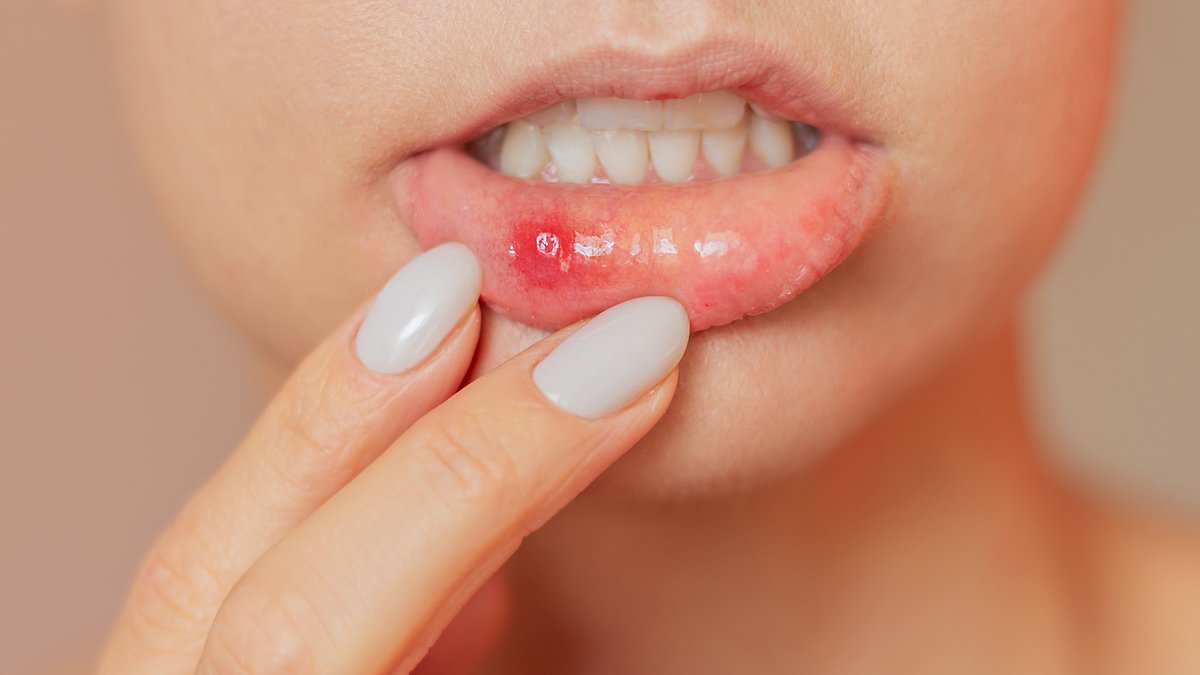
Mouth ulcers occur as small lesions on the inner lips, cheeks, or tongue, resulting from breaks in the mouth’s lining.
If a mouth ulcer persists for more than three weeks, it’s crucial to consult a doctor. Although uncommon, it could be indicative of oral cancer or possibly a sign of Crohn’s disease, a serious inflammatory bowel condition.
In most cases, mouth ulcers don’t need medical intervention as they tend to heal on their own over time.
While Bonjela, a well-known treatment, can help alleviate the discomfort, it does not actually speed up the healing of the ulcers.
Some patients may benefit from an antibacterial mouthwash, such as chlorhexidine, to keep the ulcer clean and avoid a painful infection. But, again, this doesn’t speed up the healing.

Mouth ulcers are breaks in the lining of the mouth, on the inner lips, inner cheeks or the tongue
Crucially, though, there are ways to prevent ulcers coming back. Many patients find that taking a vitamin B12 supplement reduces the risk of recurrence. Certain foods, such as coffee, chocolate and peanuts, are thought to trigger ulcers.
One of the biggest risk factors is a chemical found in many toothpastes called sodium lauryl sulfate, or SLS. But studies show it can also irritate the mouth, leading to ulcers. The good news is that there are SLS-free toothpastes available.
At 84, I recently developed a large bulge just above my pelvis. It’s not painful and the only other symptom I have is an increased need to go to the toilet.
My GP has requested a scan, but apparently I’ll have to wait six weeks. Should I be worried?
Dr Ellie responds: Any new lump that appears in someone aged over 80 should be urgently scanned and assessed. Arguably, the most common lump that appears near the pelvis would be a hernia. This is where internal organs push through a hole in overlying muscles, creating a lump.
Sometimes they hurt, but not always. The main worry is that the bulge may contain internal parts of crucial organs, such as the bowels. This can cause the organ to be blocked, stopping
it from functioning properly, which can have dangerous consequences. If someone has a lump like this and their toilet habits have changed, that might suggest the bowels are affected.
It is possible that a new lump could be caused by swollen glands or lymph nodes in the groin. Lymph nodes are small bean-shaped glands which help the body to filter out harmful substances like bacteria or viruses. A swollen lymph node might be due to an infection.
But it could also be a sign of cancer. That is why it is crucial that patients with a new lump get scanned, so the risk of a deadly tumour can be ruled out.
A new large lump in an 84-year-old should meet the criteria for an urgent NHS scan. If a patient with a new lump also has a change in bowel habits, then this symptom should be mentioned to the GP.
I have diverticulitis and have been in constant pain for two decades. The only relief I get is from cortisone injections but the effect only lasts for a few months. What else can I do?
Dr Ellie responds: Patients with chronic pain may benefit from daily tablets that GPs can prescribe.
Diverticulitis is an agonising condition where small pockets form in the walls of the intestine. This causes inflammation and, often, infections.
Symptoms include tummy pain, constipation, diarrhoea and bloating.
Unfortunately, diverticulitis cannot be cured. Instead, patients are often given laxatives to help with bowel movement issues and medicines which help with stomach cramps, called antispasmodics.
Lifestyle changes, including eating a balanced diet rich in fruit, vegetables and whole grains, as well as boosting fibre intake, avoiding smoking and maintaining a healthy weight, have all been shown to help.
Diverticulitis patients will generally take anti-inflammatory tablets such as ibuprofen and naproxen.
For those in severe agony, nerve pain tablets may help. These drugs, which include amitriptyline, nortriptyline and pregabalin, work by dampening pain receptors in the body.
Many patients also report that talking therapy and regular exercise help to relieve some of the pain of diverticulitis.
If shingles jab stops Alzheimer’s, would you pay £500 for it?

I am fascinated by growing research that suggests the shingles vaccine can help to prevent dementia.
Some studies have shown the Shingrix jab, which is available on the NHS, can cut the risk of the deadly disease by as much as 20 per cent.
More research is obviously needed, but it would appear that some people are already getting injected to protect their brain health.
One example is Lord James Bethell, 58, a former Conservative health minister during the Covid-19 pandemic. Last week he posted on social media that he paid £500 for the Shingrix vaccine for the express purpose of lowering his dementia risk.
It raises a big question: Should the NHS be offering the vaccine for free to young patients to prevent dementia?
Have you received the shingles jab in order to reduce your dementia risk? Write and let me know.
Why are so many doctors still missing women’s heart attacks
Seven years ago I spoke at Parliament’s first-ever women’s health conference. One of the biggest issues that cropped up was the NHS’s poor record when it came to spotting heart disease in women.
Heart attacks, in particular, are often viewed as a men’s issue. But the deadly condition affects 35,000 British women every year. It is thought to become much more likely after the menopause, too.
Despite this, as we discussed at the 2018 conference, heart attacks are often missed in women as doctors don’t expect them to be affected. And,
when they are spotted, women are less likely to be offered crucial treatments.
Unfortunately, today, it feels like little has changed since that landmark event. Women who suffer heart attacks are still often poorly served by the NHS. It is about time the Government took notice of this issue and acted.
Are you a woman who has suffered a heart attack? Did the NHS mishandle your treatment? I want to hear from you. Please contact me using the email on the right.