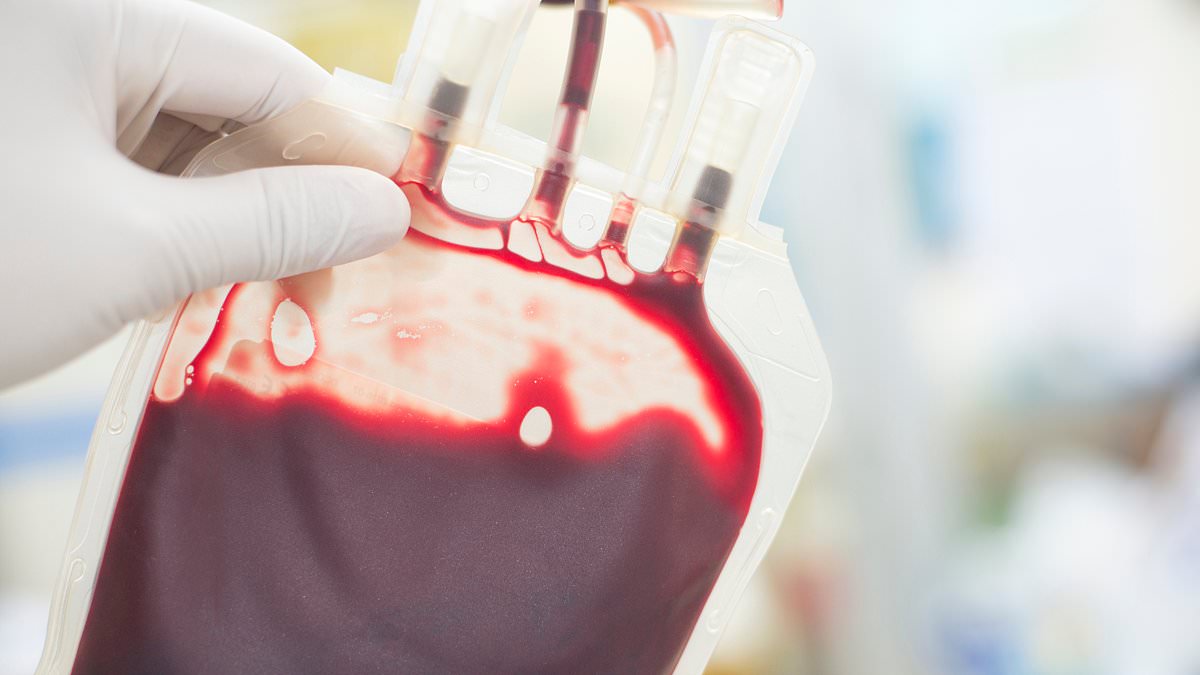

Recent research indicates that individuals with blood type A may face a heightened risk of developing autoimmune liver disease, which can inflict serious and potentially fatal liver damage.
Conversely, those possessing blood type B appear to have a significantly lower likelihood of contracting primary biliary cholangitis (PBC), a liver condition that can ultimately lead to liver failure.
A person’s blood type is determined by their genetic profile, specifically by the presence of A, B, or H antigens on the surface of red blood cells. This classification results in four main blood types: A, B, AB, and O, each of which can be further divided into positive and negative subgroups.
In the United Kingdom, nearly half of the population has type O blood, while over a third has type A. Blood types B and AB constitute about 10% and 5% of the population, respectively.
Only about one in 12 individuals have O-negative blood, a type known as ‘universal donor’ because it can be safely transfused to people of any blood type during emergencies.
An analysis involving more than 1,200 patients, including 114 diagnosed with autoimmune liver disease, revealed that blood type A was the most prevalent among those with chronic liver conditions, followed by types O, B, and AB.
There are several types of the chronic disease, including autoimmune hepatitis, where the immune system attacks and damages the liver.
Eventually the liver can become so damaged that it stops working properly.

Analysis of 114 liver disease patients and over 1,100 healthy people finds links between blood group and risk of the potentially deadly condition
PBC is another type of liver disease in which the immune system mistakenly attacks the liver’s bile ducts, causing bile to build up in the liver leading to scarring, cirrhosis and eventually liver failure.
The condition does not always cause symptoms but some people may experience bone and joint aches, itchy skin, dry eyes and mouth and abdominal pain around the liver. For others, it is only spotted after having a routine blood test for another reason.
‘It could be said that people with blood type A were more likely to develop PBC than people with blood types AB and O,’ said Dr Yi Hong, an expert in transfusion medicine at Xi’an Gaoxin Hospital and study lead author.
In the study, published in the journal Frontiers in Medicine, researchers compared the blood types of 114 patients with a previous diagnosis of autoimmune liver disease with 1,167 healthy individuals.
Of the 114 patients, 44 had autoimmune hepatitis and 70 were diagnosed with PBC.
They found that blood group A was most common among patients with both forms of chronic liver disease, followed by groups O, B and AB.
Compared to healthy controls, there was a significant difference in blood-type distribution among patients with PBC but not among patients with autoimmune hepatitis.
Specifically, they found that people with type B blood were less likely to develop PBC whilst patients with blood type A were at a significantly higher risk.

There are often no signs that you have autoimmune liver disease and symptoms can be vague
The researchers said this could be because individuals with type A blood ‘carry’ more high-risk antigens for autoimmune liver disease through a process called linkage disequilibrium.
Previous studies have shown that type As are more likely to carry carry specific alleles, called HLA-DRB1*03:01 and DRB1*04:01 which have been associated with autoimmune liver disease.
In the immune system, these genes lay a crucial role in distinguishing they body’s own cells from foreign invaders, such as pathogens and cancer cells.
However, these mechanisms were not directly tested in the study.
The researchers added: ‘We also discovered that females were more susceptible to autoimmune liver disease than males, and the reasons for this gender difference might be determined by sex hormones, fetal micro-chimerism and genetic factors.’
The incidence also increased with age.
Overall, the researchers concluded, their findings support the inclusion of blood type analysis in clinical settings to identify patients at risk of autoimmune liver disease, particularly PBC.
In the minds of many people, liver disease is synonymous with alcohol and obesity.
Yet in those with autoimmune liver diseases, problems emerge when the immune system—which is meant to protect the body against illness—goes haywire and attacks the organ. This leads to irreversible scarring, or cirrhosis, which eventually causes the liver to fail.
The illnesses can go hand in hand with other conditions that involve the immune system, such as type 1 diabetes and multiple sclerosis. But many sufferers are otherwise in perfect health.
By the time most sufferers are diagnosed, about a third already have significant cirrhosis. In the early stages, the only symptom many patients experience is fatigue – and patients often don’t seek medical help. If they do visit a doctor, their symptoms may be dismissed as simply a virus.
Without a transplant, treatment includes immune-system and inflammation-dampening steroids. But these must be taken for life, and have side effects including diarrhoea, abdominal pain and skin reactions. In some patients, the drug can even make the liver cirrhosis worse.
At that point, the liver can spiral into rapid failure, often leaving patients with just days or weeks to live.
Over time, this damage can affect liver cells and increase the risk of developing cancer.
The only option at that point is a transplant, which cures the condition. But the number of patients needing livers, due to all types of liver disease, is more than double the number available.
Experts warn that both main types of autoimmune liver disease, primary biliary cholangitis and autoimmune hepatitis, are on the increase. No one is sure why, although common viral infections and environmental toxins have been suggested as potential triggers.


