
Australia’s financial watchdog is set to impose stricter regulations on high-risk home loans, a strategic decision aimed at aiding first-time buyers in gaining access to the property market.
Effective February 1, the Australian Prudential Regulation Authority (APRA) will limit the proportion of new home loans with a debt-to-income ratio exceeding six to just 20%.
This regulation requires banks to ensure that at least 80% of their new lending is extended to borrowers whose debts are less than six times their annual income.
According to APRA, these adjustments are designed to address increasing vulnerabilities within the housing sector, particularly as household debt levels in Australia rank among the world’s highest.
APRA’s chair, John Lonsdale, emphasized, “A significant structural threat to the system’s stability has long been high household debt.”
He further noted, “In the past, rising debt levels have frequently correlated with riskier lending practices and a surge in real estate prices.”
Borrowers have been stretching further as property prices continue to soar, leaving many households vulnerable to interest rate hikes or income drops.
Treasurer Jim Chalmers backed the move, claiming it would improve both stability and access to housing for more Australians.

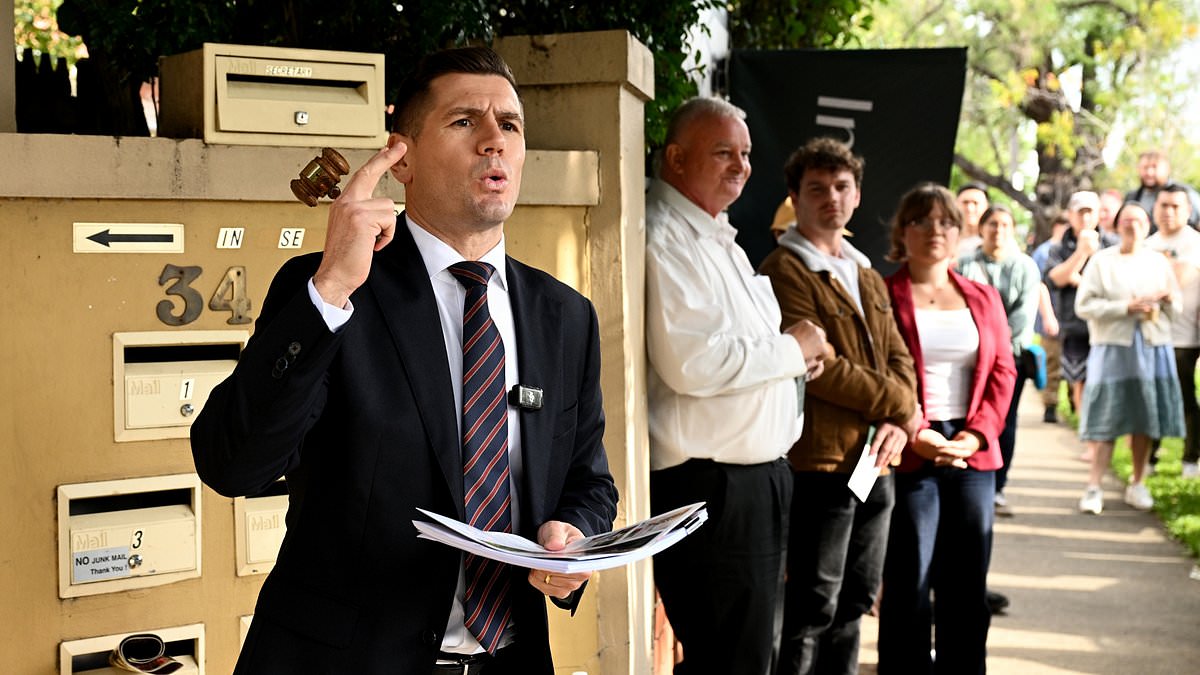
Home loans must meet debt-to-income limits as the banking regulator clamps down on risky lending. The new restrictions will take effect from February (pictured, an auction in Sydney)

The changes are aimed at curbing mounting risks in the housing market, where household debt is already among the highest in the world (pictured, a property for sale in Sydney)
‘These are important changes that will help with financial resilience and housing affordability,’ he said.
‘It’s about managing emerging risks in our financial system and will help people into the market.’
However, Greens Senator Barbara Pocock said the cap did not go far enough and called for tighter restrictions on investor lending.
‘$40billion has gone to investors in the last three months, and APRA and Chalmers need to stop the tens of billions flowing to investors,’ she said.
‘APRA must use all the tools in their toolbox to rein in investor lending that is exacerbating the housing affordability crisis.’
The caps, which will apply separately to investor loans and owner-occupier loans, are not expected to affect many banks.
While high debt-to-income lending is on the rise, APRA said only ten per cent of loans to investors were currently above the six times debt-to-income threshold.
Meanwhile, only four per cent of loans to owner-occupiers meet the threshold, including first-time buyers on the government’s new five per cent deposit scheme.

Treasurer Jim Chalmers supported the move, claiming it would ‘help people into the market’
Although the limit is not expected to constrain most borrowers immediately, APRA said it would act as a guardrail if high-risk lending continues to grow.
Australia’s banking regulator has never limited the total number of high-debt home loans banks can issue, unlike its UK, Canadian and New Zealand counterparts.
House prices surged this year following three interest rate cuts and Labor’s five per cent first-home buyer deposit scheme.
In the year leading up to September, the median Australian house price rose by nearly 9 per cent, driving up borrowing demand.
APRA also noted investor lending, which generally carries higher debt-to-income ratios, has contributed to housing credit growth above long-term averages.
The regulator warned warned it may introduce further measures if lending standards deteriorate.
‘We will consider additional limits, including investor-specific limits, if we see macro-financial risks significantly rising or a deterioration in lending standards,’ Mr Lonsdale said.