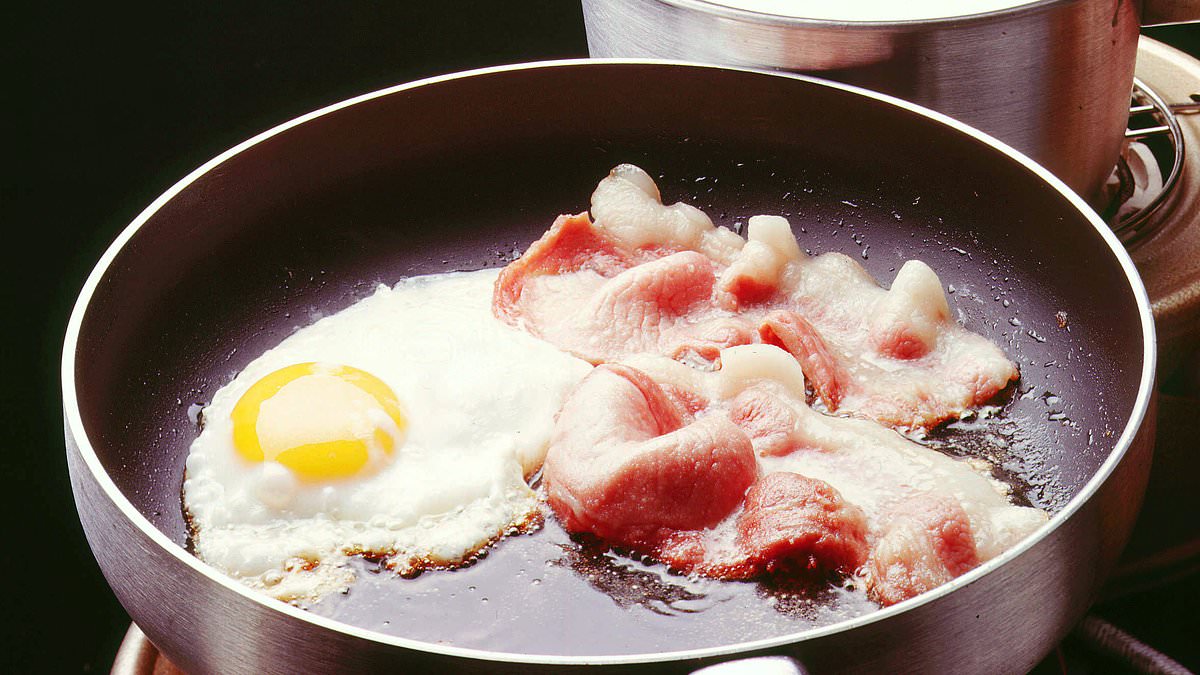

Experts are warning that pregnant women who consume a diet high in fatty foods, such as bacon, may increase the likelihood of their children developing obesity. This caution comes from researchers in Germany who believe that the aroma of these fatty foods could heighten the risk of obesity in children as they grow older.
Previous studies have already established connections between a mother’s health during pregnancy and her child’s weight in later years. However, this new study, conducted on mice, is one of the first to suggest that a diet featuring the scent of foods like bacon during pregnancy and breastfeeding could lead to brain changes associated with obesity.
While scientists have yet to determine the exact mechanism behind this phenomenon, they propose that early-life exposure to artificial flavors might create a ‘mismatched association’ between the sensory signals of food and the anticipated calorie content. This mismatch could potentially influence children’s weight as they mature.
But, the new research on mice, is among the first to show a diet which includes food like a ‘bacon smell’ when pregnant and breastfeeding may trigger brain changes linked to obesity.
Scientists could not say exactly why this was the case.
But they suggested that exposure to artificial flavours early in life may create a ‘mismatched association’ between food’s sensory signals and expected calorie content which may affect children when they get older.
Writing in the journal Nature Metabolism, the researchers from Max Planck Institute for Metabolism Research in Cologne, said: ‘Our study indicates that perinatal odour and flavour learning not only transmits food preferences to subsequent generations but can also have detrimental consequences for their metabolic health.
‘These findings might have far-reaching implications related to the long-term consequences of the consumption of flavouring agents during pregnancy and lactation.’

German researchers have suggested that the smell of such fatty foods increases the risk of babies developing obesity later in life
In the study, the scientists fed two groups of pregnant mice the same healthy diet of the same nutritional value, but added artificial bacon flavour to the food of one group.
They believed the ‘bacon smell’ molecules would reach the pups through the liquid in the womb and later through their mothers’ milk.
Over a follow-up period of almost six months tracking mice from birth until adulthood, scientists took insulin tolerance tests, blood glucose measurements, body composition tests and body length measurements.
They found that maternal body weight and weight gain among fetuses was the same for both diets.
However, offspring exposed to the bacon-flavoured diet showed an increased accumulation of body fat and insulin resistance and reduced energy expenditure when fed a high-fat diet in adulthood.
Brain activity analyses also revealed altered activity in the structure of key brain regions and hunger neurons in these mice.
This, the researchers said, resembled responses typically seen in obese animals.
Studies have already suggested that fetuses can begin to smell by around the 24th week of pregnancy.
But the olfactory receptors — specialized cells that detect odour molecules, enabling the sense of smell — may begin to form earlier, around week 10.
The scientists said: ‘In light of the large number of women consuming a high fat diet during pregnancy and lactation, these insights are important.
‘They suggest that even a healthy weight mother, when exposed to an unhealthy fat-rich diet and despite apparent optimal health status, might put her offspring at higher obesity risk later in life.’
They added: ‘Given the rising prevalence of food additives in modern processed diets, our study raises the possibility that exposure to artificial flavours during development might create a mismatched association between food sensory signals and expected calorie content.
‘This might programme long-lasting inappropriate physiological and behavioural responses later in life.’
Figures show more than a quarter of adults and a fifth of Year Six pupils in England are now classed as obese.
In October, a raft of long-awaited anti-obesity measures came into force in England designed to curb the growing crisis.
Under new Government laws, buy one, get one free deals on sweets, crisps, sugary drinks and other snacks have been outlawed in England, along with free refills of fizzy drinks in restaurants and cafés.
The crackdown will be followed in January by a ban on online adverts for unhealthy food and drink, and restrictions on TV advertising before 9 pm.
A sobering report last year warned that Britain’s spiralling weight problem has fuelled a 39 per cent rise in type 2 diabetes among under-40s, with around 168,000 young adults now living with the disease.
Excess weight has also been linked to at least 13 types of cancer and is the second-biggest preventable cause of the disease in the UK, according to Cancer Research UK.