
What is Mark Stoops’ net worth and salary?
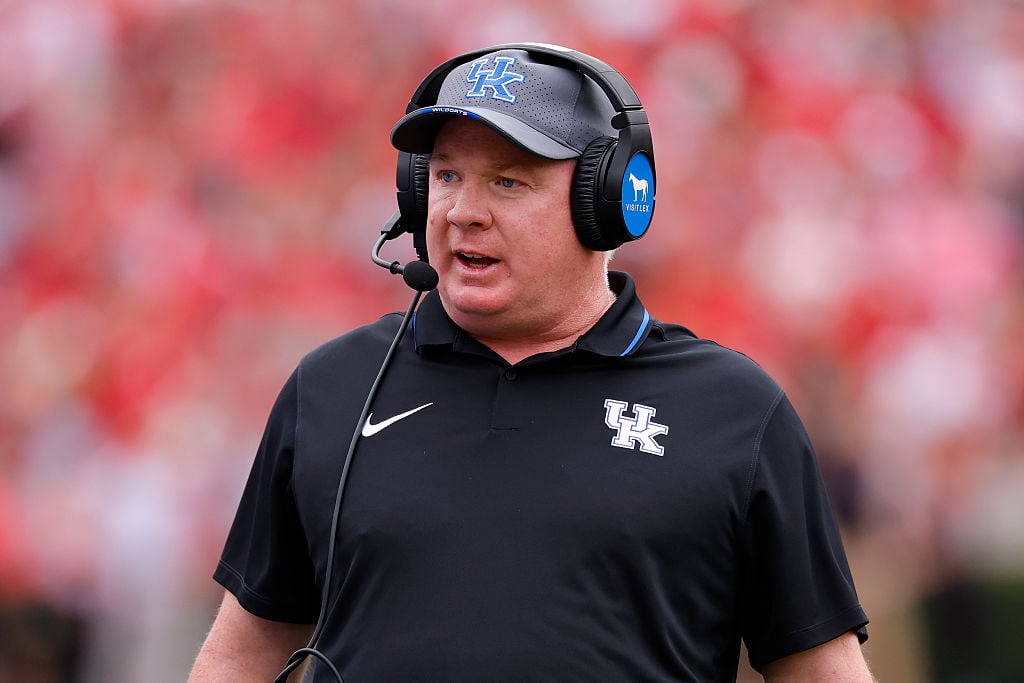
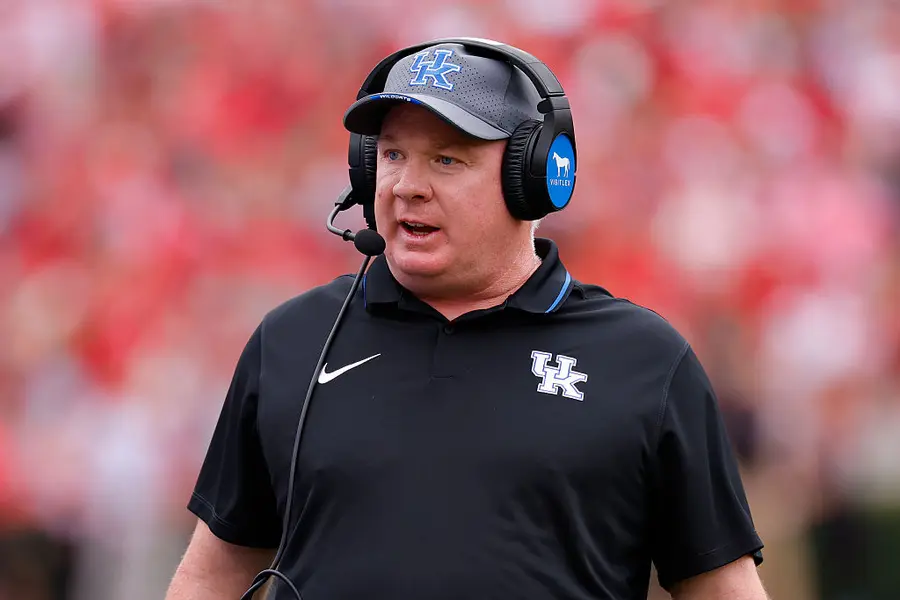
Mark Stoops, a prominent name in American college football, boasts a net worth of $30 million, largely owing to his transformative role as Kentucky’s head coach. Over more than a decade, Stoops took the Kentucky Wildcats from underdogs to respected contenders in the SEC. He achieved this by instilling discipline, emphasizing player development, and cultivating a robust defensive strategy. As part of a renowned coaching lineage, Stoops began leading the Wildcats in 2013. Over thirteen seasons, he methodically built a competitive program, taking a team with limited depth to new heights, including multiple top-20 finishes and a landmark 10-win season in 2018. Though his 2021 season was vacated, Stoops still became the winningest coach in Kentucky’s history, surpassing the legendary Bear Bryant, and led the team to nine consecutive bowl games from 2016 to 2023. Despite challenges during the new NIL era, Stoops left an indelible mark on Kentucky football, becoming one of the SEC’s longest-tenured coaches before his departure in 2025.
Early Life
Hailing from Youngstown, Ohio, Mark Thomas Stoops was born into a family steeped in football traditions. His brothers, Bob, Mike, and Ron, all ventured into Division I coaching, making the Stoops family synonymous with defensive prowess. Mark himself played safety at the University of Iowa under coach Hayden Fry, before smoothly transitioning to coaching. His early career saw him building a reputation at South Florida, Wyoming, Houston, and Miami, where he was recognized for his defensive acumen and recruiting skills. His career reached new heights at Arizona and later Florida State, where as defensive coordinator, he helped shape a defense that laid the foundation for FSU’s 2013 national championship.
Coaching Career
In late 2012, Kentucky brought Stoops on board as head coach, entrusting him with the task of revitalizing a program long struggling in the SEC. The initial years posed challenges, but Stoops gradually molded the team into a unit defined by physicality and defense, underpinned by robust player development. The pivotal moment arrived in 2018, when Kentucky achieved a historic 10-win season, their first since 1977, and produced NFL talent like first-round pick Josh Allen.
Between 2016 and 2023, the Wildcats consistently reached bowl games, a remarkable achievement for the program. Stoops became renowned for his ability to transform three-star recruits into NFL-ready players, sending numerous prospects to the league annually and producing four first-round picks during his tenure. Although the 2021 double-digit win season was vacated, Stoops’s impact was undeniable.
The evolving landscape of college football, marked by aggressive NIL dynamics and revenue-sharing shifts, posed new challenges for Stoops. Despite maintaining a competitive edge, Kentucky experienced uneven performances in 2024 and 2025, posting 4-8 and 5-7 records respectively. A promising midseason performance in 2025, led by freshman quarterback Cutter Boley, was overshadowed by a late-season slump and a crushing 41-0 defeat to Louisville, culminating in Stoops’s dismissal on November 30, 2025. His 13-year tenure concluded with him as Kentucky’s longest-serving and winningest coach.
Todd Kirkland/Getty Images
Contracts, Salaries & Career Earnings
Financially, Stoops’s journey at Kentucky mirrored his significant contributions to the program. By 2025, his annual salary reached $9 million, placing him among the top earners in the SEC and underscoring his role in elevating Kentucky to national prominence and consistent success.
Stoops was signed through June 2031 at the time of his dismissal, meaning Kentucky owed him 75% of the salary remaining on his contract under his buyout terms. That obligation totaled approximately $37.7 million, placing his payout among the five largest buyouts in college football history. The only larger buyouts recorded that season were those of Brian Kelly ($54 million), James Franklin ($49 million, later reduced after he joined Virginia Tech), and Jonathan Smith ($33 million).
Earlier extensions also pushed Stoops into elite salary territory. As Kentucky improved under his leadership, the school repeatedly renegotiated his deal, adding retention increases tied to bowl appearances, academic benchmarks, and on-field achievements. The structure of his long-term deals ensured steady raises, escalating annual salaries, and generous guarantees, reflecting both his stability and the school’s desire to retain him amid periodic interest from other programs.
Across his 13-season tenure, Stoops earned well over $50 million in salary alone, not including incentives, retention bonuses, and contractual escalators tied to team performance. The buyout added an additional $37.7 million to that total, meaning he earned nearly $90 million.
Legacy at Kentucky
While the final two seasons were difficult, Stoops’s impact on Kentucky football was unmistakable. He delivered the longest period of sustained success the program had seen, elevated its recruiting profile, and produced NFL talent at a rate once unimaginable in Lexington. He proved that Kentucky could compete physically with top SEC programs and demonstrated that stability, development, and patience could change a program’s trajectory. His tenure reset expectations for what Kentucky football could be and laid the foundation for the next chapter of the program’s evolution.
All net worths are calculated using data drawn from public sources. When provided, we also incorporate private tips and feedback received from the celebrities or their representatives. While we work diligently to ensure that our numbers are as accurate as possible, unless otherwise indicated they are only estimates. We welcome all corrections and feedback using the button below.
(function() {
var _fbq = window._fbq || (window._fbq = []);
if (!_fbq.loaded) {
var fbds = document.createElement(‘script’);
fbds.async = true;
fbds.src=”
var s = document.getElementsByTagName(‘script’)[0];
s.parentNode.insertBefore(fbds, s);
_fbq.loaded = true;
}
_fbq.push([‘addPixelId’, ‘1471602713096627’]);
})();
window._fbq = window._fbq || [];
window._fbq.push([‘track’, ‘PixelInitialized’, {}]);