
In an exhilarating development for conservationists, a significant patch of one of Western Australia’s rarest carnivorous plants, Drosera silvicola, has been discovered just an hour from Perth. This remarkable find at the Paruna Wildlife Sanctuary, managed by the Australian Wildlife Conservancy (AWC), provides a crucial boost for a species that was previously known to exist in only two other highly endangered populations in the southwest of the state.
The discovery came at the end of an exhaustive two-day search, with a team of 10 scientists and volunteers on the verge of concluding their expedition. The group, which included experts from Curtin University and AWC, had been scouring the Paruna Wildlife Sanctuary, located east of Perth along the Avon River on Whadjuk country, in hopes of locating the elusive plant.
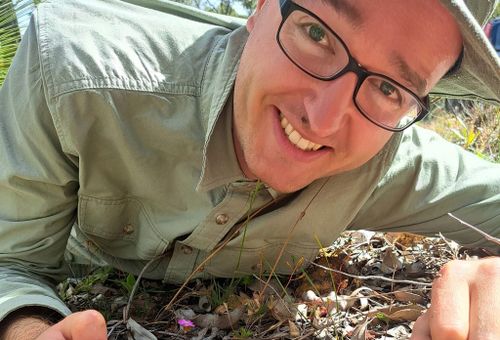
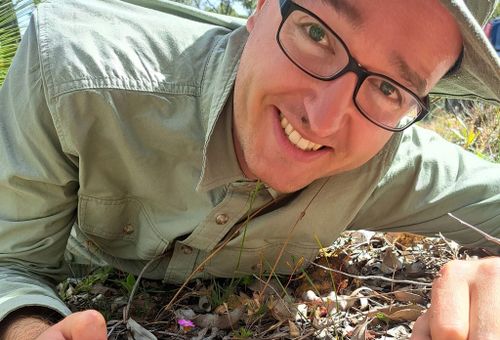
Just as the team was preparing to wrap up their efforts, a spontaneous detour led to an unexpected triumph. “I was so excited when I first spotted the plant out of the car window,” recounted Thilo Krueger, a PhD student and carnivorous plant specialist from Curtin University. “I jumped out of the door, fist-pumping the air, and threw myself on the ground next to it.”
This significant discovery not only provides new hope for the survival of Drosera silvicola but also highlights the rich biodiversity that remains hidden within Western Australia’s natural landscapes. The find underscores the importance of continued conservation efforts and the potential for unexpected rewards in the quest to protect endangered species.
Then, a last-minute detour led to a triumphant moment.
“I was so excited when I first spotted the plant out of the car window, I jumped out of the door fist-pumping the air and threw myself on the ground next to it,” Thilo Krueger, a PhD student and carnivorous plant expert from Curtin University, said.
The crew was heading toward their third and final search area when Krueger noticed a side track with habitat that, based on his knowledge, seemed perfect for the species.
“The area had ridges and slopes that sat high up,” he said.
“It was in the Jarrah forest, but it was an open area with very little leaf litter – the perfect environment for the species.”
Following Krueger’s instincts, the team quickly explored the new area.
Within minutes, they were greeted by the sight of thousands of the small, yet unmistakable, plants.
The Drosera silvicola, also known as a sundew, is easily identified by its stunning features, despite only being a few centimetres in size.
“Drosera silvicola is a very distinctive species of sundew because of its beautiful, absolutely stunning flowers with pink, glossy petals and a dark red centre,” Krueger said.
“It captures and digests tiny insects using its leaves which are covered with sticky tentacles.”
The team collected a few specimens to officially document the population with the WA Herbarium and will be returning to the site to observe the spectacular sight as the plants enter full bloom over the coming month.
This discovery is especially significant as Drosera silvicola is listed as a Priority 1 species by the WA Department of Biodiversity, Conservation and Attractions (DBCA).
This status marks it as extremely rare and potentially threatened, urgently requiring a full conservation assessment.
Before the Paruna find, the only two other confirmed populations were located 70 km away – one on an active mine site and the other on a mining tenement – making them highly vulnerable.
“To find such a healthy population of this rare species on a protected conservation area is a huge win for conservation,” Dr Amanda Bourne, regional ecologist with AWC, said.
“The discovery highlights the importance of wildlife sanctuaries like Paruna in preserving Australia’s unique biodiversity.”
The South West of WA is renowned as the world’s centre of diversity for carnivorous plants, with over 150 species recorded.
Many of these are confined to tiny, fragile areas, making them highly susceptible to habitat loss and climate change.
In fact, during their survey, the researchers encountered a total of six sundew species, including Drosera walyunga (endemic to the region), Drosera hyperostigma, and Drosera glanduligera
Experts from the Wildflower Society of WA believe Paruna’s diverse landscape likely holds many more rare species waiting to be found.
“Paruna’s landscape and relatively undisturbed habitats is likely to make it a treasure trove for native flora,” Jolanda Keeble, from the Wildflower Society of WA, said.
“Discoveries like this underscore just how much we still have to learn about the plant life in our own backyard, and how vital it is to protect these landscapes.”


