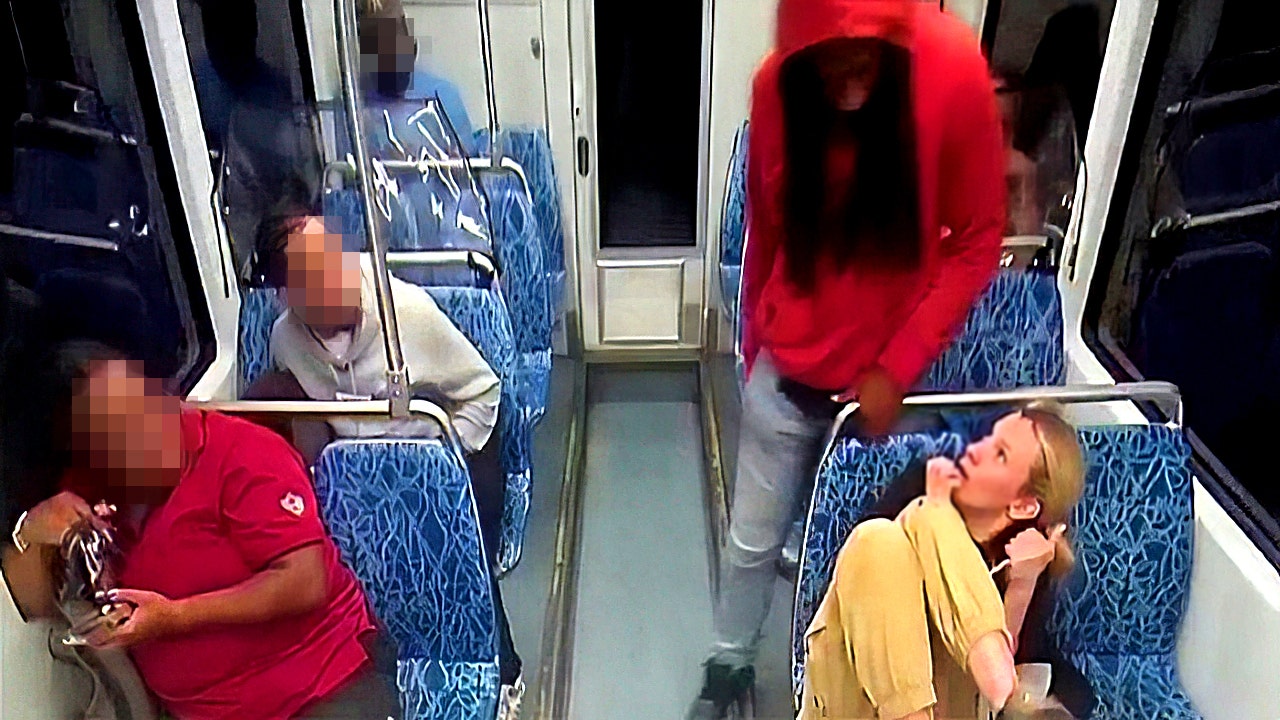

In the wake of another stabbing incident on Charlotte’s light rail, Mecklenburg County Sheriff Garry McFadden has sounded an alarm regarding the potential fallout from Iryna’s Law, a new piece of legislation that recently took effect. The law, named after 23-year-old Iryna Zarutska who tragically lost her life in a light rail stabbing this past August, aims to tighten pretrial release protocols for repeat and violent offenders. North Carolina Governor Josh Stein signed the law into action in October.
During a press conference on Monday, Sheriff McFadden expressed concerns about the implications of the law on local detention facilities. He warned that the stricter rules could lead to a surge in jail populations, thereby creating hazardous overcrowding. He also suggested that the tragic incident, caught on video and widely circulated, was leveraged by politicians to push their agendas, framing Zarutska as a refugee rather than an immigrant.
“The law’s national spotlight is primarily due to the incident being captured on video and broadcasted extensively,” McFadden remarked. “Local politicians capitalized on this visibility, crafting Iryna’s Law as a political maneuver.” He further emphasized that the new requirements imposed by the legislation place additional burdens on his office.
McFadden’s remarks come at a critical moment, as the community grapples with the balance between public safety and the operational strains on law enforcement and detention facilities. The debate surrounding Iryna’s Law continues to unfold, highlighting the complexities of criminal justice reform in the face of tragic events.

Sheriff Garry McFadden discussed Iryna’s Law on Monday, Dec. 8. (Mecklenburg County Sheriff’s Office/Facebook)
McFadden insisted that the new legislation will lead to overcrowding in Mecklenburg County Jail.
“This law will cause our detention centers’ numbers to rise. We will have more people staying inside a detention center at a longer stay than normally. Because it attacks the new bond referendum and it attacks also the discretion that the magistrates and the judge has on releasing people,” he said.
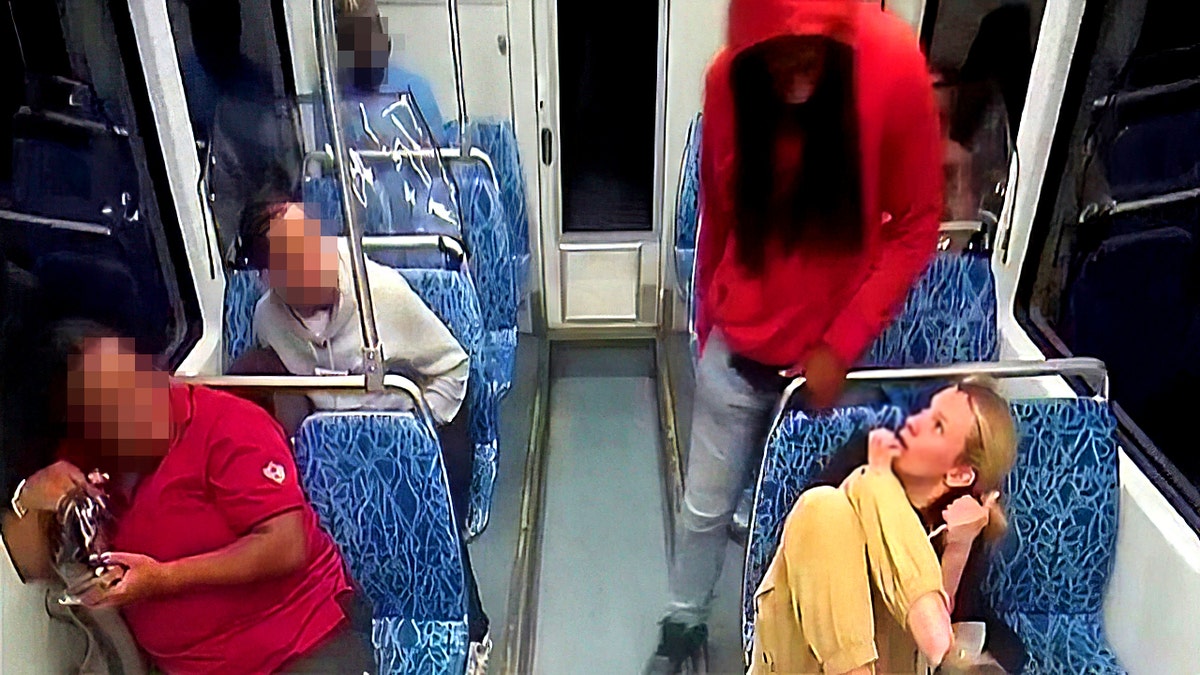
Iryna Zarutska curls up in fear as a man looms over her during a disturbing attack on a Charlotte, North Carolina, light rail train. (NewsNation via Charlotte Area Transit System)
The sheriff said that following Zarutska’s violent attack in August, local judges “were attacked violently on social media.”
“And we took additional measures to protect them because of the violent nature of social media, and parts of other media, and also just the violence that they received just personally,” he said. “And so, they live in fear now, and I have to say that, because for an entire day, we had to talk to the magistrates on how to live safely, how to travel safely, and in the middle of all of that, they were concerned after the shooting of Charlie Kirk, because they said to me, ‘Well, what if they shoot me because of this?’ And so, they’re going to be more cautious and reluctant to allow people to be released.”

Ukrainian Iryna Zarutska came to the U.S. to escape war but was stabbed to death in Charlotte. (Evgeniya Rush/GoFundMe)
He argued that county staff will now be responsible for managing “a much more difficult population,” particularly individuals with heightened mental-health needs who must remain in custody longer under the new rules.
“On top of the other population, of the people who are arrested for robbery, rape and murder. All these people are still gonna be housed here at the detention center. So when people say, ‘Well, is that gonna cause a problem for your staff?’ Of course, it is. Why? Because my staff is not gonna be subject to having to deal with people with much more mental health problems than we had in the past. Or we’re gonna be dealing with families who will not understand why their loved ones are not being released.”
WATCH: North Carolina lawmakers pass tough-on-crime bill in honor of Iryna Zarutska
The sheriff said that none of the new requirements were accompanied by state funding.
“House Bill 307 did not bring us any resources, and it did not bring any funding,” he said, adding that lawmakers should not impose such sweeping mandates without input from the agencies that must carry them out.
He asked legislators in Raleigh to include sheriffs in future conversations about criminal-justice policy, saying they “need a seat at the table and a voice” when new laws directly affect local detention operations.