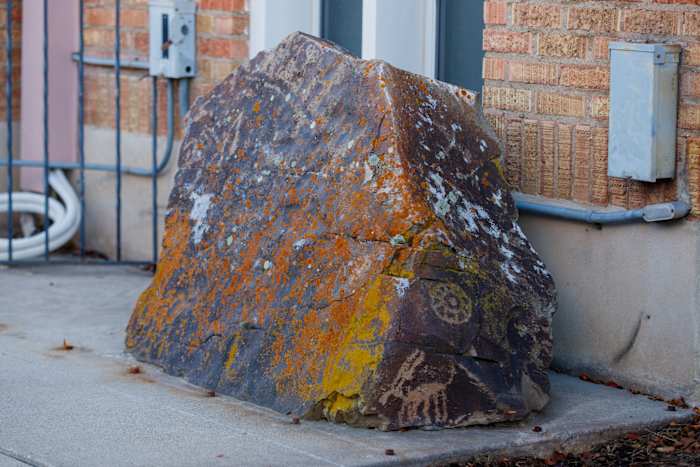
TREMONTON, Utah – A significant cultural artifact, a boulder adorned with ancient petroglyphs crafted over a millennium ago by the forebears of the Northwestern Band of the Shoshone Nation, has finally been returned to its rightful place in the northern Utah mountains.
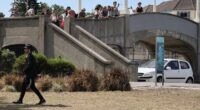
This monumental repatriation journey, which initiated in 2011, reached its pinnacle earlier this month. The sacred stone was transported by air back to its original site after being extracted from its previous location—a concrete base in front of a church meetinghouse in Tremonton, approximately 80 miles (129 kilometers) north of Salt Lake City.
The Church of Jesus Christ of Latter-day Saints announced on Wednesday that a team of historians and conservators, collaborating with the tribe and state authorities, meticulously removed and restored the 2,500-pound (1,134-kilogram) rock. The restoration process involved using saws, chisels, and finally, soap and water to cleanse the petroglyphs of accumulated lichen over the years.
Brad Parry, vice chair of the tribe, expressed deep emotion witnessing the rock’s return to its rugged hillside, where it reunites with other petroglyph-laden stones. This site is revered as a spiritual gathering area where Shoshone ancestors historically camped and hunted.
Parry likened the return of the rock to completing a puzzle.
“Our history has been fragmented by many past events,” Parry remarked in a statement. “To witness these positive developments is instrumental in reconstructing our history. The significance of this cannot be overstated.”
People give different versions of how the rock found its way to the church meetinghouse some 80 years ago. Stories involve a group of people muscling the hefty rock into a pickup and hauling it to town.
It’s a mystery why it was brought to the church, said Ryan Saltzgiver, history sites curator for the Church History Department. For decades, it sat outside the building, first near the flagpole and then on the north side. Grainy black and white photos shared by the church showed the rock on display.
David Bolingbroke, research and outreach historian for the Church History Department, said the rock was likely placed at the chapel not out of malice, but out of a lack of proper understanding.
In 2011, amateur archaeologists used a 1937 rock-art survey to identify and track down the rock’s origin.
“We’ve been working since about that time on getting everything to line up so we could move the stone,” Saltzgiver said.
The Utah State Historic Preservation Office helped bring partners together, and the church worked with the tribe to finalize a preservation and repatriation plan. Saltzgiver said the church has a moral and ethical obligation to care for things that are in its possession as well as a responsibility to return sacred items to their rightful owners.
Once the rock was removed from its concrete base, it was taken to Provo where conservators with the Midwest Art Conservation Center used bamboo and plastic tools to remove the lichen without altering the original patina.
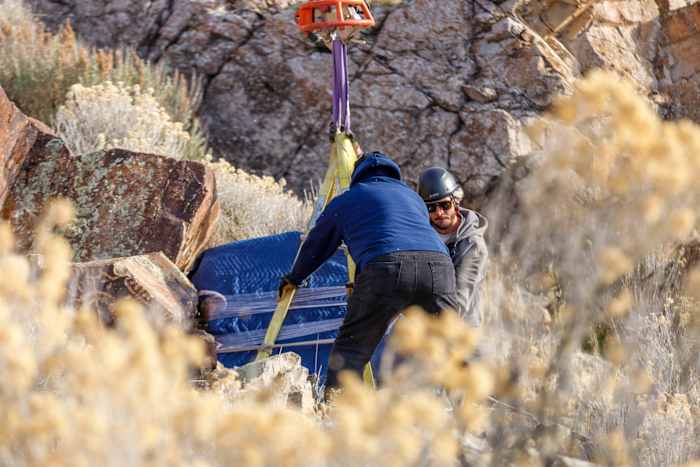
After trucking the rock to a spot near the Utah-Idaho line, a helicopter was used to move it into place. Officials did not disclose the exact location to ensure its safekeeping.
To mark the return, tribal spiritual leader Rios Pacheco offered a blessing in Shoshoni, the language spoken by the tribe.
“This rock was meant to be here,” Parry said. “It’s like this rock knows it’s home.”
Copyright 2025 The Associated Press. All rights reserved. This material may not be published, broadcast, rewritten or redistributed without permission.