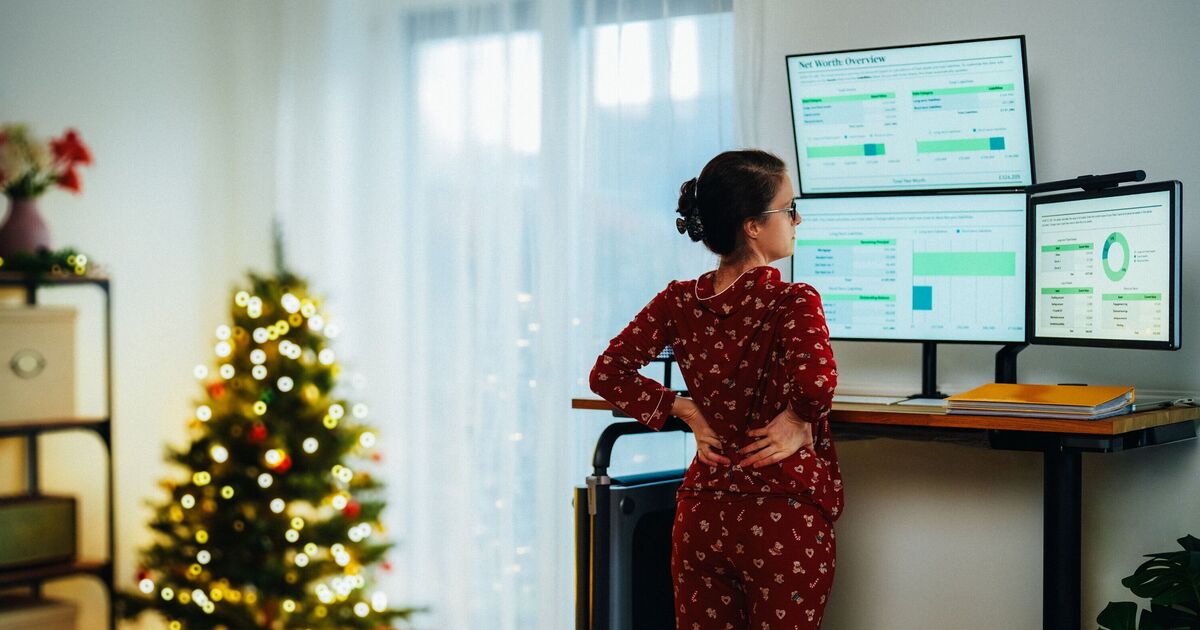

With the festive season fast approaching, the NHS has shared crucial advice for those grappling with back pain—a condition that affects many but often goes overlooked during the holiday hustle and bustle.
According to the NHS’s official guidance, while “back pain, especially lower back pain, is very common,” there are instances when it may indicate something more serious. The NHS clarifies, “It usually improves within a few weeks but can sometimes last longer or keep coming back,” suggesting that persistent or recurring pain warrants attention.
Back pain can arise from a multitude of sources, and pinpointing the exact cause is not always straightforward. As the festive season draws near, activities such as sprucing up the home, preparing elaborate meals, assembling gifts, and playing with children can all potentially trigger back discomfort. The NHS highlights that “a common cause of back pain is an injury like a pulled muscle (strain),” which can easily happen during these tasks.
It’s important to monitor any back pain closely, even if you suspect it’s linked to one of these holiday activities. More serious underlying issues could be at play, such as a slipped disc, sciatica (a trapped nerve), or ankylosing spondylitis. The NHS cautions, “Very rarely, back pain can be a sign of a serious problem such as a broken bone, cancer, or an infection.”
In most cases, back pain tends to resolve on its own within a few weeks. To facilitate recovery, the NHS advises against prolonged bed rest, emphasizing the importance of remaining active to aid the healing process.
How to ease back pain at home
Back pain often improves on its own within a few weeks. There are things you can do to help speed up your recovery with the NHS warning you should “not stay in bed for long periods of time.”
Instead you should:
-
stay active and try to continue with your daily activities
-
take anti-inflammatory medicine like ibuprofen – paracetamol on its own is not recommended for back pain but it may be used with another painkiller
-
use an ice pack (or bag of frozen peas) wrapped in a tea towel to reduce pain and swelling
-
use a heat pack (or hot water bottle) wrapped in a tea towel to relieve joint stiffness or muscle spasms
-
try doing some exercises and stretches for back pain
Be mindful that during this time of year, your GP and pharmacy may be shut. You can try the above approach or contacting other professionals as explained below who may be open when your doctors are off for Christmas.
When should I see a GP?
You should make a doctors appointment if:
- your back pain does not improve after treating it at home for a few weeks
- the pain is stopping you doing your day-to-day activities
- the pain is severe or getting worse over time
- you’re worried about the pain or you’re struggling to cope
NHS pain scale
According to the NHS, severe pain is characterised by pain that is:
- always there and so bad it’s hard to think or talk
- so bad you cannot sleep
- makes it very hard to move, get out of bed, go to the bathroom, wash or dress
Moderate pain:
- always there
- makes it hard to concentrate or sleep
- you can manage to get up, wash or dress
Mild pain:
- comes and goes
- is annoying but does not stop you doing daily activities
Ask for an urgent GP appointment or call 111
You have back pain and:
- a high temperature
- you’ve lost weight without trying to
- there’s a lump or swelling in your back or your back has changed shape
- the pain does not improve after resting or is worse at night
- the pain is made worse when sneezing, coughing or pooing
- the pain is coming from the top of your back (between your shoulders), rather than your lower back
Call 999 or go to A&E
You have back pain and:
- pain, tingling, weakness or numbness in both legs
- numbness or tingling around your genitals or buttocks
- difficulty peeing
- loss of bladder or bowel control (peeing or pooing yourself)
- chest pain
- it started after a serious accident, such as a car accident
Other ways to get help
You may be able to refer yourself for help and treatment, such as physiotherapy, from NHS community musculoskeletal (MSK) services without needing a referral from a GP. You can check out how you can get NHS help for back or joint problems here.


