
Share this @internewscast.com


The Northern Territory government’s recently introduced bail laws are facing a constitutional challenge in the High Court as prison populations reach record highs and remand rates near 50 per cent.
The Northern Australia Aboriginal Justice Agency (NAAJA), a not-for-profit legal service based in the NT, will argue the Bail and Youth Justice Legislation Amendment Act 2025 is unlawful and undermines fundamental legal principles — including the presumption that defendants are innocent until proven guilty, and the separation of powers between government and courts.
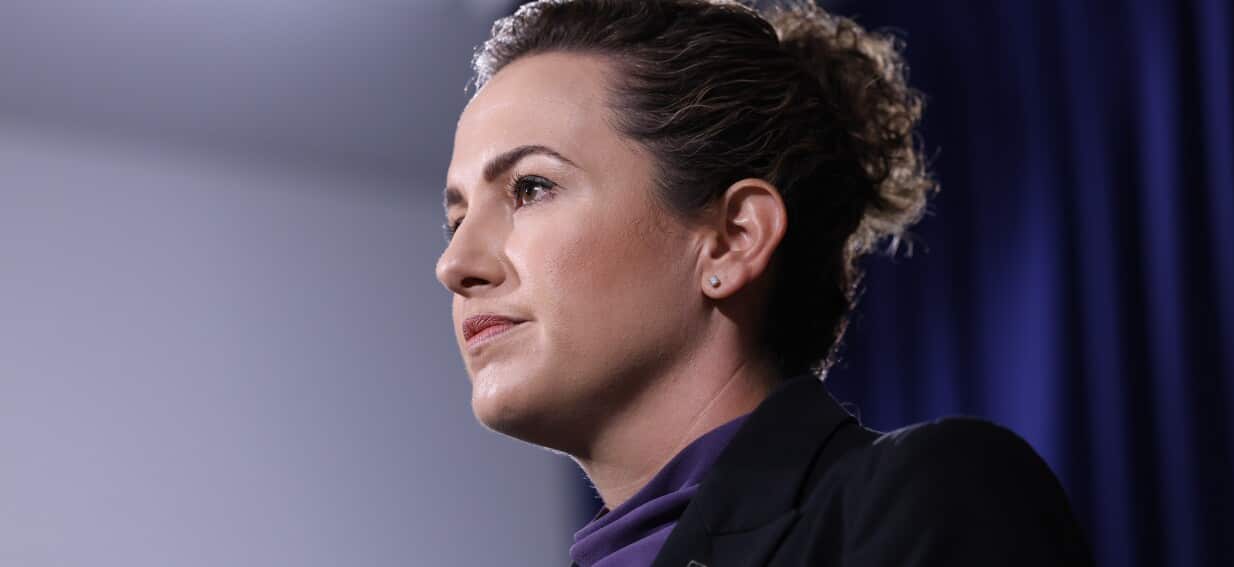
NT Chief Minister Lia Finocchiaro recalled parliament in late April and used extraordinary powers to pass the law in a single day, outlining what she called a “double community safety test”.
The law creates a presumption against bail for some serious offences, reversing the onus onto defendants.
In making community safety the “paramount consideration” in these cases, it requires a judge to be “satisfied to a high degree of confidence” that the person applying for bail will not pose a danger to the community or commit a serious offence.

The legal framework surrounding bail decisions is facing scrutiny, especially in cases involving minors. Traditionally, judges weigh a variety of factors before deciding on bail. However, recent changes have lifted the presumption against granting bail as a last resort for children, sparking debate on the balance between individual rights and community safety.

In a statement on Wednesday, NAAJA said the new laws impose an “impossibly high threshold” for being granted bail — which it said has the primary purpose of ensuring defendants attend their trial.
NAAJA will argue in court that this amounts to unlawful punishment before there has been a finding of guilt.
NAAJA chairperson Theresa Roe said the law was rushed through in a single day to avoid accountability and scrutiny, accusing the NT government of “undemocratic” processes.
“These new laws mean more and more Aboriginal people in the NT are being locked up when they haven’t been convicted of any crime,” Roe said.
“NAAJA sees many people who have been sent to prison because of these laws who have later had their charges withdrawn, essentially serving time for crimes they have not committed.”
In a statement, the NT government said it will “defend its actions” and described the constitutional challenge as “legal warfare that is being used to try to make the Territory unsafe”.

Critics argue that organizations like NAAJA should focus on breaking cycles of violence rather than potentially compromising public safety. Officials maintain their commitment to enacting policies that prioritize victims’ rights alongside community protection.

The rising incarceration rates have placed an immense burden on the correctional system. Overcrowding, understaffing, and frequent lockdowns are prevalent issues, compounded by troubling reports of neglect, such as prisoners being instructed to drink from toilets due to water shortages.

Aboriginal and Torres Strait Islander people make up 26 per cent of the NT population, but 88 per cent of the people in prison, according to data from the Australian Bureau of Statistics.
A rising number of people in NT prisons are being held on remand.
ABS data from June this year shows more than 48 per cent of the prison population were being held without being sentenced, up 53 per cent over two years.
In the year to 30 June, the total prison population jumped by 24 per cent. It rose by 8 per cent the previous year, before the CLP was in government.
When compared to global country-level statistics, the NT has the second-highest rate of incarceration, second only to El Salvador, according to data from World Prison Brief, an online database of information on prison systems around the world.

Delays in the legal process exacerbate these challenges. Criminal lawyers highlight the impact of late guilty pleas, which can lead to unnecessarily prolonged detention. Earlier pleas could reduce time spent in custody, easing some pressures on the system.

In October, co-vice president of the Criminal Lawyers Association, Luke Officer, told SBS News the new bail laws had increased pressure on courts and corrections.
He said the new bail test drives more people into remand, and lockdowns often make it more difficult to meet with clients, which can lead to adjournments and more time on remand.
“You can see how quickly it all adds up. They might be on remand for three or four months before they can even have a plea, for example,” he said.
In some cases, “they’ve all but served, if not more than served, what they would’ve got on a penalty had it been dealt with quickly”.
Officer said defendants can serve as much as six months on remand.

International attention has turned to these issues as well. The United Nations Working Group on Arbitrary Detention recently criticized the Northern Territory government for obstructing their inspections of detention facilities. In their preliminary findings, they called for urgent bail reform, underscoring the need for transparency and cooperation.

Justice system under scrutiny

The CLP has introduced a raft of “tough on crime” reforms since coming to power.
Other changes address public drunkenness, offences for ram raids and “posting and boasting” about crimes online, stronger enforcement for unpaid fines, and mandatory minimum sentences for assaulting frontline workers, as well as a range of new powers and greater resourcing for police.
The government maintains that tougher laws are needed to deal with community concern over crime.
The bail laws that are now subject to constitutional challenge were introduced after a shop owner was fatally stabbed.
But criticism has grown with prison numbers.
In November, the acting NT Ombudsman recommended prisoners be removed from watch houses “as a matter of urgency” after finding conditions were “unreasonable and oppressive”.

This month, the United Nations Working Group on Arbitrary Detention criticised a “complete lack of cooperation” from the NT government after being barred from inspecting all watch houses, prisons, and youth detention facilities, calling for bail reform in its preliminary findings.

Shortly after those findings were handed down, Australian Human Rights Commissioner Lorraine Finlay expressed her “serious concern” at the fact that the UN had been denied access.
“We understand that’s being done for operational reasons and safety concerns,” she said.
“The fact that there are safety issues serious enough … to block an expert oversight body from accessing those facilities, noting that this is an oversight body that does this type of thing every single day and routinely, that’s a really troubling thing.
“It raises serious transparency concerns, particularly when we know that those facilities have well-documented human rights issues and are specific facilities that the Australian Human Rights Commission and other bodies have raised significant concerns about over a long period of time.”

Share this @internewscast.com
You May Also Like

Lebanon’s Pivotal Role: How Its Future May Shape Regional Conflict Dynamics

in brief World leaders have called for peace talks to take place…

UK Plans New Legislation to Prohibit Cigarette Sales for Those Born After 2008

In brief A rolling age ban means children and anyone born in…
Emma Sleep mattress

Mattress Industry Leader Faces $15 Million Penalty for Deceptive Online Advertising

Mattress company Emma Sleep has been ordered to pay a $15 million…

Australian Women Confront Tough Decisions Amid National Crisis

in brief Experts are warning that the cost of living crisis is…
Ahead of the Budget delivery on Tuesday evening, Greens housing spokesman Max Chandler-Mather slammed the $9.3billion surplus as evidence of 'how little Labor cares about the housing crisis'

Budget 2024: Albo’s Challenger Unveils Key Oversight by Jim Chalmers

For the second consecutive year, Treasurer Jim Chalmers has announced a budget…
Robert F Kennedy has doubled down on Donald Trump's incorrect maths.

Trump and Kennedy’s Baffling Math Claims: Unraveling the Controversial Calculations

The President of the United States has consistently asserted that his initiatives…
Anzac soldiers

Partial Remains of Australian Soldiers from WWI Finally Laid to Rest Over a Century Later

The partial remains of eight Australian soldiers have been laid to rest…

Australia Boosts Fuel Reserves to Pre-Middle East Conflict Levels

In brief: Australia’s fuel reserves are now greater than before the US-Israeli…
Michelle Stalimeros (pictured) grew up in a 'chaotic' home where alcohol was woven into family life

Weekend Wine Habit Triggered Blackouts and Anxiety, Straining Marriage; Reflecting on Three Years of Sobriety

At first glance, Michelle Stalimeros appeared far from someone struggling with alcohol.…

Woolworths Executive Announces Price Reductions Amid Evolving Inflationary Challenges

In brief: The supermarket giants are before Federal Court over accusations of…

Unpacking the Key Issues in the NDIS Overhaul

In Brief Roughly 160,000 Australians are set to lose access to the…
Jade Elston

Adelaide Family Turns to Crowdfunding for Son’s Urgent Cancer Treatment: A Community’s Call to Action

An Adelaide family has found themselves seeking help from the kindness of…