
As Australians indulge in post-Christmas activities such as shopping for Boxing Day deals, watching the Test cricket, or following the Sydney to Hobart yacht race, a new Resolve poll reveals a significant shift in the nation’s sentiment following the December 14 terror attack at Bondi.
This shift also highlights the growing disconnect between the Prime Minister and the electorate that granted him a sweeping victory earlier this year. It’s a reminder of how swiftly political landscapes can transform.
The poll indicates that a majority of Australians now favor banning pro-Palestine rallies, including those in which members of the Prime Minister’s party recently participated.
In addition, there is a strong desire among Australians for stricter visa regulations in the wake of the ISIS-inspired attack. Nearly half of the respondents also support a Royal Commission into antisemitism, a measure the Prime Minister has so far resisted despite calls from security experts and Jewish community leaders.
Having started his political journey as a left-wing activist, the Prime Minister later became a prominent figure within the Labor Party, representing the left faction in New South Wales before entering Parliament in 1996, where he has served ever since.
Raised in Sydney’s inner western suburbs, he has long represented this area in Parliament before moving to Canberra’s Lodge upon becoming Prime Minister. This region, known for its strong support of causes like Palestine, has played a significant role in shaping his values and perspectives.
I don’t have the geographical breakdown of the Resolve research, but it’s a fair bet outlier responses to the broader majority would have come from the electors Albo represents as a local MP. The same was true of the Voice referendum which was heavily defeated despite being popular in Albo’s local community.
However, as PM he’s supposed to represent the views and values of the rest of us, which is why he’s now in a conundrum – as he pushes back against the idea of a Royal Commission, using weasel words to argue it’s unnecessary because the NSW Premier is holding a state-based one.

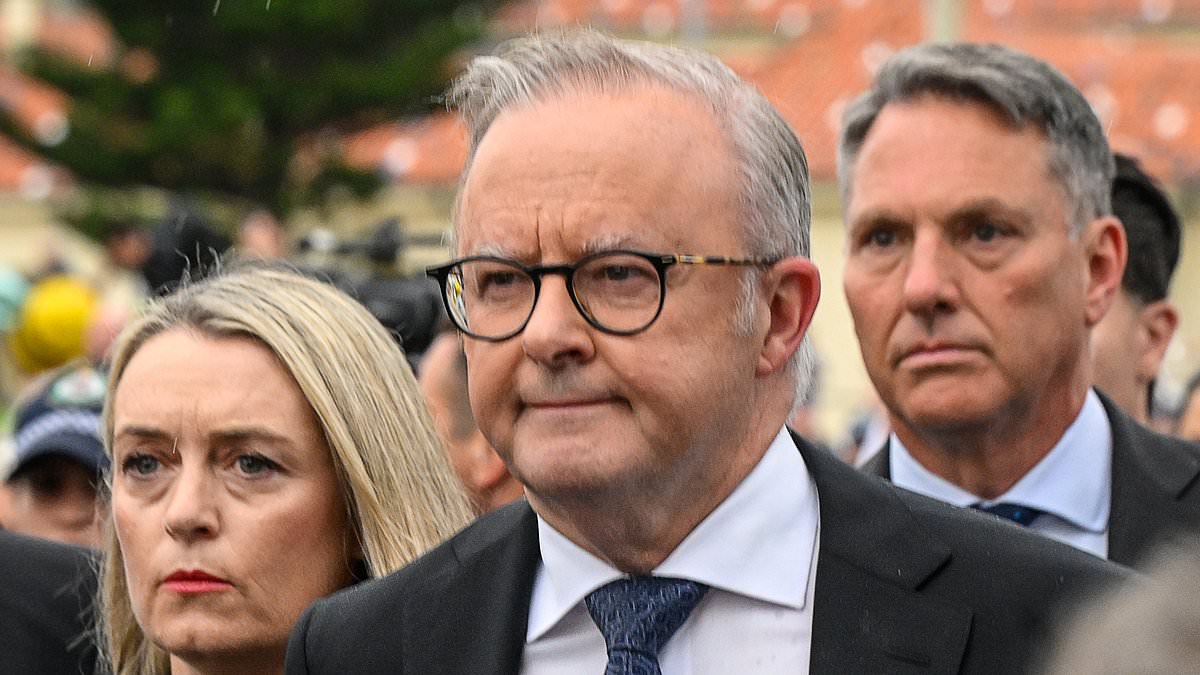
Anthony Albanese and his wife Jodie are seen at a National Day of Reflection memorial

Beachgoers and emergency service scrambe to held the wounded after the December 14 terror attack at Bondi
A federal Royal Commission is the only way to comprehensively examine what occurred on December 14. While 48 per cent of Australians want one, only 17 per cent are opposed, with the remainder undecided either way. In polling terms that’s a landslide in favour.
Albo says a Royal Commission would take too long, which is ironic given how slow-moving his government has been on so many other pressing policy positions. Unfortunately that includes responding to his hand-picked antisemitism envoy, who had been calling for stronger action for months in a report delivered to Albo’s government, but sat on ahead of December 14. He’s now belatedly taking action.
Of course Royal Commissions take time to report back, that’s the whole point of holding them. To do in-depth work for the future. The PM has instead tasked his department with doing a quicker review, one that he can control in every respect.
That tells us everything about where Albo’s priorities are at. While he says that speed is better than depth and detail, the truth is that he can do both: holding a shorter-term review that’s tightly controlled alongside enacting a detailed independent examination of what went down.
Unfortunately, for now at least, Albo can’t seem to manage to walk and chew gum at the same time. It’s just too hard, or too politically risky perhaps?
The more Australians are asked what should happen next, the clearer the mismatch becomes between the country’s instincts and those of the PM.
Of the seven policy responses tested by Resolve, the most popular wasn’t another round of the ‘social cohesion’ rhetoric Albo turns to as a default rebuff to serious action.
Australians want tougher immigration screening to weed out antisemitic or extremist views, backed by 76 per cent of respondents, with just seven per cent opposed.

A majority of Australians now support banning pro-Palestine rallies, including the sort that Albo’s MPs and ministers marched in not all that long ago
Next came banning extremist organisations, supported by 72 per cent of us compared to just six per cent against.
Stronger hate speech laws and harsher penalties for incitement against Jewish Australians also drew sizeable majorities.
NSW Labor Premier Chris Minns has been far better at answering these community concerns than Albo has, which is why he was given a standing ovation at the Bondi vigil. The contrast to the booing Albo received was stark.
In plain terms, voters want the state to act: at the borders, in the courts and against organised movements that use legal grey zones as cover. Wouldn’t you love to know how much of all of this Albo REALLY backs in his heart of hearts?
Labor’s immigration minister Tony Burke says he’ll tighten visas and create a new extremist listing regime. But not a Royal Commission that they can’t control in the same way more executive powers can be tightly controlled and managed.
A Royal Commission compels evidence. It exposes institutional failure. It produces findings that can’t be controlled by departmental processes or media management. That is the real reason why it’s being resisted by team Albo.
The public mood has shifted sharply since Bondi. Albo is trying to keep up, if only for the sake of his political survival, but his wants are a mismatch with the expectations of the rest of us, and it shows.