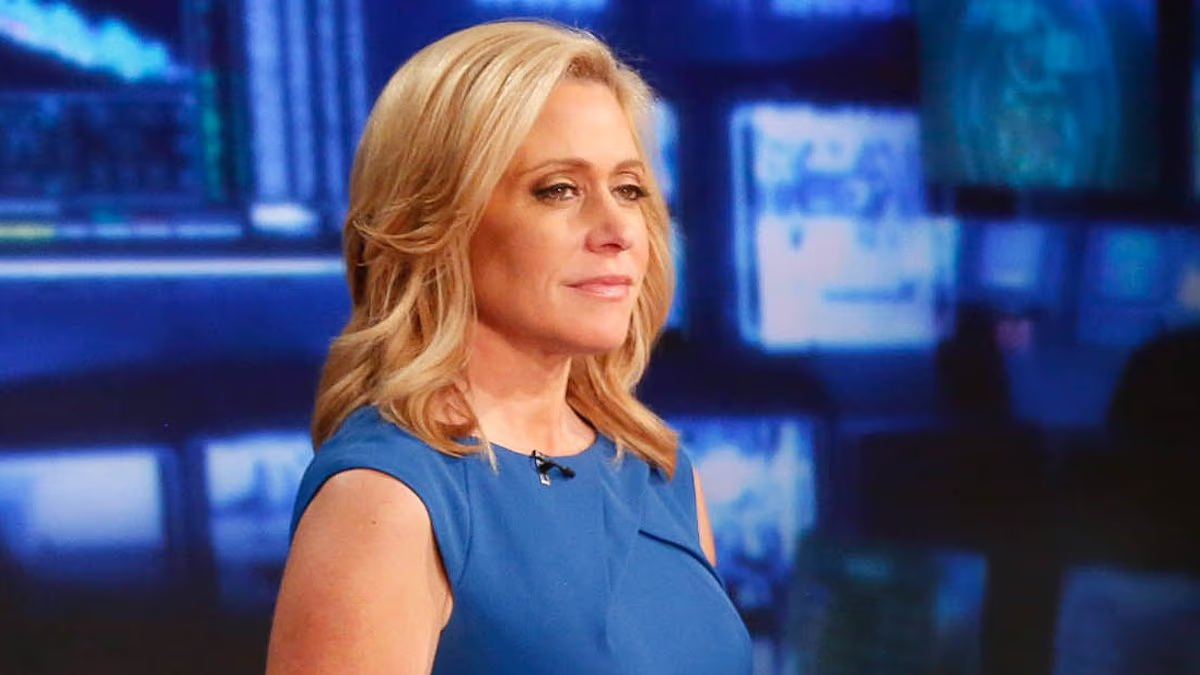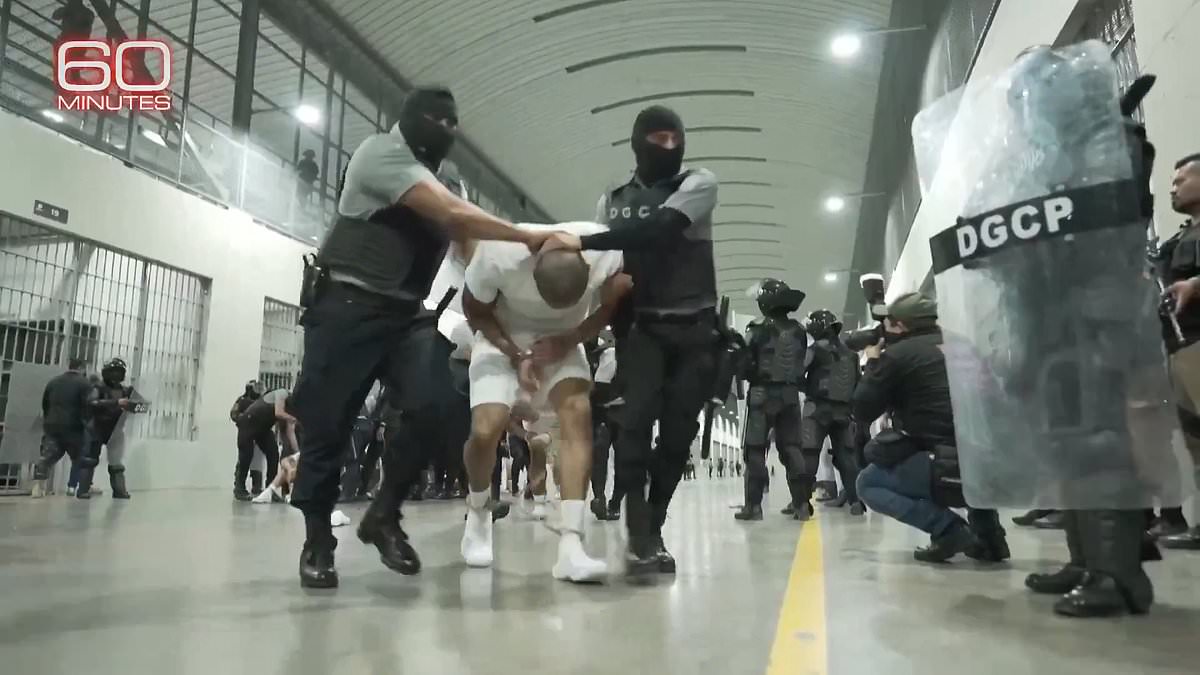

A 60 Minutes segment intended to air on Sunday night was unexpectedly removed just hours before its scheduled broadcast, but it has since surfaced online following its airing on Canadian television. The segment, titled “Inside CECOT,” was crafted by veteran journalist Sharyn Alfonsi and included interviews with a group of Venezuelan men who believed they were being deported back to Venezuela, only to find themselves at the infamous El Salvador prison. However, two hours before the episode was supposed to be broadcast, 60 Minutes announced via social media that the segment was postponed and would be shown in a future episode. Notably, Sharyn Alfonsi is pictured.

A CBS News insider revealed that the segment was pulled because network executives felt it required further reporting. This decision came after the new CBS News Editor-in-Chief, Bari Weiss, requested several modifications. Despite the last-minute change, the Canadian network Global TV aired the original episode, including the “Inside CECOT” segment, and it is now available on their streaming service. The episode quickly gained traction as viewers shared recordings on social media platforms like X and YouTube. Many viewers expressed outrage over Weiss’s decision to ax the segment at the last minute, accusing her of censorship and yielding to pressure from the Trump administration.

Alfonsi, who has been with the news magazine since 2015, criticized Weiss for damaging the reputation of 60 Minutes in a strongly worded email addressed to fellow correspondents like Lesley Stahl, Scott Pelley, and Anderson Cooper. Alfonsi mentioned she had requested a conversation with Weiss to discuss the decision, but was denied that opportunity. In her email, first reported by The Wall Street Journal and The New York Times, Alfonsi insisted that she and her team adhered to all journalistic protocols, including seeking comments from the White House, State Department, and Department of Homeland Security. She informed her colleagues that the segment underwent five screenings and was approved by CBS attorneys as well as Standards and Practices, confirming its factual accuracy. Alfonsi concluded by stating, “In my view, pulling it now, after every rigorous internal check has been met, is not an editorial decision, it is a political one.”

Weiss (pictured), the 41-year-old founder of The Free Press, has denied her decision was political, arguing it is standard practice to hold back stories until they’re perfect. ‘My job is to make sure that all stories we publish are the best they can be. Holding stories that aren’t ready for whatever reason — that they lack sufficient context, say, or that they are missing critical voices — happens every day in every newsroom,’ she told The Times. ‘I look forward to airing this important piece when it’s ready.’ She again defended her decision on Monday morning. She told colleagues that she spiked the segment simply because it ‘did not advance the ball’ during the network’s typical 9am editorial call on Monday, The New York Times reported.

She pointed out how the the Times and other publications have ‘previously done similar work’ while maintaining that fresh, through-provoking content was her ‘north star.’ ‘To run a story on this subject two months later, we need to do more,’ Weiss told staff. ‘And this is 60 Minutes. We need to be able to get the principals on the record and on camera. ‘Our viewers come first. Not the listing schedule or anything else,’ she argued. ‘That’s my north star, and I hope it’s yours too.’ A manager meeting was held later in day to address backlash caused by the decision, The Guardian reported. Panelists on MS NOW’s Morning Joe had said Monday they viewed the segment being pulled as an affront to journalism. CBS News employees, meanwhile, have threatened to quit over Weiss’s decision, CBS sources told CNN.

The uproar came as Alfonsi argued that the segment was only killed because the Trump administration refused to comment on it, saying if that is a ‘valid reason to spike a story, we have effectively handed them a “kill switch” for any reporting they find inconvenient.’ ‘If the standard for airing a story becomes ‘the government must agree to be interviewed,’ then the government effectively gains control over the 60 Minutes broadcast,’ she claimed. ‘We go from an investigative powerhouse to a stenographer for the state.’ She then declared that the men she spoke with ‘risked their lives’ by being interviewed. ‘We have a moral and professional obligation to the sources who entrusted us with their stories,’ Alfonsi said. ‘Abandoning them now is a betrayal of the most basic tenet of journalism: giving voice to the voiceless.’

In the newly-released segment, a college student who was detained by US Customs before being deported to CECOT described how he was tortured upon arrival. He said that the first thing a guard told them ‘was that we would never see day or night again.’ ‘He said “Welcome to Hell, I’ll make sure you never leave,”‘ the deported migrant said, later claiming: ‘When you get there, you know you’re in Hell. You don’t need anyone else telling you.’ Another said he and others were taken to a ‘little room where there’s no light, no ventilation, nothing.’ ‘It’s a cell for punishment where you can’t see your hand in front of your face. After they locked us in, they came to beat us every half hour, and they pounded on the door with their sticks to traumatize us while we were in there,’ he claimed.

Alfonsi also said in the segment released Monday evening that she reviewed available ICE data to confirm Human Rights Watch’s findings that suggest only eight deported men had been sentenced for violent or partially violent crimes. She then questioned the Trump administration’s basis for deporting many of the Venezuelan men to CECOT, where she claimed they were left without food or medicine. ‘The sicker and more injured we were, the better it was for them,’ one of the migrants said of the guards. The segment ends with Alfonsi saying the Department of Homeland Security ‘declined our request for an interview and referred all questions about CECOT to El Salvador.

‘The government there did not respond to our request,’ she said, before noting that the Trump administration has since made deals with other countries to send migrants to prisons there. But the segment also included comments Trump made as he sat down with El Salvadoran President Nayib Bukele earlier this year, praising the prison system, saying it has ‘very strong facilities’ and El Salvadorans ‘don’t play games.’ CBS News had included the segment on the 60 Minutes schedule just last week. ‘Earlier this year, the Trump administration deported hundreds of Venezuelan migrants to El Salvador, a country most had no ties to, claiming they were terrorists,’ it advertised. ‘This move sparked an ongoing legal battle and nine months later, the US government still has not released the names of all those deported and placed in CECOT, one of El Salvador’s harshest prisons.’ But Weiss then requested numerous changes to the segment, according to The New York Times.