
Consumers are still grappling with rising costs.
In the United States, the price tags on groceries, clothing, and vehicles have surged by 25.1 percent over the past five years, according to an analysis of government-released inflation figures.
Every month, the Bureau of Labor Statistics dispatches researchers to a variety of retail and service locations, including supermarkets, gas stations, restaurants, bars, cafes, and car dealerships, to assess what Americans are paying.
They track the prices of a representative basket containing 80,000 items—ranging from eggs and rent to gasoline, coffee, and apparel—and compare current prices to those from the previous month and year. This evaluation forms the basis of the Consumer Price Index.
In November, the cost of this basket increased by 2.7 percent compared to the same month in 2024.
Although this figure was slightly below the anticipated 3.1 percent, it still indicates that items priced at $100 last year now cost $102.70.
And that is after two years when prices were rising by more than 5 percent and peaked at 9.1 per cent.
‘We’re all comparing our grocery bills to what our money could buy in 2019 and not walking away with a warm and fuzzy feeling,’ Scott Anderson, the chief economist at BMO Bank, told CNBC.

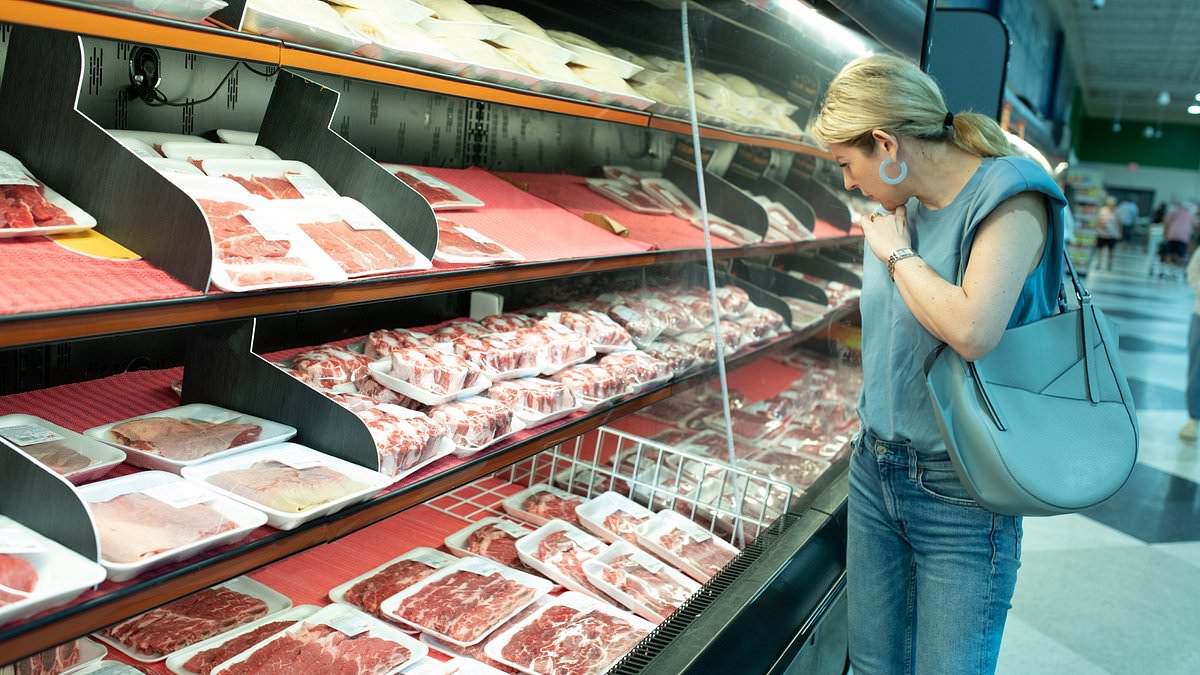
Shoppers have seen prices for essentials – including grocery meats, gas at the pump, and clothing – increase over the past year
The 25.1 percent consumer price increases are massive compared to other five-year periods. For example, between 2015 and 2020, retailers raised prices by just 10 percent.
Yet not every American has felt that pricing increase the same way.
Wage gains for middle- and high-income earners have largely kept pace with inflation, helping six-figure households absorb higher prices without cutting back as sharply.
That’s helped keep America’s economy hot. Gross domestic product — a broad measure of economic activity — jumped by 4.3 percent from July through September.
But for lower-income Americans and hourly workers, the math has been far less forgiving.
‘Wage gains tend to be higher for higher-skilled workers than lower-skilled workers, and in industries like financial services, information services, and manufacturing sectors,’ Anderson said.
The result is an economy increasingly split in two: one where rising prices are inconvenient for high earners, and another where they are destabilizing for people who are scraping by.
That divide is now showing up in more economic data.

The five-year price increases have not hit the economy evenly. High-income earners are still spending on luxury retail. But shoppers with less than $100,000 annual salaries have become increasingly squeezed

Shoppers are starting to trade down to lower-priced retailers as inflation continues to climb
In December, the Consumer Confidence Index — a key measure of Americans’ economic outlook from The Conference Board — fell for the fifth straight month, dropping 3.8 points to 89.1, the second-lowest reading of 2025.
‘Consumer confidence fell again in December and remained well below this year’s January peak,’ Dana Peterson, the chief economist at the organization, said.
Americans are now most anxious about their ability to find a new job if prices continue to rise — a warning sign economists watch closely.
And it helps explain why many analysts believe higher prices are here to stay.
The Federal Reserve, led by Chair Jerome Powell, is the federal government’s primary tool to help stave off massive price increases.
But it’s long tried to walk a tightrope by raising interest rates when inflation runs hot, and cutting them when the job market weakens.
While the central bank publicly maintains a 2 percent inflation target, some market watchers say that goal has quietly shifted.
‘This will never be formalized or admitted publicly,’ said Tom Hulick, CEO of Strategy Asset Managers.
‘But the Federal Reserve’s inflation target has effectively been raised to 3 percent.’
For shoppers already stretched thin, that shift carries a clear implication: even if inflation cools, prices are unlikely to come back down — even after their 25.1 percent five-year increase.