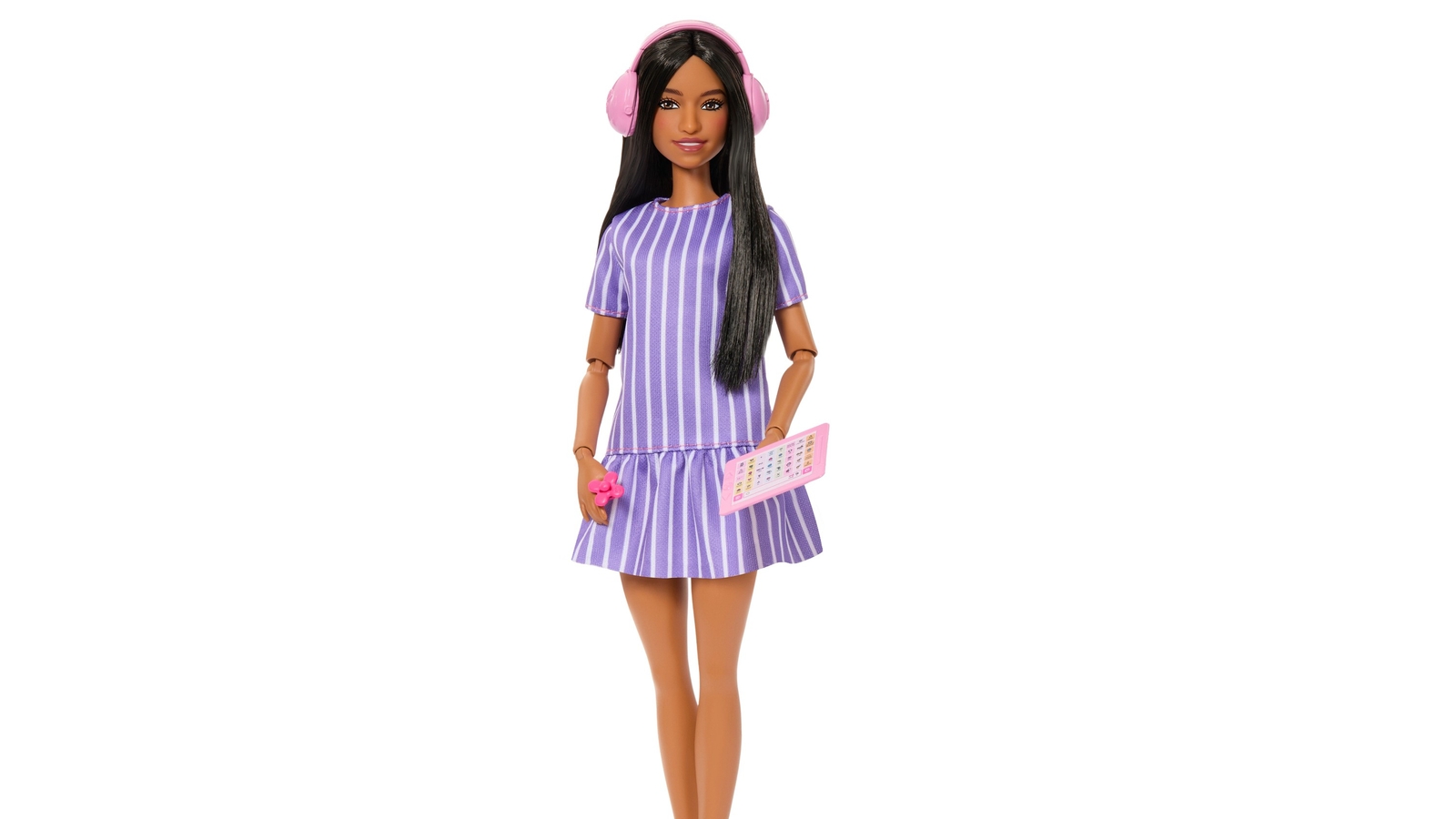

In an effort to embrace diversity, Mattel Inc. is set to unveil a new addition to its Barbie lineup: a doll representing the autistic community. This latest model is part of a broader initiative to create more inclusive toys, alongside other dolls featuring Down syndrome, blindness, and vitiligo.
The creation of this autistic Barbie was a meticulous process, spanning over 18 months, and was developed in collaboration with the Autistic Self Advocacy Network. This nonprofit organization is dedicated to promoting the rights of individuals with autism and ensuring accurate media portrayals. According to Mattel, the aim was to design a Barbie that captures the unique ways in which autistic individuals interpret and engage with their surroundings.
Crafting a doll that embodies autism’s diverse spectrum posed a significant challenge. Autism manifests in a wide variety of behaviors and challenges, many of which are not overtly visible. Noor Pervez, the community engagement manager at the Autistic Self Advocacy Network, played a key role in the development process, stressing the complexity of representing autism through a doll.
“Autism does not present a uniform appearance,” Pervez noted. “However, we can highlight some common expressions of autism.”
One of the most distinctive features of the new Barbie is her gaze, which slightly diverts to the side, symbolizing the tendency among some autistic individuals to avoid direct eye contact. Additionally, the doll features articulated joints in her elbows and wrists, acknowledging behaviors like stimming and hand flapping, which can be methods for autistic people to manage sensory input or express excitement.
In designing the doll’s attire, the team deliberated between tight and loose-fitting clothing. Some individuals with autism prefer looser garments to avoid discomfort from fabric seams, while others opt for snug clothing to maintain spatial awareness. This consideration reflects the nuanced needs of the autistic community.
The team ended up choosing an A-line dress with short sleeves and a flowy skirt that provides less fabric-to-skin contact. The doll also wears flat shoes to promote stability and ease of movement, according to Mattel.
Each doll comes with a pink finger clip fidget spinner, noise-canceling headphones and a pink tablet modeled after the devices some autistic people who struggle to speak use to communicate.
The addition of the autistic doll to the Barbie Fashionistas line also became an occasion for Mattel to create a doll with facial features inspired by the company’s employees in India and mood boards reflecting a range of women with Indian backgrounds. Pervez said it was important to have the doll represent a segment of the autistic community that is generally underrepresented.
Mattel introduced its first doll with Down syndrome in 2023 and brought out a Barbie representing a person with Type 1 diabetes last summer. The Fashionistas also include a Barbie and a Ken with a prosthetic leg, and a Barbie with hearing aids, but the line also encompasses tall, petite and curvy body types and numerous hair types and skin colors.
“Barbie has always strived to reflect the world kids see and the possibilities they imagine, and we’re proud to introduce our first autistic Barbie as part of that ongoing work,” Jamie Cygielman, Mattel’s global head of dolls, said in a statement.
The doll was expected to be available at Mattel’s online shop and at Target stores starting Monday for a suggested retail price of $11.87. Walmart stores are expected to start carrying the new Barbie in March, Mattel said.
The Centers for Disease Control and Prevention reported last year that the estimated prevalence of autism among 8-year-old children in the U.S. was 1 in 31. The estimate from the CDC’s Autism and Developmental Disabilities Monitoring Network said Black, Hispanic, Asian and Pacific Islander children in the U.S. were more likely than white children to have a diagnosis, and the prevalence more than three times higher among boys than girls.
Copyright © 2026 by The Associated Press. All Rights Reserved.