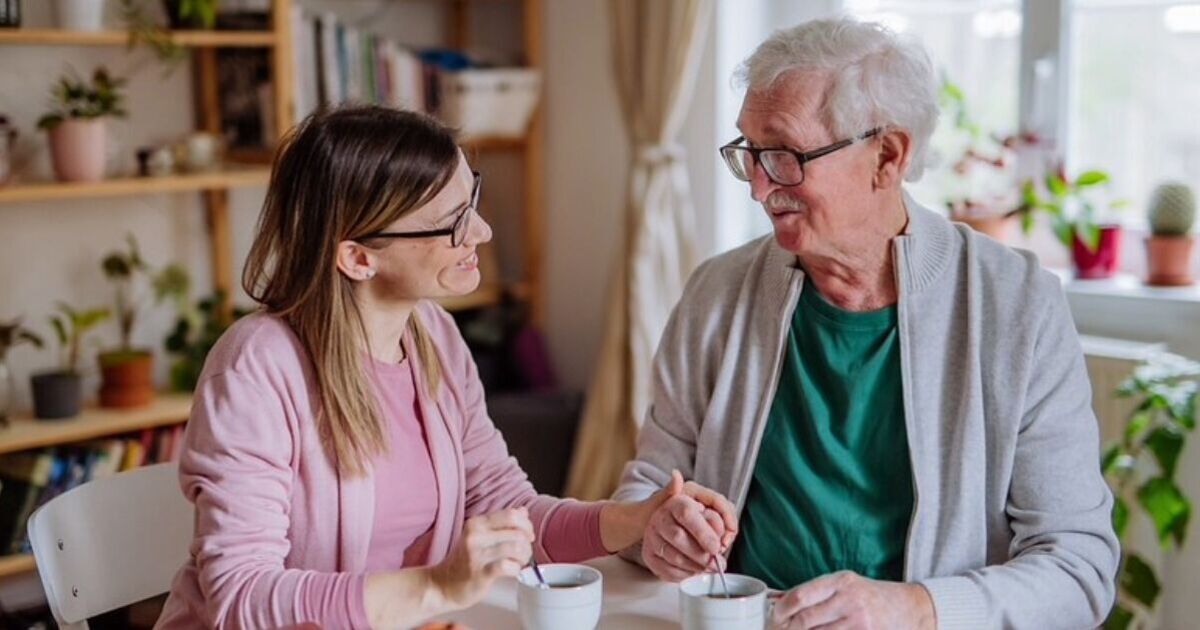


Families urged to have conversations with elderly relatives now after “red flag” warnings over Chris (Image: Person Centred Software / Cover Images)
More than a third of Brits are worried elderly relatives may now need extra care after noticing worrying changes over the Christmas period, new research has revealed.
Recent research has uncovered that over a third of Britons are concerned that their elderly relatives may require additional care following observations of troubling changes during the Christmas period.
The holiday season brought to light several warning signs, with the most frequently noted issues being confusion and memory lapses (41%), shifts in mood and behavior (40%), and increased frailty or mobility challenges (39%).
Conducted by the care technology company Person Centred Software, the study also revealed that 64% of individuals tend to postpone discussions about the need for extra assistance with their elderly relatives.
Common reasons for delaying these conversations include fears of causing distress to their loved ones and uncertainty about how to initiate the dialogue.
Additionally, negative portrayals of care homes in media and television dramas, which often depict them as substandard or neglectful, contribute to these hesitations. Consequently, 41% of respondents believe care homes are the same or worse than they were 10 to 15 years ago, even though 56% have not visited one in the last two years.
This hesitation means that many families only address the need for care during a crisis, with 45% making decisions following a sudden health decline or hospital admission.
“We believe that January is an ideal time to have a conversation about care, particularly if changes are noticed over Christmas,” she said.
“Far better to have the conversation straight away than wait for a crisis, when stress is high and care choices are limited.
“Digitisation has truly transformed the care sector and, with perceptions of care homes that are out of step with reality, a lot of fears can be put to rest quickly.
“Person Centred Software technology lets homes deliver care in smarter, more personalised ways. This includes tailored care plans and accurate medication management, but also more meaningful activities and improved communication with families.
“What this means is greater focus on residents’ wellbeing while giving families peace of mind, making the move into care feel less daunting.”
The research also revealed that reluctance to talk about care is driven by denial and rooted in fear.
Top concerns included quality of care and attention their loved one would receive (54%), cost and affordability (53%), and worries that their loved one would feel abandoned (51%) or lose their independence or dignity (45%).
Marina Glaves, a registered carer and manager at Pearlcare homes, said that relatives often expect the worst.
“Families arrive with the idea that care homes are like old workhouses – restrictive places where residents have all decisions made for them,” she said.
“The modern care home is quite the opposite: lively, bustling places full of joy where people thrive. Residents are involved in how the home runs, what happens day-to-day, what they eat, and how they spend their time.
“I can think of one resident whose sister was devastated when he moved here, convinced a care home was wrong for him. Four years on, she tells us: ‘Why did I put myself through that stress when he’s so happy now?’”
To help families have ‘That Care Home Conversation’ Person Centred Software has compiled advice and tips on how to get started.


