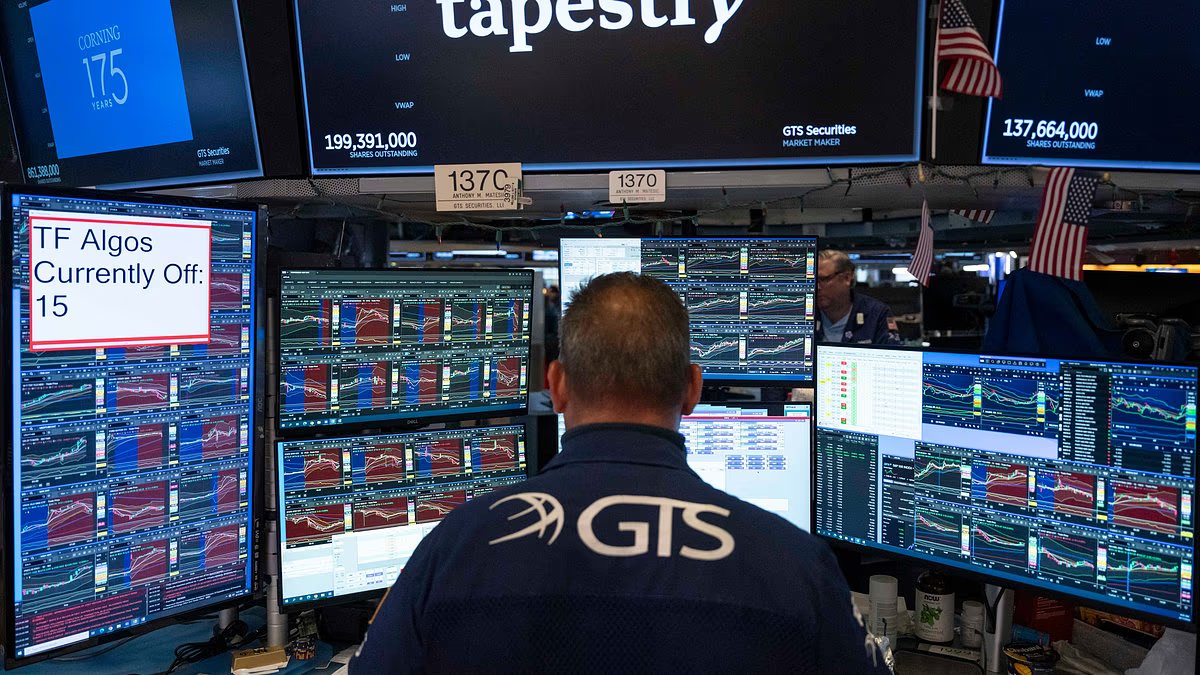

Yesterday, First Lady Melania Trump had the honor of ringing the opening bell at the New York Stock Exchange, standing against the backdrop of a large display showcasing the documentary titled ‘Melania’.
Every day, both the New York Stock Exchange and the Nasdaq exchange kick off the trading day with an atmosphere filled with excitement, applause, and vibrant energy.
In the world of equity investing, the enthusiasm among market professionals and individual investors seems boundless.
Yesterday marked a significant moment for the S&P 500, widely recognized as the index that best mirrors the American economy, to demonstrate its strength.
This index comprises companies that are deeply embedded in the fabric of the U.S. economy, spanning across its various regions and cities.
There was a wave of celebration as the S&P 500 surpassed the 7,000 mark for the first time. Investors appeared undeterred by the uncertainties stemming from President Donald Trump’s verbal confrontations with the U.S. Federal Reserve, Canada, and the looming presence of a ‘beautiful’ armada near Tehran.

Changes: Rules governing London IPOs have been eased and the LSE has set up an innovative interim market PISCES, which allows firms raising funds to dip in and out of the public markets
Shareholders were also unbothered by the central bank decision last night to hold the key Fed funds rate in the 3.5 per cent to 3.75 per cent range.
Markets are hanging on to the hope of two cuts in the months ahead. There are three stock market indexes monitored closely in the US.
The runaway Nasdaq is the natural home to tech stocks, and in the decade of the ‘Magnificent Seven’ is increasingly seen as the bellwether.
But it is the Dow Jones Industrial Average, comprising 30 shares, that commands the most headlines on news bulletins.
It is home to the grand dames of American commerce, such as Exxon Mobil, Caterpillar, JPMorgan, Coca-Cola, IBM and McDonald’s.
The S&P, in contrast, runs the gamut. Given the size of the American economy and the number of firms represented it cannot escape the madcap artificial intelligence boom. A soaring rise in the S&P – historically much stodgier than the other indexes – has been fuelled by AI.
Technology stocks including Nvidia, Microsoft and Google owner Alphabet now make up some 50 per cent of the value of the S&P 500, demonstrating the changing face of US commerce.
The index has become more volatile. The S&P plunged after the Liberation Day tariff scare in April 2025 but has gained 45 per cent since then.
Recovery, partly, is driven by the increasing preference of professional and private investors for funds which shadow the indexes, rather than active investment based directly on earnings, prospects and analytical nous.
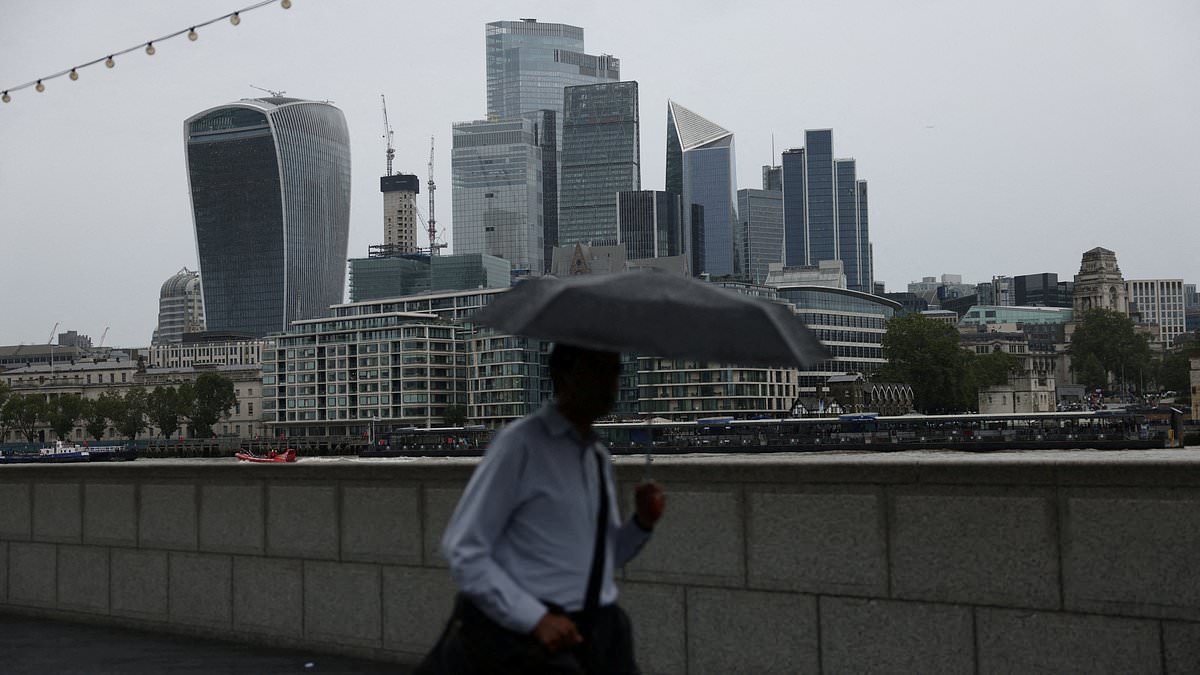
A big question for UK investors is why most shares on the London stock markets fail to attract New York valuations.
The Government, regulators and the London exchange have sought to address the issue by sweeping away regulations.
Rules governing initial public offerings have been eased and the London exchange has set up an innovative interim market, PISCES, which allows firms raising funds to dip in and out of the public markets.
None of this has been enough to stop the UK’s most valuable corporation, pharma giant AstraZeneca, from adding a full New York listing to its London quote.
The key factor undermining London as a venue for equity trading has been the exit of British pension funds from UK equities.
In the 1990s UK funds held 30 per cent-plus of London-quoted equities, a figure which has plummeted to just 4 per cent.
The initial trigger was the removal of favourable tax treatment for the dividends from British companies invested by pension funds. The favourable tax treatment of private pensions saving is critical in a country with an ageing population.
Leading City figures, including David Schwimmer, chief executive of the London Stock Exchange Group, question why UK pension savings, which receive a large subvention from the Exchequer, should be splashed on overseas shares. The benefit would be better focused on Britain.
The equity culture in the UK is badly denuded. Much of the energy generated by Mrs Thatcher’s privatisations in the 1980s and beyond has drained away.
Labour politicians seem to think that public ownership of the railways, water and other utilities is the answer to our woes.
They need to look across the Atlantic to see the benefits, in terms of wealth creation, of dynamic listed companies.
DIY INVESTING PLATFORMS
AJ Bell

AJ Bell
Easy investing and ready-made portfolios
Hargreaves Lansdown

Hargreaves Lansdown
Free fund dealing and investment ideas
interactive investor

interactive investor
Flat-fee investing from £4.99 per month
Freetrade

Freetrade
Investing Isa now free on basic plan
Trading 212

Trading 212
Free share dealing and no account fee
Affiliate links: If you take out a product This is Money may earn a commission. These deals are chosen by our editorial team, as we think they are worth highlighting. This does not affect our editorial independence.
Compare the best investing account for you