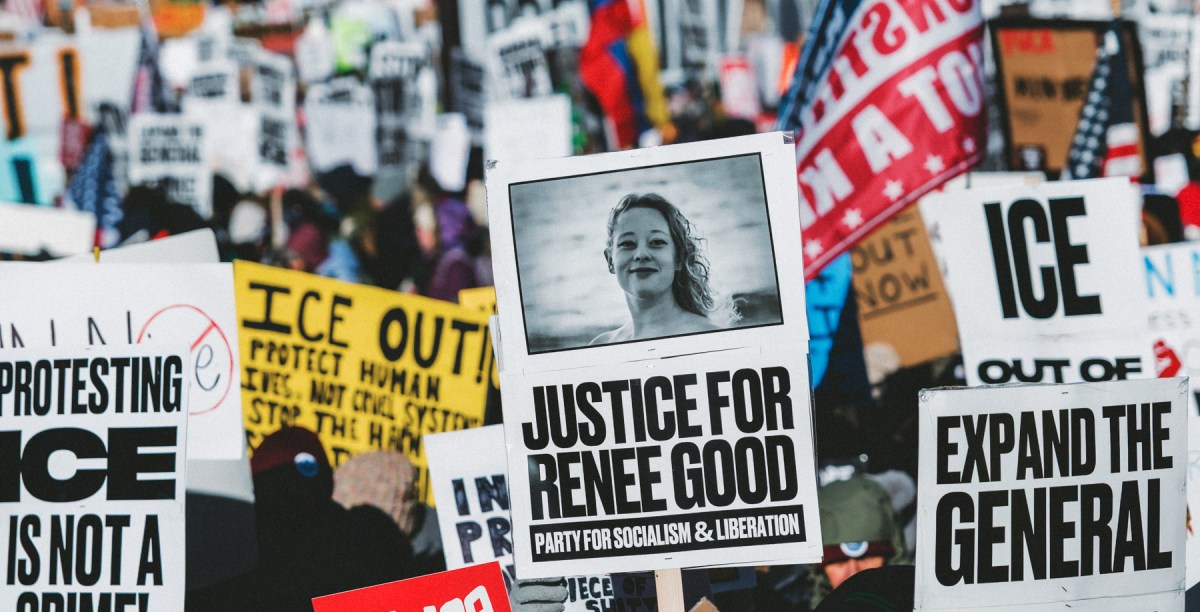

In the biting cold, removing my mittens to consult Google Maps was not an option. Instead, I entrusted my direction to the procession of warmly dressed individuals ahead, each clutching signs and sporting whistles over their layers of winter attire. Initially, we were a modest group, but as we progressed toward Government Plaza, opposite Minneapolis City Hall, our numbers swelled from dozens to hundreds. By the time we arrived, the throng had grown into thousands. Estimates ranged from five to ten thousand participants, but on the ground, it felt like an undulating sea of people too vast to quantify.
Navigating through the crowd, I offered countless “excuse me” and “pardon me” amid the noise, as the attendees exemplified remarkable politeness. I was offered various items: a “Fuck ICE” pin, a chocolate-chip cookie, and a red vuvuzela, but all three individuals chose to remain anonymous and declined interviews.
Friday, January 30 marked the second general strike in the Twin Cities following the fatal shooting of Alex Pretti by federal immigration officers. This particular event appeared to be organized by Somali and Black student groups from the University of Minnesota. Unlike the initial strike endorsed by local unions the previous week, this one came together more swiftly. Despite some whispers of a lower turnout, the crowded plaza seemed impossibly full, yet more Minnesotans continued to arrive. As a light-rail car arrived, it revealed passengers packed shoulder to shoulder, spilling out to fill any remaining space.
The crowd’s chants echoed: “No more Minnesota nice, Minneapolis will strike.”
In contrast to the ongoing protests at the Whipple Federal Building—where ICE agents embark in unmarked vehicles to apprehend immigrants—the atmosphere at City Hall was notably buoyant, albeit underscored by a pervasive sense of anger and fear. At Whipple, federal agents and local deputies are often met with jeers and shouts, which are sometimes reciprocated with flash bangs and pepper spray. Today, however, the City Hall rally seemed devoid of such threats. Yet, recent events have taught Minneapolis residents that danger is ever-present. Whether sitting in a car, participating in an ICE watch, protesting a killing, or simply commuting, the risk of encountering federal agents is palpable. Even sounding a whistle to warn neighbors of an ICE operation can result in being pepper-sprayed. Meanwhile, medics were on standby, prepared for any eventuality.
Above, helicopters circled the skies, while volunteer marshals in neon vests managed the crowd at nearly every entrance and street corner. One marshal cautioned me about the ice, but before I could react, I slipped. Fortunately, a woman behind me caught me, preventing a fall.


