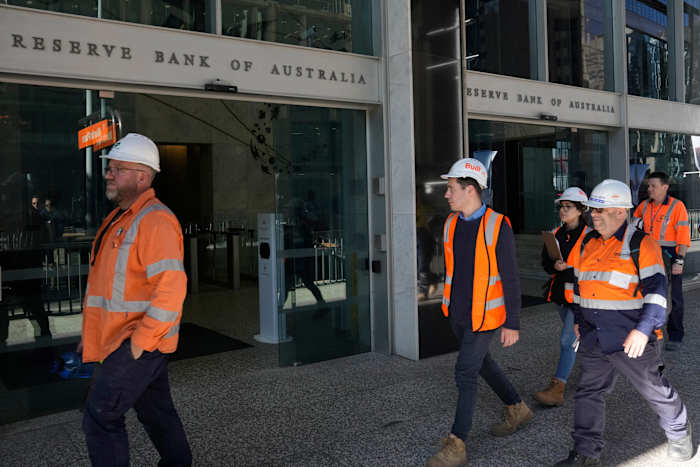

MELBOURNE – In a decisive move to counter rising inflation, Australia’s central bank announced an increase in its benchmark interest rate on Tuesday. The rate was raised by a quarter percentage point, bringing it to 3.85%. This comes after a series of three rate cuts last year.
The Reserve Bank of Australia’s latest adjustment marks its first hike since November 2023, when the rate climbed from 4.10% to 4.35%. The decision was largely anticipated following recent government data revealing that inflation had surged to 3.8% for the year ending in December, up from 3.4% the previous month.
The bank’s interest rate adjustments are part of its strategy to steer inflation within a target range of 2% to 3%. Despite efforts to curb inflation, the bank acknowledged in a statement that inflation is expected to remain above this target for the foreseeable future.
Inflation has seen a significant drop from its peak of 7.8% in the final quarter of 2022. However, recent trends indicate a notable increase during the latter half of 2025, prompting the central bank’s preemptive rate hike.
“The board considers that inflation is likely to remain above target for some time,” the bank said in a statement.
Inflation had fallen substantially since it peaked at 7.8% in the last three months of 2022, but had “picked up materially in the second half of 2025,” the statement said.
“Uncertainty in the global economy remains significant but so far there has been little or no depressing effect on the Australian economy; indeed, recent growth and trade in Australia’s major trading partners has surprised on the upside,” the bank said.
Treasurer Jim Chalmers described the rate hike as “difficult news” for millions of Australians with mortgages and businesses.
Chalmers rejected criticism that government spending was fueling inflation. He noted the bank statement blamed growth in private demand driven by household spending and investment.
The bank had reduced the cash rate by 25 basis points last year in February, May and August.
The adjustment in February last year had been Australia’s first rate cut since October 2020.
Last year, annual inflation fell from 2.4% in the March quarter to 2.1% in June, before rebounding to 3.2% in September.
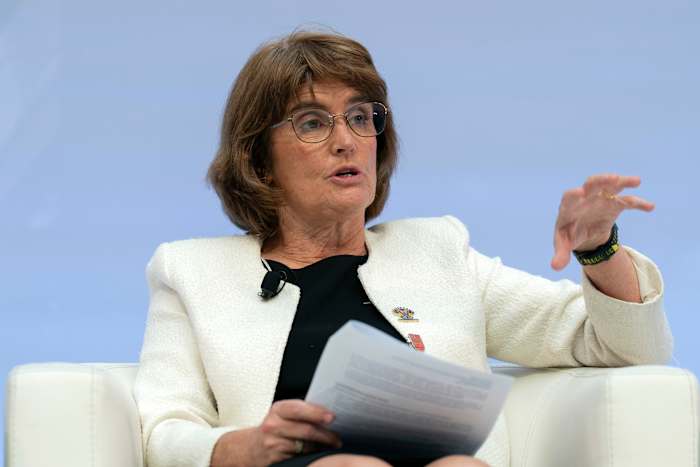
EY Oceania Chief Economist Cherelle Murphy said it was unusual for the bank to boost the cash rate only six months after cutting it.
“There is certainly a possibility here obviously, that last rate cut wasn’t needed. But to be fair to the Reserve Bank, that was not obvious at all at the time,” Murphy told Australian Broadcasting Corp.
“In fact, it looked like the inflation numbers had been coming down quite nicely. Obviously that’s not turned out to be the case,” Murphy added.
Murphy said she had been surprised by Australia’s unemployment rate falling from 4.3% in November to 4.1% in December.
“It does seem like the economy is running a little bit too hot,” Murphy said. ”I certainly wouldn’t rule out another rate hike later in the year.”
Copyright 2026 The Associated Press. All rights reserved. This material may not be published, broadcast, rewritten or redistributed without permission.