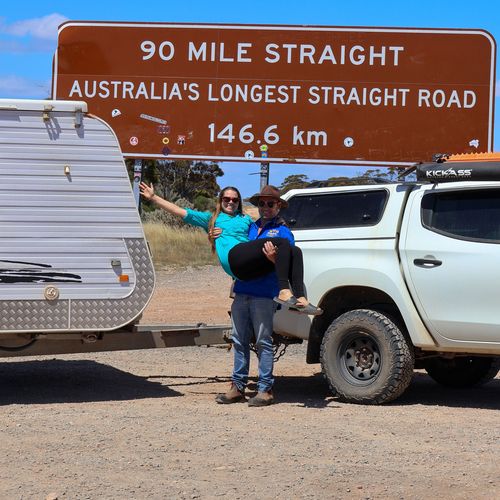

The couple from South Australia faced a significant crossroads: should they chase the dream of homeownership with the traditional white picket fence, or should they abandon convention and embrace a life of perpetual travel on the open road?
In the end, these adventurous “not-so-grey” nomads chose the latter path, opting for a life filled with exploration and freedom.
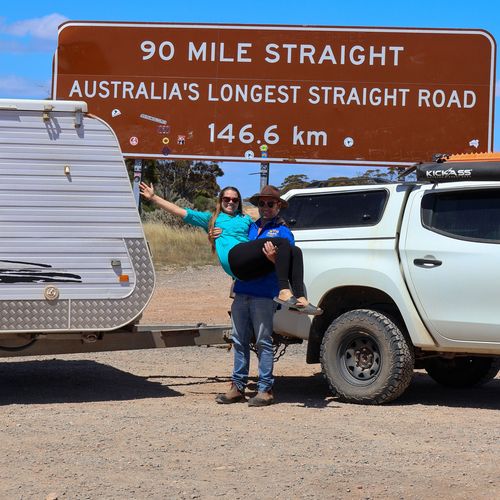
After covering an impressive 116,000 kilometers, they remain steadfast in their decision, with no intention of returning to their former, more settled lives.
“We were both engaged in regular careers,” Mercer shared with nine.com.au.
“Jess is a physiotherapist by profession, while I was successfully managing my own personal training business at the time.”
Despite their professional achievements, the relentless grind of six-day workweeks began to wear them down, fueling their desire for change.
And while plenty of their friends and family members back home knuckled down to buy a house, Mercer and Smith wanted something more.
They didn’t want to wait until retirement to see their own backyard.
“We hardly ever got to go away. We never really had weekends,” Mercer added.
“We kind of got sick of paying somebody else’s mortgage for their house.
“While we were sort of saving money, it wasn’t enough to be able to get out of the rent cycle.”
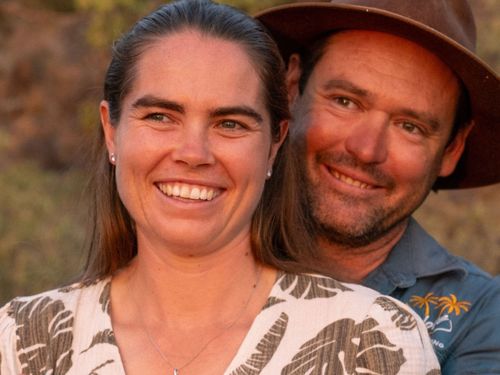
Mercer said he “pestered” his now-fiancee to take the leap.
“One particular day, Jess actually just turned around and said, ‘Yep, let’s do it’,” he recalled.
After ending their lease and holding a garage sale, the couple set off for an indefinite trip alongside Mercer’s parents, who also live on the road full-time.
Smith said her own parents were a little “shocked” by their decision.
“They [asked me], but you’ve got a partner, why don’t you buy a house?” she laughed.
Aged in their 20s and 30s when they embarked on their adventure, Mercer and Smith are among tens of thousands of younger Australians who are eschewing mortgages for life on the road.
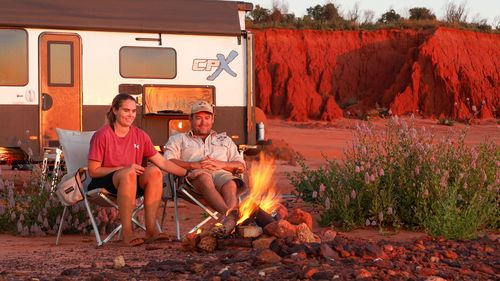
Half a decade and a trove of priceless experiences later, Mercer and Smith have no regrets about buying a van instead of a property.
They have travelled to almost every state and territory in Australia except the ACT.
Their dream life has taken them to WA’s Pilbara, Fortescue Bay in Tasmania, the Nullabor Plain, SA’s Flinders Ranges, Rottnest Island, Bundaberg and Uluru.
“We’ve definitely done the coin toss before to decide which way to go,” Mercer said.
”I like being spontaneous now, I can deal with not having an exact plan for where we are going,” Smith added.
Right now, they are slowly making their way through Victoria’s High Country.
When it gets colder, the couple will migrate north to “follow the sun”.
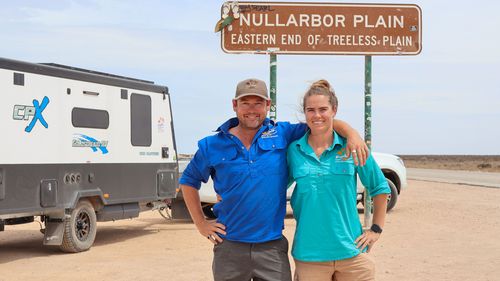
Finances can be the most difficult part of full-time travel.
Smith still keeps her registration as a physio by taking on casual appointments wherever they travel, and they both pick up odd jobs at pubs, caravan parks or bottle shops in small towns to earn cash.
“The most it’s ever taken us to find work over five years is two days,” Mercer said.
It can cost between $500 to $1000 per week to live on the road.
That includes petrol, van maintenance, internet bills, flat tyres, food and campsite fees.
Diesel petrol for their 2023 Isuzu D-Max is the biggest expense that eats into their budget.
“We’re spending a lot less money per week now compared to what we would be spending on a mortgage,” Mercer added.
Mercer and Smith have no intention of ending their travels and say it’s possible to live on the road “forever”.
“We still get a lot of, ‘How’s your trip going? How’s your holiday?” Mercer said.
“But this is our life now. This is what we do.”
NEVER MISS A STORY: Get your breaking news and exclusive stories first by following us across all platforms.