
Recent research indicates that a prevalent bacterium, typically associated with minor respiratory ailments, might persist in the body for years and exacerbate Alzheimer’s disease.
Known as Chlamydia pneumoniae, this bacterium is believed to infect up to 80% of adults during their lifetime.
For the majority, it results in nothing more than a mild sore throat, fatigue, and a runny nose.
However, in susceptible populations, such as the very young and the elderly, it has the potential to cause severe respiratory infections, including pneumonia.
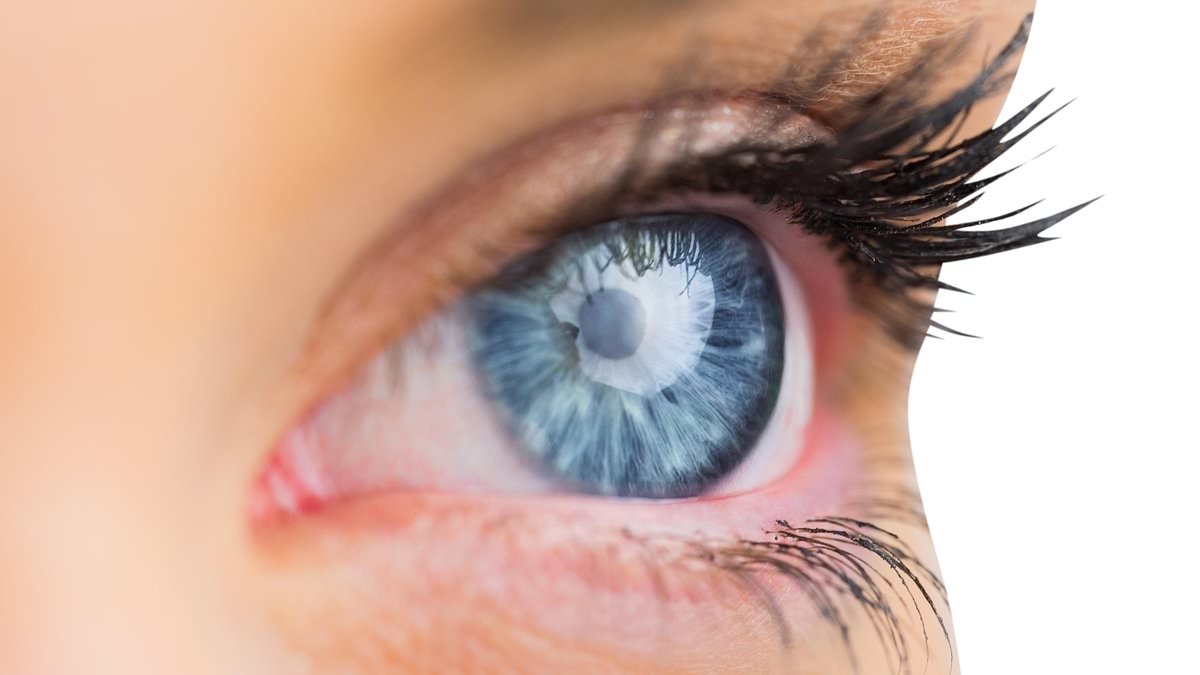
Intriguingly, scientists have discovered traces of this bacterium in the eyes of individuals who had Alzheimer’s, prompting questions about whether the infection could initiate or speed up the disease.
Researchers at Cedars-Sinai Medical Center in Los Angeles propose that early antibiotic treatment upon detection of the infection may eventually help in lowering the risk of dementia.
The findings come as European surveillance data suggests C. pneumoniae surged sharply in 2024 – from roughly five cases per 1,000 tests to almost 17 per 1,000 within a single year.
The cause of the sudden rise isn’t fully understood. But some scientists have raised the possibility of post-Covid ‘immunity debt’ – the idea that reduced exposure to everyday bugs during lockdowns left populations more vulnerable once restrictions were lifted.

A common bacteria best known for causing mild cold-like illnesses could linger in the body – including in eyes – for years and help worsen Alzheimer’s, new research suggests
Others believe a new strain of the bacteria may be emerging.
To make their discovery, researchers examined donated eye tissue from more than 100 people who had died with Alzheimer’s, mild cognitive impairment or no signs of dementia.
They were looking specifically for C. pneumoniae, because previous research has already linked it to Alzheimer’s.
The bacteria has also been detected in brain tissue from patients who died with the condition, sometimes found close to the sticky amyloid plaques and tangles believed to drive memory loss and confusion.
Unlike many bacteria, C. pneumoniae can live inside human cells, allowing it to hide from the immune system, persist for long periods – and potentially spark damaging inflammation.
This has led scientists to theorize dementia and the bacteria could be linked.
This time, the team looked for signs of infection in the retina – the light-sensitive layer at the back of the eye that is effectively an extension of the brain.
Their thinking was, if the bacteria showed up here too, it might one day be possible to test the eyes of living patients to assess Alzheimer’s risk – and intervene earlier.

Jana Nelson was 50 when diagnosed with early onset dementia, following severe personality changes and a sharp cognitive decline that left her unable to solve simple math problems or name colors
They found levels of Chlamydia pneumoniae were significantly higher in the retinas – and brains – of people with Alzheimer’s than in those with normal cognition.
The higher the bacterial burden, the more severe the brain changes and cognitive decline seen in the patients before death, the researchers reported.
To test whether the bacteria could actively contribute to the disease process, the scientists also ran experiments in the lab.
They infected human nerve cells with C. pneumoniae and found it appeared to switch on powerful inflammatory pathways linked to Alzheimer’s, while also increasing levels of disease-related proteins.
They repeated the work in mice bred to develop Alzheimer’s-like changes, infecting them through the nose – the same route the bacteria typically enters the body – before tracking brain inflammation, plaque build-up and behaviour over time.
Finally, they used computer analysis to see whether patterns in the retina could help tell who had Alzheimer’s – raising the prospect that eye tests might one day spot warning signs earlier.
Maya Koronyo-Hamaoui, professor of Neurosurgery, Neurology, and Biomedical Sciences at Cedars-Sinai Health Sciences University, said: ‘Seeing Chlamydia pneumoniae consistently across human tissues, cell cultures and animal models allowed us to identify a previously unrecognized link between bacterial infection, inflammation and neurodegeneration.
‘The eye is a surrogate for the brain, and this study shows that retinal bacterial infection and chronic inflammation can reflect brain pathology and predict disease status, supporting retinal imaging as a noninvasive way to identify people at risk for Alzheimer’s.’

A new report from Alzheimer’s Disease International highlighted 16 modifiable risk factors that could influence dementia risk
Timothy Crother, one of the authors of the study and a research professor at Cedars-Sinai Guerin Children’s and the Department of Biomedical Sciences at Cedars-Sinai added: ‘This discovery raises the possibility of targeting the infection–inflammation axis to treat Alzheimer’s.’
Dementia affects millions in the US, with over seven million Americans aged 65 and over having Alzheimer’s alone, a number projected to grow significantly as the population ages, potentially reaching 12.7 million by 2050.
Approximately 982,000 people are living with dementia in the UK, a number projected to rise to 1.4 million by 2040. It is a leading cause of death, particularly for women, and affects 1 in 11 people over 65. One in three people born today will develop the condition in their lifetime.
The news comes as one Idaho mother has revealed how her ‘midlife crisis’ was actually early-onset dementia – after she suffered a sudden personality change, mood swings and balance problems in her late 40s.
Jana Nelson was diagnosed at 50 following neurological tests and an MRI scan, and now documents her decline online to help others facing the condition.