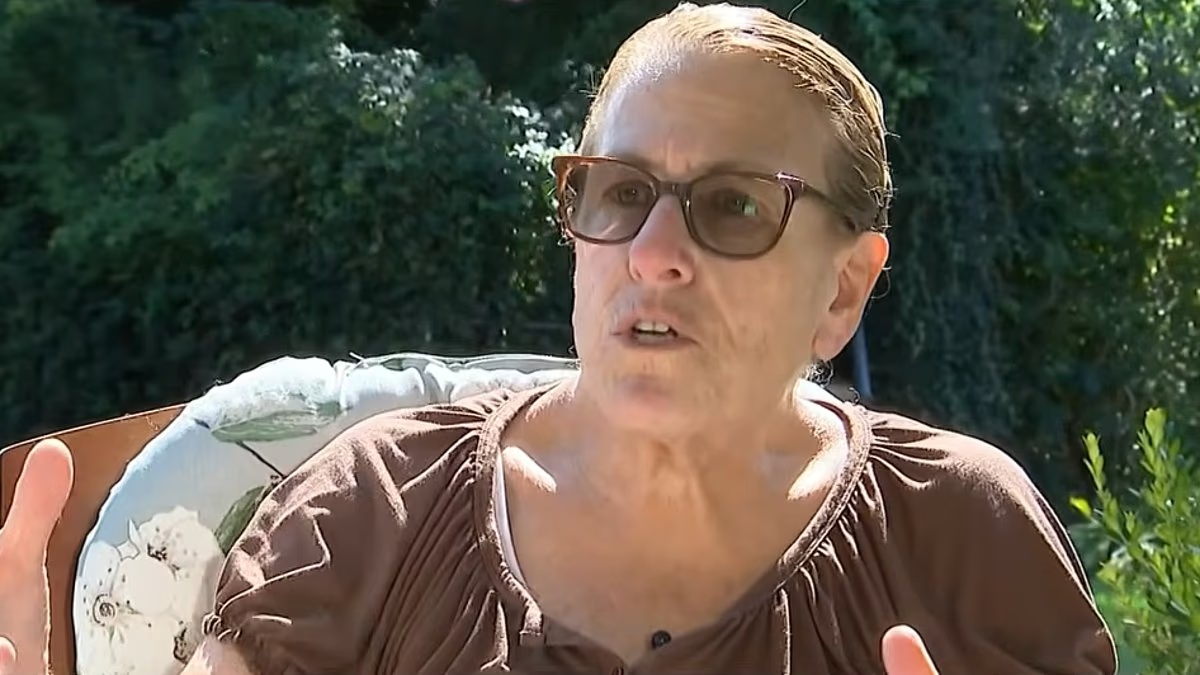

In the ongoing investigation into the disappearance of Nancy Guthrie, mother of “Today” show host Savannah Guthrie, authorities have uncovered a critical lead. They discovered that her pacemaker had ceased syncing with her Apple Watch around 2 a.m. on Sunday. This insight may help determine the exact time she vanished from her residence.
This unsettling development underscores a growing trend: the integration of technology into our daily health management. Millions now rely on wearable devices to monitor vital health metrics, enhancing both safety and well-being.
Apple devices, in particular, are at the forefront of this health tech revolution. They can detect irregular heart rhythms, monitor breathing patterns, alert users to dangerous falls, and even call for emergency assistance in a matter of seconds.
In a recent innovation, Apple introduced a groundbreaking feature with its Series 11 Watch in September. This model includes software capable of notifying users when their blood pressure reaches dangerously high levels.
High blood pressure, often referred to as the ‘silent killer,’ typically presents no overt symptoms. However, it is a leading contributor to approximately 50% of heart attacks and strokes globally, according to research.
Studies suggest it is responsible for around half of all heart attacks and strokes worldwide.
Heart conditions, collectively known as cardiovascular disease, affect a staggering 127 million adults in the US – almost half the adult population – and it remains the leading cause of death, responsible for one in five deaths.
So how does Apple Watch safeguard health, and potentially protect users from the worst? And why do privacy campaigners have concerns about the intimate records it creates of your body?

Investigators probing the disappearance of Nancy Guthrie – the 84-year-old mother of Today host Savannah Guthrie – believe her pacemaker stopped syncing with her Apple Watch around 2am on Sunday, potentially pinpointing when she was taken from her home

It’s a disturbing clue – but it also highlights a striking new reality: millions of us now wear devices that are key to maintaining our health and wellbeing
It can call emergency services after a serious fall
Apple Watch Fall Detection, introduced with Series 4 in 2018, detects ‘a hard fall’ – triggering it to vibrate and sound an alarm.
If you are immobile for about 60 seconds, a 30-second countdown begins with a loud alert. If not canceled, it automatically calls emergency services, such as 911, and then texts your emergency contacts your location.
The feature is off by default if you are under 55, meaning you may have to enable it to benefit.
Samsung Galaxy Watch, Google Pixel Watch and Garmin watches all carry similar features.
It can do an ECG reading – and flag worrying heart rhythms
The ECG app on Apple Watch uses electrodes built into the back crystal and the Digital Crown of the watch.
When you open the app and rest your finger on the crown, it completes a circuit across your chest and arms.
This allows it to record the electrical impulses that make up your heartbeat.
It gives a reading within 30 seconds and tells you if your heart is beating in a consistent, normal pattern, or if atrial fibrillation, a serious type of irregular rhythm, is detected.
Atrial fibrillation is a heart condition where the upper chambers beat chaotically, causing an irregular and often rapid heart rhythm.
This irregular beat can cause blood to pool and form clots, significantly increasing the risk of stroke and heart failure if left untreated.
Approximately 10.5 million American adults, about 1 in 22, are estimated to have atrial fibrillation, although up to one in five are undiagnosed.
It can warn if your heart rate is abnormally high or low
Apple Watch’s Heart Rate Notifications can alert you if your pulse becomes unusually high or low when you appear to be inactive.
You can set thresholds in the Health app, with common options including high heart rate alerts from 100–150 beats per minute and low heart rate alerts at 40–50 beats per minute.

Apple has unveiled a feature that can alert people to deadly high blood pressure – and the company claims it could flag more than one million undiagnosed cases in its first year alone

The Apple Watch Series 11, showcased at Apple’s annual September launch event in California, contains software that uses its optical heart sensor to monitor blood vessel activity over time
If triggered, the watch sends a notification prompting you to seek medical advice if you feel unwell, as abnormal heart rate readings can be linked to issues such as infection, dehydration, anaemia, thyroid problems, medication side effects, or underlying heart conditions.
However, experts warn that heart rate changes can also be caused by benign factors such as stress, alcohol, caffeine, lack of sleep, or even a poor fit on the wrist, meaning the alert should be treated as a prompt – not a diagnosis.
It can spot warning signs linked to high blood pressure
While the Apple Watch doesn’t measure blood pressure itself, it can pick up clues that may be associated with hypertension – such as an irregular heart rhythm alert, persistently high resting heart rate, or signs of poor sleep, including disrupted breathing patterns.
Doctors stress these aren’t proof of high blood pressure – but they can be an early prompt to check your BP properly and seek medical advice, especially if you also have symptoms like headaches, dizziness or chest tightness.
It can estimate blood oxygen
Apple Watch can measure blood oxygen saturation – a percentage score that estimates how much oxygen is being carried in your bloodstream.
The watch uses sensors on the underside that shine light through the skin and analyse how much is reflected back – a technique known as pulse oximetry.
Low blood oxygen readings can be a warning sign of breathing problems, and may be linked to conditions, including asthma, pneumonia, COPD, or complications in people with heart disease – although doctors stress the watch is not a substitute for medical-grade equipment.
Short dips can also happen during sleep, at altitude, or due to cold hands, movement, or poor sensor contact.
Health experts say persistent low readings, especially if paired with symptoms like shortness of breath, chest pain, confusion or blue lips, should be treated as urgent.

It can also monitor for possible sleep apnea – a night-time breathing disorder that is strongly linked to high blood pressure, heart disease and stroke
It can flag signs of sleep apnea
Newer Apple Watches can monitor overnight breathing and look for signs of disturbed breathing patterns, which can be associated with sleep apnoea – a common condition where the airway repeatedly collapses during sleep.
People with sleep apnoea may not realise they have it, because they’re asleep when it happens – but it can leave them waking up exhausted, struggling with daytime sleepiness, headaches, brain fog and mood changes.
Doctors warn that untreated sleep apnoea is linked to serious long-term risks, including high blood pressure, heart rhythm problems, type 2 diabetes, heart attack, and stroke.
It can track fitness and cardio capacity trends
Apple Watch estimates cardio fitness using a metric known as VO2 max – a measure of how efficiently your body uses oxygen during exercise.
It calculates this using heart rate response and movement during activities such as walking, running or hiking, then builds a longer-term picture of fitness over weeks and months.
A falling cardio fitness trend can be a subtle warning sign, particularly in older people, as lower VO2 max has been linked to a higher risk of heart disease, frailty, and premature death.

Apple Watch estimates cardio fitness using a metric known as VO2 max – a measure of how efficiently your body uses oxygen during exercise

Newer Apple Watches can monitor overnight breathing and look for signs of disturbed breathing patterns, which can be associated with sleep apnoea – a common condition where the airway repeatedly collapses during sleep
It can also help people see the benefits of lifestyle changes – for example, whether building back exercise after illness, surgery, or a sedentary period is actually improving capacity over time.
However, experts stress the estimate is not perfect and can be skewed by factors such as medications (including beta blockers), uneven terrain, extreme heat, or inconsistent workout tracking.
It can pick up temperature changes
Newer Apple Watches track wrist temperature, measuring tiny shifts overnight rather than a single thermometer-style reading.
This can help identify subtle physiological changes that may occur during illness, inflammation, or hormonal shifts, and is often used for cycle-related tracking.
While a temperature increase does not necessarily mean you are sick, it can be another clue when paired with symptoms such as fatigue, a sore throat, body aches, or a rising resting heart rate.
Experts say this kind of trend-based monitoring is most useful when people know their baseline, because ‘normal’ temperature varies widely among individuals.
It can also be affected by external factors such as room temperature, bedding, alcohol, or even how tightly the watch is worn.
It can monitor noise exposure
Apple Watch includes a Noise app that can detect when your environment is loud enough to risk damaging your hearing.
It measures sound levels in decibels and can send alerts if you’re exposed to high noise for a sustained period – for example, at concerts, bars, clubs, sporting events, or even through loud headphones.
Repeated exposure to high noise can lead to permanent hearing damage, tinnitus, and long-term problems with concentration, balance and mental health.
The feature allows users to see trends over time, highlighting whether they’re regularly exceeding safe levels, which many people do without realising.
Experts say it’s particularly useful because hearing damage is gradual and painless, meaning most people don’t notice until significant loss has already occurred.
It can reveal when something stopped moving with you
Apple Watches don’t just track health – they can also act as a kind of ‘digital breadcrumb trail’, offering clues about when a person stopped wearing the device, left it behind, or became separated from something it normally stays connected to.
In the Nancy case, investigators believe her pacemaker last synced with her Apple Watch around 2am Sunday, while her watch was reportedly found inside the home.
Because devices like watches often sync with other health tech via Bluetooth, a sudden cut-off can suggest the two were no longer within range – potentially helping investigators narrow a timeline.
Similarly, features like location sharing, emergency SOS settings, or the last recorded movement data can sometimes help establish when something unusual happened, particularly in missing person cases.
Why privacy campaigners are concerned
While wearable tech can be a lifesaver, some privacy campaigners warn it also creates an intimate record of your body – where you were, when you slept, how your heart behaved – that could be accessed, shared or subpoenaed in ways users never intended.
For experts, the message is simple: these devices can be incredibly powerful, but only if people understand what they’re giving away – and take the time to lock down their settings.