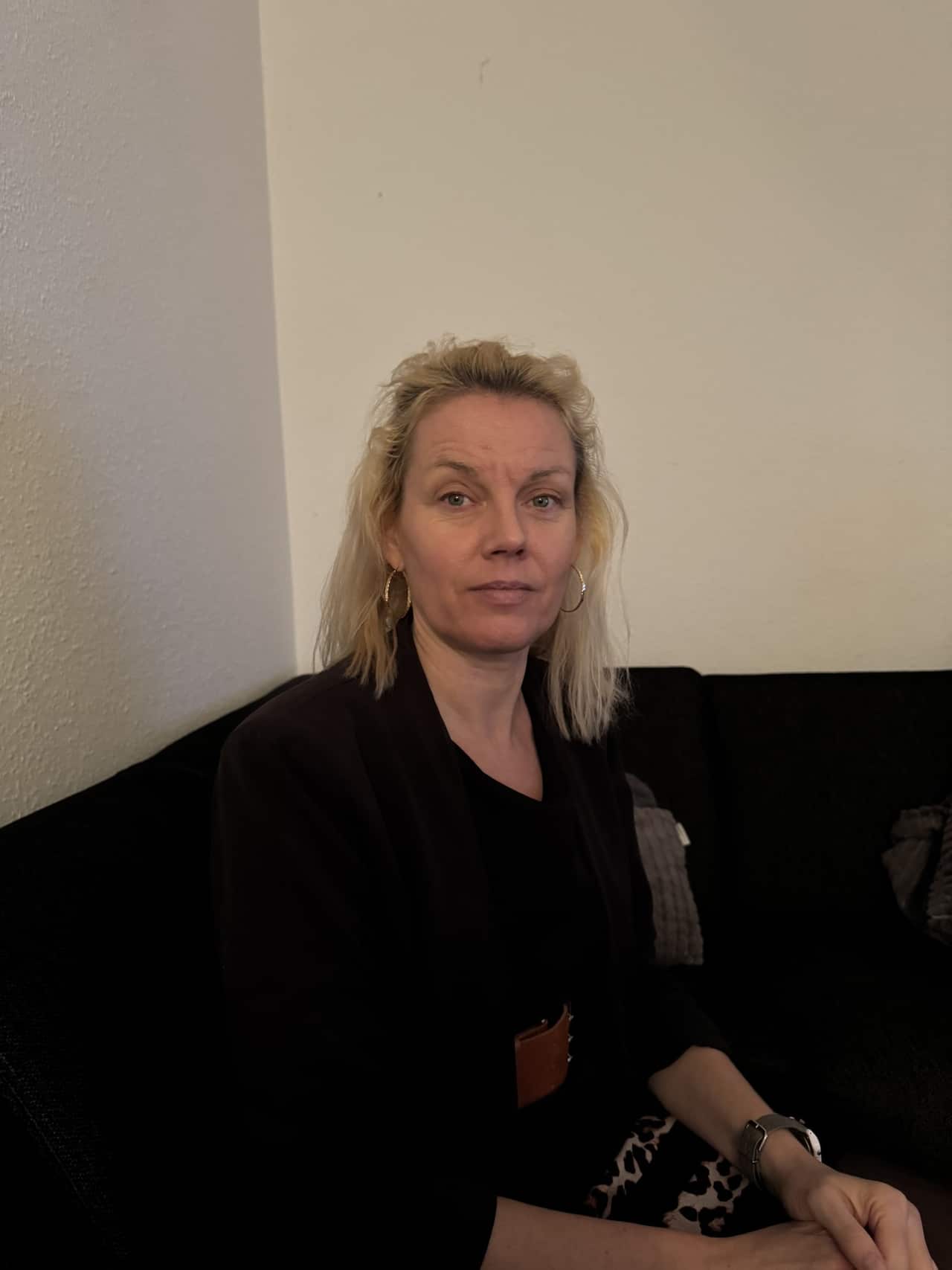
Majken Felle returned home one day to a startling discovery: a newsletter in her mailbox announced that her home was to be sold, and she would soon need to relocate.
Felle resided in Mjølnerparken, a public housing complex located in Copenhagen’s vibrant Nørrebro district, which Time Out magazine crowned as the ‘World’s Coolest Neighbourhood’ in 2021.
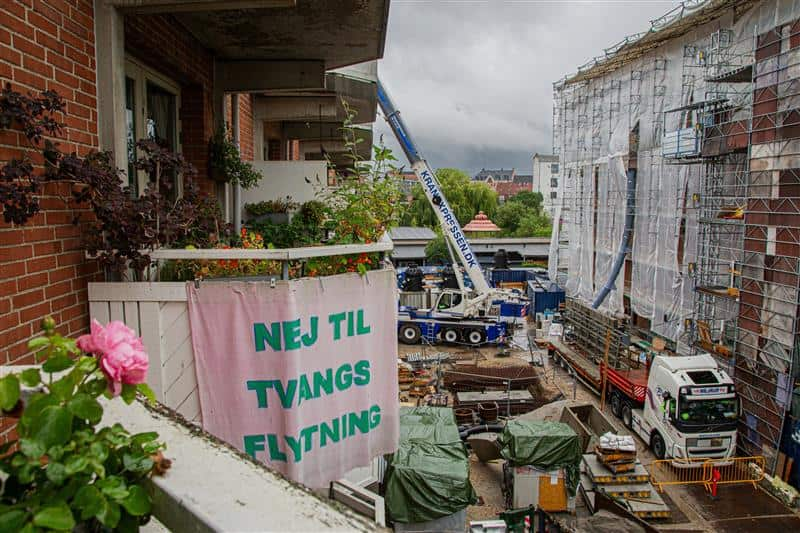
In May 2019, the unsettling news reached half of Mjølnerparken’s residents. Their housing association informed them that their apartments were scheduled for sale, and they would be relocated to temporary housing.
The community of Mjølnerparken comprises roughly 1,000 residents, predominantly ‘non-Western’ immigrants or their descendants.
This area was labeled a ‘parallel society’ under Denmark’s contentious ‘ghetto law,’ now known as the ‘parallel societies law.’ Although the law aims to enhance the ‘integration’ of immigrants, it has sparked significant debate.
Proponents argue that the law aids in integration and curbs crime, whereas detractors claim it perpetuates discrimination.
A goal of ‘zero parallel societies
The labelling of these communities as ‘parallel societies’ is dependent on 50 per cent of residents being immigrants and their descendants from a “non-Western” background, as well as socioeconomic factors including low employment, high crime, low education and low income.
If an area meets these criteria, its residents can be evicted and the area redeveloped, its public housing flats demolished or sold to private investors — who may raise the rent.
The Danish government’s aim is to reduce the amount of public housing in ‘parallel societies’ to 40 per cent by 2030.
“My goal is zero parallel societies. So we get a more united Denmark, and so that children from disadvantaged residential areas get a better start in life,” Denmark’s social affairs and housing minister, Sophie Hæstorp Andersen, said in 2024.
Felle had been living in Mjølnerparken for five years when she received notice that she had to move.
“I read that [the building management] had decided to sell off blocks two and three, and I was living in block two. It really shocked me,” she said.
Other residents found the alternative housing provided by the government small, too expensive, or too far away from their support networks.
“Some have moved to very different parts of the city, lost their network, they have higher rent and everything, Felle told Dateline.
Denmark’s originally-termed ‘ghetto laws’ were introduced in 2018 by then prime minister and current foreign minister Lars Løkke Rasmussen, who led a right-wing coalition.
In his New Years’ address that year, he spoke of the need to “break the vicious circle of one generation after another living in ‘parallel societies’ … by breaking up the concrete. By demolishing buildings. By spreading the inhabitants and rehousing them in different areas”.
Mette Frederiksen, leader of the centre-left Social Democrats, was elected prime minister in 2019 and has continued to support the laws.
Since the 1960s, Denmark has experienced increased immigration, with immigrants often settling in concentrated areas. Concerns about the rise of so-called “ghettos” rose to prominence in Denmark in the 1990s.
The policy has also received widespread support among Danes, though critics argue the laws are stigmatising and embarrassing.
A ‘long and hard journey’
In May 2020, residents of Mjølnerparken impacted by the contentious law filed a case in the Danish courts against the then-ministry of housing to “save their homes”.
The case was supported by the Open Society Justice Initiative, which advances justice, rule of law and protections against issues such as discrimination, criminal injustice and corruption worldwide. Its work was led by Susheela Math, who is now head of legal at the NGO Systemic Justice.
The residents argued that the ministry’s approval of a ‘development plan’ for Mjølnerparken under the ‘Ghetto Package’, which included the sale of more than 200 homes, was unlawful and discriminated against people of ‘non-Western’ background.
They claimed the ministry’s actions were discriminatory under both the EU race equality laws and the European Convention of Human Rights, and that they violated other rights.
The case was then referred to the European Court of Justice (ECJ) in 2022. In December 2025,15 ECJ judges made their unequivocal ruling that the policy was potentially unlawful under the EU’s Race Equality Directive.
Math has been working with residents and local lawyers throughout the case. She says the ECJ’s preliminary verdict has been a source of celebration in their fight against the ‘ghetto laws’.
“It’s completely unclear how losing the roof over somebody’s head and their community helps anyone,” Math told Dateline.
“The residents have had to engage in this terribly long and hard journey over all these years.”
“They have rights and how they will be fulfilled is something the Danish government, having created this mess, really needs to work out.”
The Danish government stopped using the term ‘ghetto laws’ in 2021, but Math believes this was not to “benefit the existing residents and stop stigmatising them or stop being derogatory towards them”.
Instead, she says it was “to make it an attractive area for other people to move in”.
Denmark’s controversial policy ‘an inspiration’
Since 2018, the Danish government has achieved its goal of decreasing the number of ‘parallel societies’ from 26 in 2018 to just five in 2025.
The UK government is reportedly reviewing Denmark’s migration policies, while across Denmark’s border in Sweden, politicians on both sides of the political aisle are familiar with the Danish model. Sweden has historically had a more liberal immigration policy than Denmark. But on the government website outlining the Swedish government’s current approach, it says “extensive immigration” has “caused major strains”. Its aim is an “overhaul of migration and immigration policy to create better conditions for successful integration”.
“Denmark was the enemy of Swedish migration policies … Now, suddenly everyone is looking to Denmark,” said Henrik Emilsson, an academic at Sweden’s Malmö University who specialises in migration and integration policy.
“Swedish politicians, they love to say that integration has failed.”
Sweden has designated certain areas as disadvantaged since the early 2000s, to highlight neighbourhoods grappling with socioeconomic hardship and high crime rates.
The police now describe these areas as ‘vulnerable societies’, defined on their official website as “places with low socio-economic status and where criminals have a major impact on the local community”.
Unlike Denmark, Sweden’s definition of a vulnerable society does not specifically mention race.
In Sweden, the number of immigrants has been progressively falling while the number of people applying for asylum is now at a 40-year low.
“We have scared asylum seekers away,” Emilsson told Dateline, adding, “you cannot escape diversity”.
“Here in Malmö … we have over 50 per cent [of people having] a foreign background. So what are you going to integrate into? Everybody is meeting people from all over the world every day.”
Lawen Redar is a Swedish-Kurdish MP and the new integration spokesperson for the Swedish Social Democratic Party (SAP), a traditionally left-aligned party currently in opposition. Sweden’s oldest and largest party, the SAP was last in government from 2014 to 2022.
Redar says while Sweden and Denmark’s policies and demographics are vastly different “there are things that we have picked up from their model”.
“Of course, you can always be inspired,” she told Dateline.
Sweden’s ‘vulnerable societies’
As her party’s integration spokesperson, Redar wants to stop immigration to ‘vulnerable societies’, including to the outer Stockholm suburb of Husby.
“Asylum seekers should not end up in these areas; it’s a bad start to integration.”
She says she received “standing ovations” for her policies at a citizen’s meeting in Husby among people who had emigrated to Sweden.
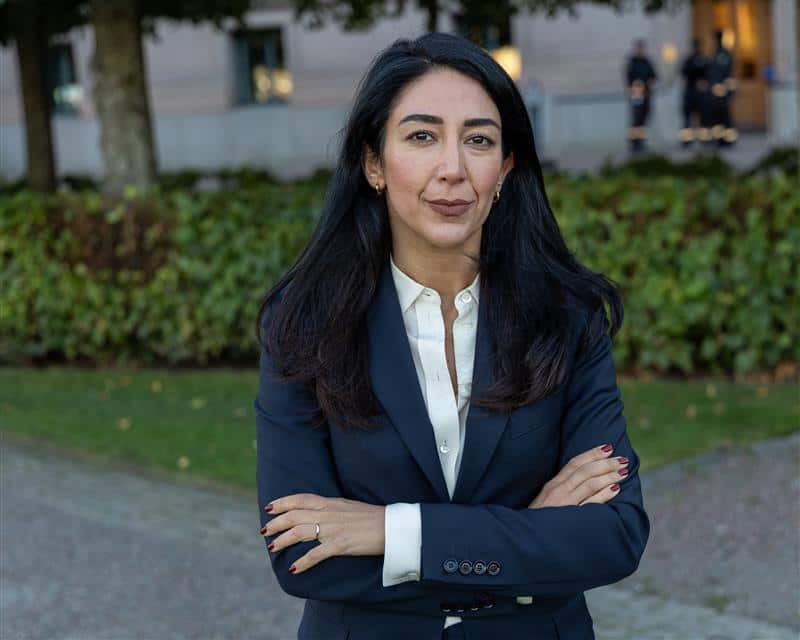
Redar says she also travelled to Mjølnerparken in Denmark and spoke with affected residents who both welcomed and criticised the policy.
However she believes that there have been positive outcomes of Denmark’s controversial integration policy.
“When I have a father come up to me and say that they will get a second chance, ‘my child will not grow up in an area that is affected by gang crime’… I can’t come to any other conclusion,” she said.
‘Destroyed the community’
For Susheela Math from Systemic Justice, Denmark’s ‘parallel societies’ are simply “neighbourhoods that have had a racialised label applied to them”.
“We found [Mjølnerparken] to be, and has since been noted by the European Commission Against Racism Intolerance, a pleasant neighbourhood with a good community spirit. And it was. Families had been there for generations.”
Felle, the Mjølnerparken resident, believes Denmark’s policies have “destroyed” the suburb’s sense of community. She thinks positive change could have been achieved by investing in the area rather than asking non-Westerners to leave.
She considers integration to be a “malleable concept” that people can interpret differently.
“Is it like you need to be a Christian? Is it that you need to hold a job? Is it you need to introduce yourself as Danish? Is it you have Danish friends? What would be the parameters to say that somebody is integrated?”
Felle says her experience of living in what most people call a ‘parallel society’ was overwhelmingly positive.
“I felt totally welcome in Mjølnerparken; it is the place that I have felt the most free in my whole life,” she says.
“Perhaps it’s because people come from different parts of the world — and somehow when we meet each other, we cannot use those standardised ways of putting each other into boxes.”
The case has now been referred back to the Danish courts.
Watch your favourite Dateline episodes around the clock on SBS On Demand’s dedicated Dateline channel. For the latest from SBS News, download our app and subscribe to our newsletter.