
An iconic American outdoor brand is undergoing a significant transformation as its major operator faces financial challenges and files for bankruptcy amidst declining sales. Eddie Bauer, known for its rich heritage in outdoor apparel, has seen the operator of its approximately 180 stores across the United States and Canada seek Chapter 11 bankruptcy protection. This decision comes as the brand grapples with various industry hurdles and waning sales figures.
This financial setback marks the third time in just over twenty years that Eddie Bauer has encountered bankruptcy, further highlighting the struggles of this once-thriving brand, which originated from a Seattle fishing shop in 1920. Despite these obstacles, there is a determined effort to revitalize the brand and adapt to the changing retail landscape.
Authentic Brands Group, which retains ownership of the Eddie Bauer brand and its intellectual property worldwide, has assured stakeholders that a new strategic plan is in place to guide the brand into the future. This plan emphasizes a shift away from the traditional brick-and-mortar retail model.
Instead, Eddie Bauer aims to strengthen its wholesale and digital presence, reducing reliance on its extensive network of physical stores. This approach is intended to better align the brand with modern consumer shopping habits and the overall evolution of the retail industry.
The strategy also includes a commitment to launching innovative product lines that utilize advanced materials and design, reinforcing Eddie Bauer’s long-standing reputation for quality and adventure-ready apparel. This focus on innovation and performance is intended to appeal to a new generation of outdoor enthusiasts, ensuring that the brand remains relevant and resilient in a competitive market.
The brand will also place a strong emphasis on launching innovative product lines that leverage cutting-edge materials and design, reinforcing its reputation for quality and adventure-ready performance.
The company’s namesake founder and avid outdoorsman, originally launched it as Bauer’s Sports Shop 106 years ago.
In 1945, after producing more than 50,000 jackets for the military, the company introduced a mail-order catalog. At its peak, Eddie Bauer operated over 600 stores.

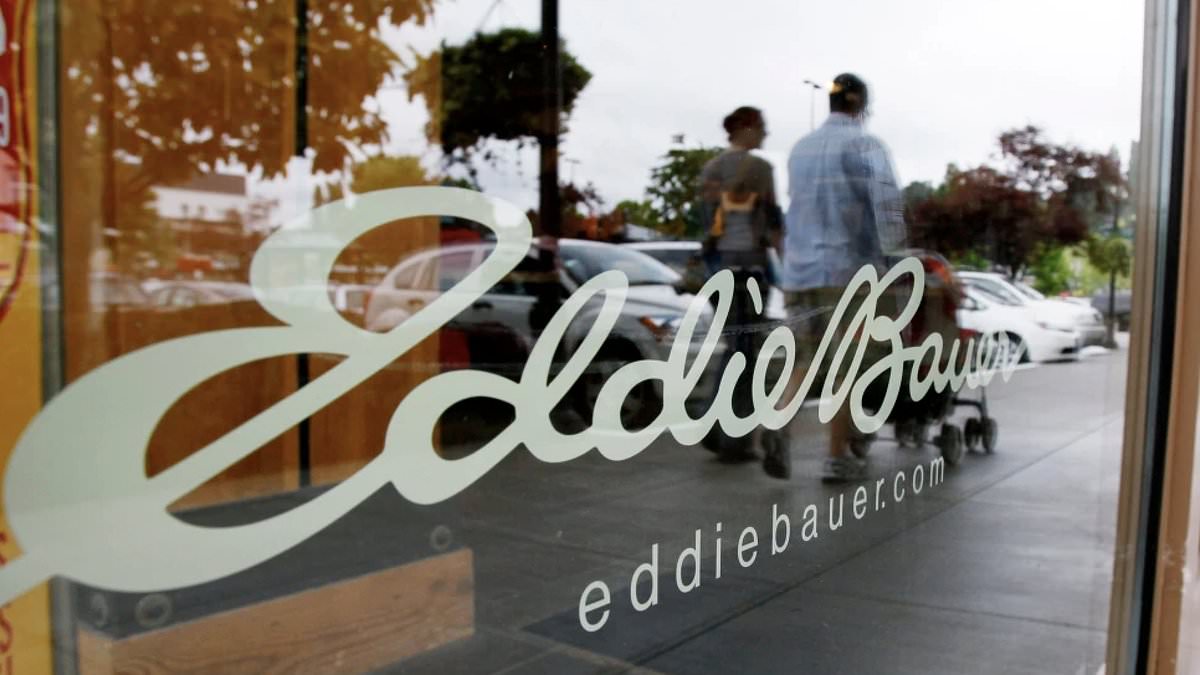
The operator of roughly 180 Eddie Bauer stores across the US and Canada has filed for Chapter 11 bankruptcy protection, citing declining sales and a host of other industry challenges
‘Bauer’s Sports Shop was not just a place to buy clothing and gear; it was a community hub where people shared knowledge, learned, and exchanged stories about their outdoor adventures,’ the company’s website notes.
The brand is credited with creating the first American goose-down insulated jacket, the ‘Skyliner,’ in 1936. In 1963, it outfitted the first American to climb Mount Everest, James W. Whittaker, with an Eddie Bauer parka.
After Bauer retired and sold the business to his partner in 1968, the company shifted toward casual apparel. It was acquired by General Mills Inc. in 1971 and later by Spiegel Inc. in 1988.
When Spiegel filed for bankruptcy in 2003, most of its assets were sold, and the remaining operations were reorganized as Eddie Bauer Holdings Inc. in 2005.
Eddie Bauer itself filed for bankruptcy in June 2009 and was acquired the following month by Golden State Capital. In 2021, it was purchased by Authentic Brands and SPARC Group LLC.
A year ago, Catalyst was formed through the merger of SPARC and JCPenney, which had been acquired by Simon Property Group and mall operator Brookfield out of bankruptcy.
On Monday, Eddie Bauer LLC announced it had entered a restructuring agreement with its secured lenders as part of its Chapter 11 filing in the US Bankruptcy Court for the District of New Jersey.
Most Eddie Bauer retail and outlet stores in the US and Canada will remain open while certain locations are wound down. The company plans to conduct a court-supervised sale process; if a sale cannot be completed, it will begin winding down its US and Canadian operations.

Eddie Bauer (pictured), the company’s namesake founder and avid outdoorsman, originally launched it as Bauer’s Sports Shop 106 years ago
‘This is not an easy decision,’ said Marc Rosen, CEO of Catalyst Brands, which holds the license to operate Eddie Bauer stores in North America.
‘However, this restructuring is the best way to optimize value for the company’s stakeholders and ensure that Catalyst Brands remains profitable with strong liquidity and cash flow.’
Stores outside North America, operated by other licensees, are not affected by the Chapter 11 filing and will remain open.
Authentic Brands Group retains ownership of the Eddie Bauer intellectual property and may license the brand to other operators.
Other brands in the Catalyst portfolio are unaffected and will continue operations as normal. Eddie Bauer’s e-commerce and wholesale operations, run by Outdoor 5, LLC, also remain intact.
Eddie Bauer joins a growing list of US retailers closing stores as companies restructure under bankruptcy protection or trim operations to focus on profitable segments.
The parent company of Saks Fifth Avenue, for example, recently sought bankruptcy protection after taking on massive debt to acquire Neiman Marcus. It also announced plans to close most Saks Off 5th stores.
Earlier this month, Amazon said it would shutter nearly all Amazon Go and Amazon Fresh locations to focus on food delivery and Whole Foods Market.
Catalyst Brands CEO Rosen noted that even before Catalyst’s formation last year, Eddie Bauer was in a ‘challenged situation.’

A spokesperson for Authentic Brands Group, which continues to own the Eddie Bauer brand and all associated intellectual property worldwide, told the Daily Mail that a new strategy is in place to ensure the brand endures for the next generation
‘Over the past year, these challenges have been exacerbated by rising costs due to inflation, ongoing tariff uncertainty, and other factors,’ he said.
He added that while improvements in product development and marketing were made, they could not keep pace with issues built up over many years.
Neil Saunders, managing director of GlobalData Retail, wrote earlier this month that while Eddie Bauer is ‘well known,’ it has lagged behind rivals such as Swedish outdoor brand Fjällräven and Canadian label Arc’teryx.
He also cited declining quality, which is particularly damaging for an outdoor brand whose reputation relies on product performance.
‘And for many younger shoppers, the brand feels somewhat old-fashioned and increasingly irrelevant,’ Saunders added.