
The debate surrounding ivermectin, a drug initially known for treating parasitic infections in both humans and livestock, has taken a new turn. Once at the center of controversy due to its promotion as a Covid-19 cure by some right-leaning medical groups, ivermectin is now capturing attention again, this time for its potential role in cancer treatment.
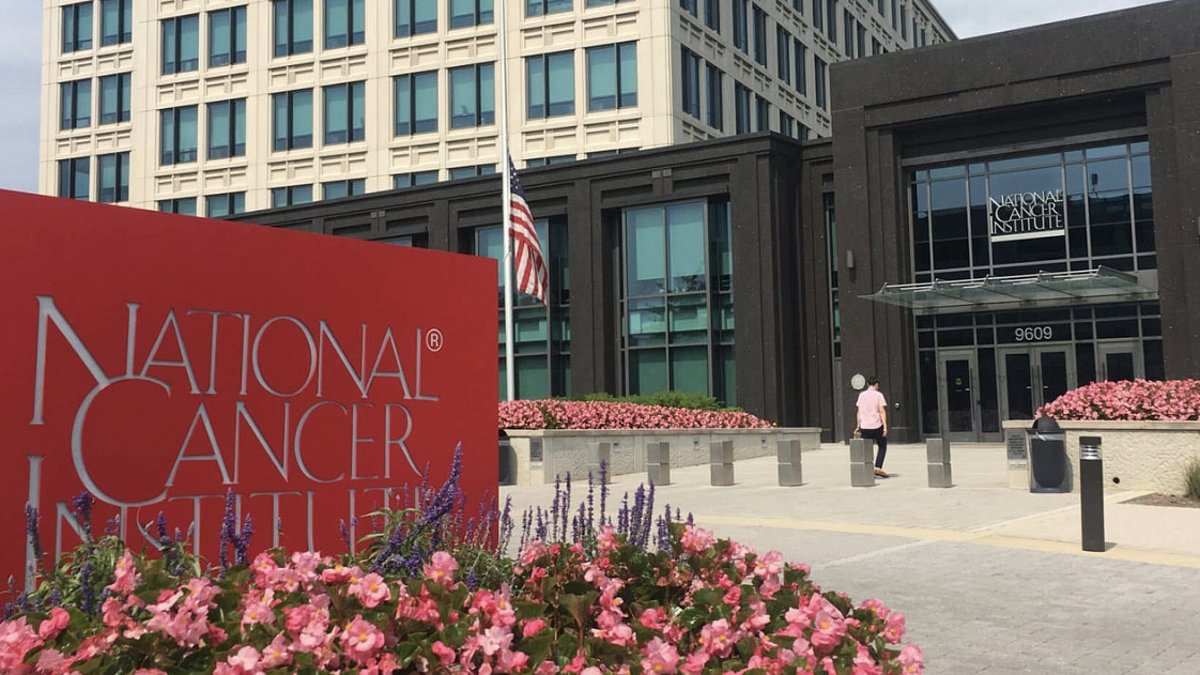
The National Cancer Institute (NCI), a leading organization within the National Institutes of Health (NIH), has begun investigating this possibility. The institute, under the leadership of Dr. Anthony Letai, who was appointed during President Donald Trump’s administration, recently announced this new focus despite not having fresh evidence to back the claims.
Dr. Letai explained at a January event with NIH Director Jay Bhattacharya that there are numerous reports and a significant level of interest regarding ivermectin’s capacity to combat cancer cells. This has prompted the NCI to undertake more thorough preclinical studies to explore the drug’s properties in this context.
During the same event, Bhattacharya emphasized the NIH’s responsibility to take such public health interests seriously, especially when they garner substantial public attention and influence.
Notably absent from this discussion was Health and Human Services Secretary Robert F. Kennedy Jr., who has long been a skeptic of Covid vaccines. Kennedy has often argued that the government, in collusion with pharmaceutical companies, has suppressed ivermectin’s potential due to its lack of profitability.
Not present at the event was Health and Human Services Secretary Robert F Kennedy Jr, a long-time Covid vaccine skeptic who has pushed the claim that an unhealthy government–Big Pharma alliance suppressed ivermectin simply because it isn’t profitable.
In laboratory studies, ivermectin has been shown in cell cultures to kill cancer cells and suppress tumors. But there is currently no reliable clinical evidence from human trials to support its use as an effective cancer treatment.
In the rest of his comments at the NIH event last month, Letai appeared to temper expectations for the drug, saying at one point, ‘It’s not going to be a cure-all for cancer,’ and adding later that even if there are signals of anti-cancer properties in the preclinical studies, ‘I can tell you again, it’s not a really strong signal.’

Ivermectin gained popularity during the pandemic after fringe medical figures, some now in federal roles, promoted it as a Covid remedy with no clinical proof. Since then, right-leaning influencers have touted it as a dubious cure for various other conditions
But, he quickly noted, ‘this doesn’t rule out… individual reports of people having taken it that had a response to their cancer. This doesn’t invalidate their personal experience.’
Ivermectin surged in popularity during the Covid pandemic when fringe medical experts touted its ability – despite a lack of clinical evidence – to alleviate the symptoms of the virus and speed up recovery.
Since then, right-leaning influencers have hyped its ability to cure a range of ailments in addition to Covid, from cancer and lupus to autism and renal failure.
None of these claims has been clinically proven, nor are they guaranteed safe.
Without the guidance of a doctor, people taking ivermectin may overdose. Ivermectin is dosed by body weight, and formulas intended for livestock have much higher concentrations of the drug than formulations FDA-approved for humans.
They might also not know about important drug interactions, particularly with antidepressants and benzodiazepines as well as blood thinners.
Ivermectin can cause dangerous and even dreadful side effects when misused or taken without medical supervision. These include neurotoxicity, such as seizures, coma and altered consciousness, as well as liver and kidney damage, severe skin reactions and life-threatening drug interactions.
Letai did not specify whether the research is being carried out by NCI scientists or funded by an external institution. About 75 percent of the cancer institute’s research budget is allocated to investigators outside the agency.

NCI head Dr. Anthony Letai, a Trump appointee, offered no new evidence to support the move to investigate the drug futher. At a January event, he said enough reports and interest prompted the institute to conduct a more rigorous preclinical study of ivermectin’s potential to kill cancer cells
Jeffery Edenfield, executive medical director of oncology for South Carolina-based Prisma Health Cancer Institute, told Stat: ‘Many, many, many things work in a test tube. Quite a few things work in a mouse or a monkey. It still doesn’t mean it’s going to work in people.’
With the help of high-profile fans, ivermectin has become a flash point in the medical field.
RFK Jr, followers of the MAHA movement and certain conservative commentators have pushed the narrative that the government and pharmaceutical companies suppressed ivermectin and other low-cost, off-patent drugs simply because they do not generate enough profit for the industry.
One NCI scientist, who chose to remain anonymous, told Stat: ‘I am shocked and appalled. We are moving funds away from so much promising research in order to do a preclinical study based on nonscientific ideas. It’s absurd.’
Ivermectin is FDA-approved to treat conditions caused by parasitic worms as well as head lice and skin conditions such as rosacea in specially formulated and dosed products.
Doctors at Cincinnati Children’s Hospital in Ohio detailed a story in an open letter in the journal Pediatric Blood & Cancer of a teenage patient with metastatic bone cancer who took ivermectin ‘after encountering social media posts touting its benefits.’
The patient had been taking his standard doctor-prescribed medication to keep the cancer stable, as well as several doses of ivermectin on their own without the guidance of a doctor over the course of five days.

With a Fiscal Year 2026 budget of approximately $7.35 billion, the National Cancer Institute serves as the world’s largest funder of cancer research

Without a doctor’s guidance, people taking ivermectin risk overdose. Livestock formulas contain far higher concentrations than those approved for humans, and the drug must be dosed by body weight. The drug can also interact poorly with other common medications (stock)
He stopped eating, became very drowsy, nauseous and developed severe kidney problems, leading to hospitalization.
Doctors said he presented to the hospital in ‘an altered state… attributed to ivermectin-related neurotoxicity.’ His symptoms improved once he stopped taking the ivermectin.
Experts believe a drug interaction between ivermectin and the patient’s cancer medication may have made the reaction worse.
Doctors who wrote the letter said: ‘This report aims to raise awareness of medical misinformation often directed at vulnerable patients in the oncology community. Ivermectin is just one contemporary example.’